
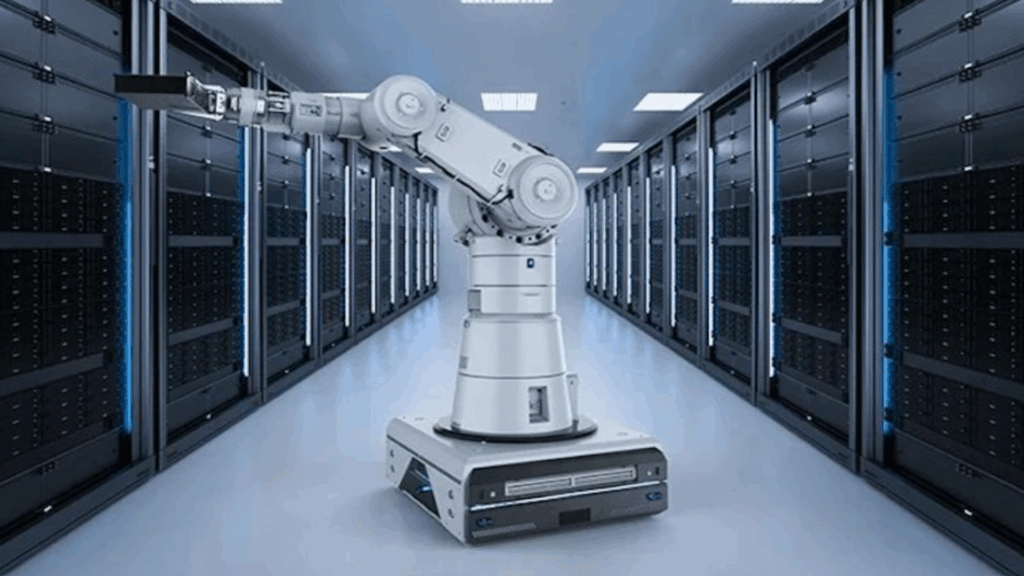
- Over half of British adults feel uneasy interacting with robots on a daily basis
- Limited exposure creates anxiety, with only 30% of Brits ever meeting robots
- Domestic robots trigger the strongest reluctance, especially in home environments
More than half of British adults say they feel uneasy about robots, making Britain the most robot-anxious nation globally.
A survey conducted by Hexagon across nine markets involving 18,000 participants found that 52% of UK respondents were concerned about potential problems when interacting with robots.
That’s higher than the global average of 42%, which experts attribute in part to the limited exposure many Britons have to robots.
The article continues below
Limited exposure causes concern among the public
Low exposure may be the cause of the anxiety, as only 30% of Britons report ever encountering a robot in their daily life, while the figure is 75% in China.
Brits express their strongest reluctance in home environments, with 39% saying they feel uncomfortable with robots in the home.
In industrial applications, such as factories and warehouses, robots are slightly more accepted, but comfort levels remain below the global average.
Security concerns are the main reason for the high levels of anxiety, with 53% citing the risk of robots being hacked or misused as their biggest concern.
Some Britons (41%) also fear that robots could fail and cause physical harm.
Observers note that fear often subsides when people meet a robot in person, especially smaller, accessible models.
“All over the world, people are not just pro-robot or anti-robot. They are asking where robots belong, what they should do, and what safety measures should come first,” said Burkhard Boeckem, CTO at Hexagon.
“In the UK, the message is particularly clear: trust falters when robots feel distant or unfamiliar. Trust breaks down when robots are pushed into everyday or domestic roles before governance, safeguards and human control are clearly in place.”
Like robots, the British don’t want data centers near them, even though national support for expansion remains high.
A survey of over 2,100 UK adults by YouGov reveals that only 44% of Gen Z respondents support a local data center and 31% actively oppose one, although national support for new facilities reaches 69%.
Much of the opposition among younger voters is driven by environmental concerns, including concerns about energy use and water use.
Although arguments for job creation and potential economic benefits exist, they are insufficient to outweigh the environmental concerns.
This “not in my backyard” attitude means that local realities may collide with wider national priorities as the UK plans to more than double data center capacity by 2030.
Across both robotics and data infrastructure, trust emerges as a central barrier that strongly influences public perception, acceptance and resistance.
Britons can accept automation in areas where the benefits are clear, including carrying out dangerous tasks or improving efficiency.
But reluctance persists when technologies are unfamiliar or perceived as a threat to control.
Follow TechRadar on Google News and add us as a preferred source to get our expert news, reviews and opinions in your feeds. Be sure to click the Follow button!
And of course you can too follow TechRadar on TikTok for news, reviews, video unboxings, and get regular updates from us on WhatsApp also.


