
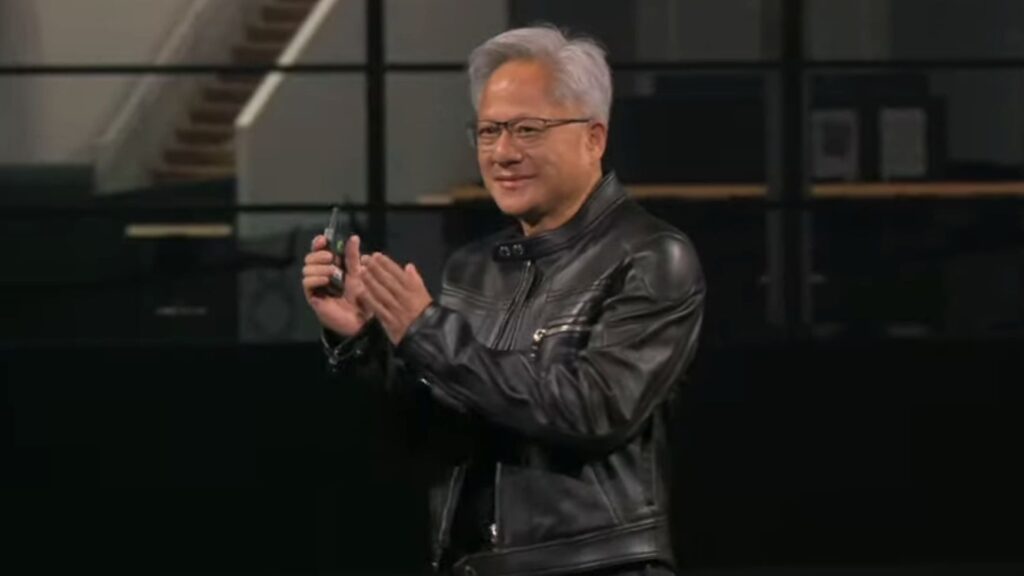
- Jensen Huang has called gamers who hate on DLSS 5 ‘completely wrong’
- The CEO noted, “This is very different from generative AI; it’s generative AI for content control.”
- He further noted that game developers have direct control over the technology and can fine-tune the generative AI to match their artistic intent.
Nvidia CEO Jensen Huang has fired back at gamers who have been critical of DLSS 5, the recently revealed technology that aims to spice up the graphics in games to make them look more realistic with its RTX 5000 GPUs.
Or at least that’s the idea – using AI that “infuses pixels with photorealistic lighting and materials” to tweak existing game assets – but many players feel the results look worse than the original graphics (for various reasons).
The criticism has been harsh from some quarters, but over at GTC 2026, Jensen Huang fired back at the critics of DLSS 5 when asked by Tom’s Hardware.
The article continues below
Pulling no punches out of the gate, Huang said, “Well, first of all, they’re dead wrong. The reason for that is, as I’ve explained very carefully, DLSS 5 merges the controllability of the geometry and the textures and everything about the game with generative AI.”
The CEO elaborated on how developers can fine-tune the generative AI used here to match the style of the game – and how it won’t interfere with the artistic control or art direction of a game.
Huang emphasized how it’s up to developers to use DLSS 5 however they want, and that: “All of this is in the game developer’s control – direct control. This is very different from generative AI; it’s content control generative AI. That’s why we call it neural rendering.”
Analysis: not the right approach
I’m not sure that doubling down on DLSS 5 and hitting back like this is the right strategy here, and it feels a little too much like reaching for a can of gas when dealing with an inflamed crowd of disgruntled players.
Huang’s words also feel too much like playing not just with fire but with semantics for my taste. It is ‘content-control generative AI’ which is very different from ‘generative AI’, of course, as we all know. Tsk, it’s worlds apart, although it, um, doesn’t sound that different at first.
What exactly is Huang talking about here? It’s the difference between having AI generate graphics from scratch and using AI to polish existing game assets – polishing what’s already there (or ‘content control’). Beyond that, the CEO also emphasizes that game developers will set the limits on how DLSS 5 is used and retain artistic control in that regard.
This all sounds good in theory, but looking at the results Nvidia shared at GTC, with a series of screenshots showing DLSS 5 off versus DLSS 5 on in a number of games, there are some surprising differences. This is especially true with the atmosphere and art style – you only have to look Resident Evil Requiem screenshot (of Grace, see above) to see it. It’s also understandable that, based on the footage shared, there are concerns that the technology will make games look overly generic – too sharply rendered and/or leaning towards a brightness overload or oversaturated colors.
Given that these are fair observations, I don’t think it’s helpful for Huang to lash out at calling players ‘wrong’ in the way he does. I’m happy to accept that this is still very early work on DLSS 5, and the end game may look very different from what we see in these glimpses of the technology at GTC – but that’s not what Huang is saying here.
It feels to me like he’s annoyed at players for lashing out at DLSS 5 without fully considering what it is – or maybe eventually, given that it’s still in early preview – but that he himself gets just as annoyed and backs off, which ultimately doesn’t feel very constructive. It also reminds me (and many others) of the classic Simpsons meme where Principal Skinner worries that he might be out of touch before blaming the kids for being wrong.

The best graphics cards for all budgets
Follow TechRadar on Google News and add us as a preferred source to get our expert news, reviews and opinions in your feeds. Be sure to click the Follow button!
And of course you can also follow TechRadar on YouTube and TikTok for news, reviews, video unboxings, and get regular updates from us on WhatsApp also.


