
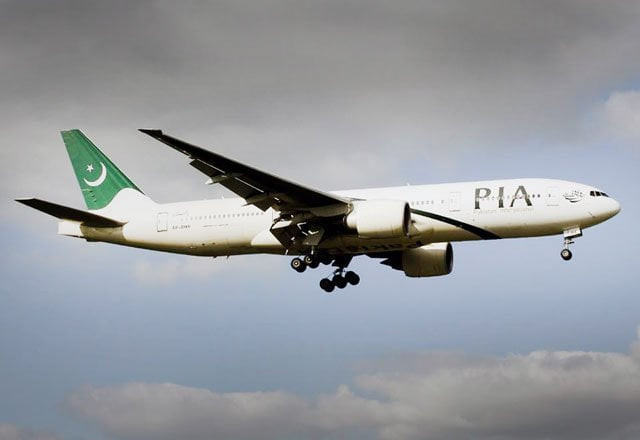
Pakistan International Airlines (PIA) on Thursday strongly denied reports that one of its flights narrowly escaped a missile attack near Fujairah in the United Arab Emirates (UAE), describing the claims as “completely baseless and false”.
The clarification came after posts circulated on social media claiming that a PIA flight was in danger during landing due to an Iranian missile attack near naval facilities adjacent to Fujairah Airport.
In a statement shared on X, the airline said: “PIA clarifies that the news circulating about a missile attack near Fujairah involving a PIA flight is completely baseless and false.”
#PIA clarifies that a news circulating about a missile attack near Fujairah involving a PIA flight is completely baseless and false.
No such statement was issued by the airline and its spokesperson.
We encourage everyone to refrain from sharing unverified information. ✈️🚫 #PIA…
— PIA (@Official_PIA) 19 March 2026
The airline also denied claims that such a statement had been issued by its spokesperson. “No such statement was issued by the airline and its spokesperson. We urge everyone to refrain from sharing unconfirmed information,” it added.
Amid escalating tensions in the Middle East, PIA on Wednesday announced operational changes to its Gulf routes, suspending flights to Fujairah in the UAE for 48 hours.
According to a statement issued by the airline’s spokesperson, PIA will limit its services to the UAE only to Al Ain, an inland oasis city on the eastern border with Oman.
Read also: PIA suspends Fujairah flights for 48 hours
Airline officials said the situation is under constant review, with further adjustments likely if tensions continue. Passengers have been advised to regularly check flight schedules and stay in touch with airlines.
On Wednesday, the Gulf conflict continued to cause widespread disruption to Pakistan’s air travel, with at least 92 inbound and outbound flights canceled across major airports, stranding passengers and forcing airlines to scale back operations.
The cancellations affected key international routes connecting Pakistan to the Gulf and beyond, underscoring the immediate fallout of regional instability on global aviation networks.


