
Pakistan relies on Gulf fuel, but war-driven supply tensions have pushed up prices and forced austerity
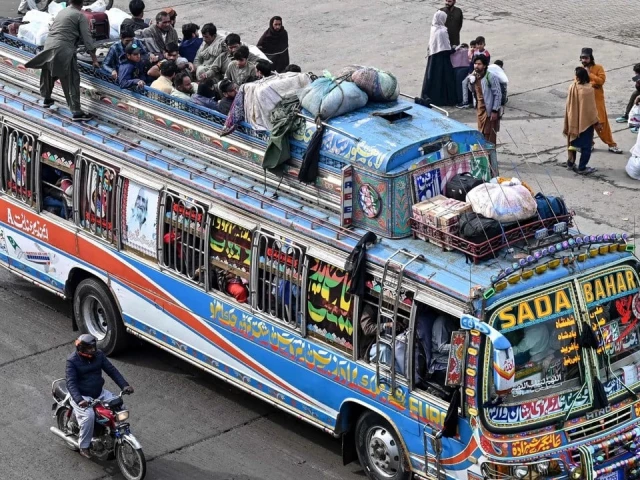
Passengers ride on an overcrowded bus as they return to their hometowns ahead of Eidul Fitr, which marks the end of the Islamic holy month of Ramazan, in Lahore on March 19, 2026. PHOTO: AFP
Preparations for the end of Ramazan were in full swing at a beauty salon in Punjab, where customers were getting haircuts, eyebrow threading and henna tattoos.
In Multan’s markets, throngs of young and old women shopped for colorful bangles, shoes, new clothes, make-up and sweets.
But in Multan and elsewhere in Pakistan, the ripple effects of the American-Israeli war against Iran are being felt.
“It feels very different because inflation has increased so much because of the ongoing war. Every poor person is distressed. It affects them deeply,” said make-up artist Rozina Amjad.
The evening of Eidul Fitr used to be “lively”, Amjad said AFPadding, “Now that charm is gone. It’s not what it used to be.”
Pakistan depends on oil and gas from the Gulf, but since the war broke out last month, pressure on fuel supplies has seen prices at the pump rise and government austerity measures.
Rising oil prices have pushed up costs across the board, affecting purchasing power ahead of the festival.
Suriya Muslim, a 35-year-old housewife, said she had already done her shopping and just needed to finish her beauty routine at the salon before getting ready for guests at her home.
But she feared that this year her family might have to cut back on the usual visits to relatives and friends.
“Due to the war in Iran, the rise in prices has greatly affected our budget. All essential items for Eid have become very expensive,” she added.
Read more: The Iran war reveals breaks in the global order, says former envoy Masood Khan
“Now our car just sits at home. Taking the budget into account, we can’t take the children out or go shopping or visit relatives.
“It now looks like petrol is going to be even more expensive and in this situation it feels like Eid remains confined to our homes.”
Prime Minister Shehbaz Sharif said this week that there would be no military parades and flyovers on next Monday’s public holiday in Pakistan because of the crisis in the Gulf.
Further east of Multan, in Lahore, the great Eid exodus had begun, with trains packed and travelers crammed onto the tops of colorful, painted buses.
Public transport prices have also increased as people travel from major urban centers back to their hometowns and villages.
In Lahore, 48-year-old laborer Muhammad Ramzan said he decided not to travel to his village.
“I wanted to spend Eid with my children, but they are asking for far more than I can afford,” he said. “Now I don’t even want to go to my children for Eid.
“I’m thinking of just staying here and working again. I don’t have that much money in my pocket.”


