
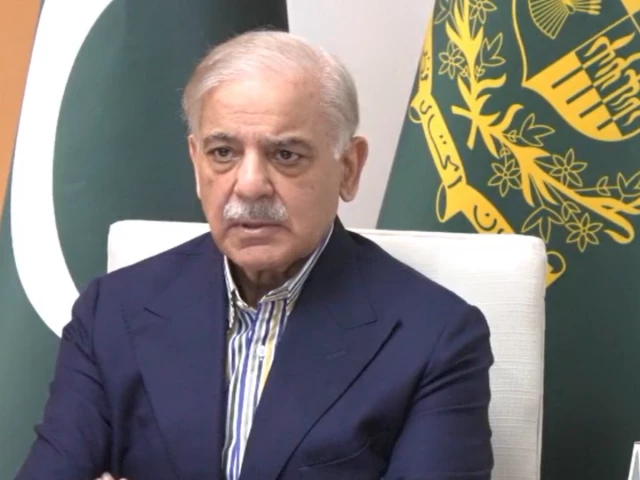
Prime Minister Shehbaz chairs a meeting on austerity measures. PHOTO: SCREENGRAB
ISLAMABAD:
Prime Minister Shehbaz Sharif said on Friday night, the eve of Eidul Fitr, that he had rejected advice to further raise fuel prices and that the federal government would absorb the burden itself.
The government was expected to absorb the impact of a hike in oil prices of up to Rs 49 per liter amid a sharp rise fueled by tensions in the Gulf region.
According to calculations, the price of high-speed diesel had increased by Rs 49 per liter while diesel prices had increased by Rs 29 per litre. But the government can absorb this impact through price differential requirements.
Over the past week, the federal government raised the prices of kerosene oil and light diesel oil (LDO). However, it decided to freeze the prices of petrol and high-speed diesel by maintaining the oil tax and providing a subsidy to absorb rising costs.
Two weeks ago, the government hiked diesel and petrol prices sharply by Rs 55 per liter or 20% – due to the ongoing war between the US and Israel and Iran, which has disrupted supply chains and pushed crude oil prices to two-year highs.
The increase in gasoline prices was more than the increase in the international market, as the government chose to collect more money than required from motorcyclists and car owners to subsidize the use of diesel, mainly by the public transport and agricultural sectors.
However, Prime Minister Shehbaz Sharif decided not to raise the prices of petroleum products last week, keeping his promise to the public despite a further rise in international oil prices.
The committee to monitor petrol prices was informed on Monday that the country had sufficient fuel availability for March and coverage was available until mid-April based on current cargo planning and supply arrangements, with efforts to extend it further towards the end of next month.
The committee members conducted a comprehensive review of petroleum product stock positions across the country and were briefed in detail on the current national inventory of crude oil and refined petroleum products, ongoing import arrangements and supply chain logistics.
Earlier, Oil Minister Hamed Yaqoob Sheikh said the country currently had diesel reserves sufficient for 21 days and gasoline stocks for 27 days.
The Petroleum Secretary briefed the Senate Standing Committee on Petroleum on the country’s fuel reserves and the impact of rising tensions in the Middle East on global energy supply.
Sheikh said the country also had liquefied petroleum gas (LPG) reserves for nine days and JP-1 aviation fuel stocks for 14 days. The petroleum secretary said around 70% of Pakistan’s oil supplies came from the Middle East and ongoing regional tensions had disrupted shipments, with vessel movements currently affected.


