
The US Securities and Exchange Commission and the Commodity Futures Trading Commission released interpretive guidance explaining how they can define what is or is not a security in crypto; The CFTC also issued a “no-action” letter to a non-deposit pool provider to facilitate transactions in derivatives and predictive markets; Arizona files criminal charges against prediction market provider; and by the way, we have some kind of hints of movement in the legislation on market structures.
What a week, huh?
You’re reading State of Crypto, a CoinDesk newsletter that looks at the intersection of cryptocurrency and government. Click here to sign up for future editions.
The narrative
The US Securities and Exchange Commission published interpretive guidance this week — along with the Commodity Futures Trading Commission — detailing how it approached the question of what in crypto it will consider a security.
Why it matters
What is and is not a security has long confused the industry. We had previous attempts to define this something from the SEC — Bill Hinman’s “When Howey met Gary (plastics)” speech, for example — but this week’s interpretive guidance is one of the most specific efforts to define this for the industry.
To break it down
The SEC laid out several categories it saw in the crypto space, with one of those categories being digital securities. These are cryptocurrencies that meet the definition of a security in any other context but happen to be tokenized, the guidance said. For example, if a crypto asset meets the prongs of the Howey test, it is a security.
This is the category of tokens that the SEC will monitor.
Other categories include stablecoins, digital tools, digital collectibles, and digital commodities, which are generally not securities unless the issuers or operators take actions that may satisfy securities regulations, such as fractionation of the tokens in question.
“We establish a straightforward taxonomy of cryptoassets — most of which are not securities — and clarify how the Supreme Court’s Howey test applies when a cryptoasset is part of an investment contract,” SEC Chairman Paul Atkins and Commissioners Hester Peirce and Mark Uyeda wrote in an op-ed for CoinDesk.
The CFTC said it would sign the guidance and administer it under the Commodities Exchange Act.
“Market participants—from innovators and issuers to individual investors—should review this interpretation to better understand the regulatory jurisdiction between the SEC and the CFTC,” the CFTC said in a news release. “The interpretation will be published on CFTC.gov and in the Federal Register.”
Congressman Troy Downing (R-Mont.) called the guidance “very positive,” but said Congress still needed to pass market structure legislation, as a future administration could undo the interpretive guidance.
“Just having another two or three years of this and then having ambiguity out there doesn’t make most people comfortable making any kind of big investment,” he told CoinDesk. “But it’s a good start because it’s exactly what the industry wants and it allows some people to move forward.”
Chris LaVigne, a partner at the law firm Withers, said the guidance “predictably concludes that most crypto assets and many common crypto activities are not securities,” although the agency retained some discretion to take enforcement action in this area.
“The guidance shifts the securities inquiry away from the asset or activity itself (which is mostly considered to be digital commodities that do not fall under the purview of the SEC) and re-centers the analysis on the transactions and representations in which those assets or activities originate or are marketed,” he said. “In doing so, the SEC did not completely eliminate the uncertainty or its enforcement role because it concludes that a cryptoasset that is not a security may nevertheless be sold as part of an investment contract if it is marketed with promises of profit derived from the issuer’s significant managerial efforts.”
A crypto that was marketed as a security may eventually be considered something else “when those promises are fulfilled or no longer work,” he said. This could affect securities more broadly than just crypto assets.
It is less clear what can constitute an item under the guidance.
Jason Gottlieb, a partner at Morrison Cohen, said the Commodity Exchange Act defines commodities as a list of products (excluding onions and movie box office receipts), services and other matters “in which contracts for future delivery are contemplated now or in the future.”
This legal definition differs from the definition apparently used in the guidance. The CFTC’s approach to crypto over the past decade has evolved since some early lawsuits in which it claimed jurisdiction over bitcoin leading to it apparently having jurisdiction over non-security cryptocurrencies. But this definition needs to be codified by market structure legislation, he told CoinDesk.
“People need to understand that jurisdiction is still uncertain. The SEC clearly says ‘we don’t have jurisdiction if the token doesn’t meet these criteria,'” he said. “Just because the SEC doesn’t have jurisdiction doesn’t mean the CFTC does.”
Gottlieb said he was part of a case before the Seventh Circuit Court of Appeals seeking clarity on this issue, but market structure legislation would be needed to give the CFTC jurisdiction over all non-security cryptocurrencies.
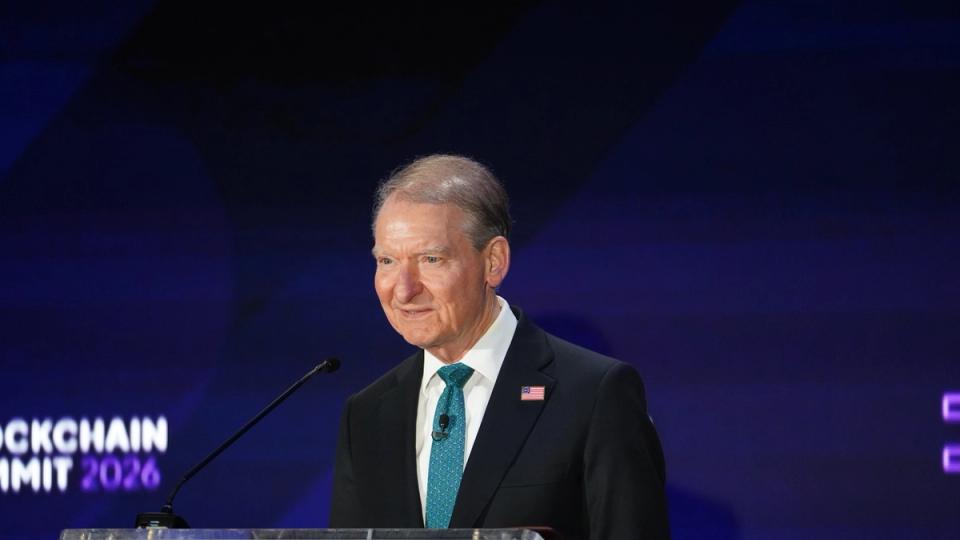
The status of that legislation also remains up in the air. Sen. Cynthia Lummis (R-Wyo.), speaking at the DC Blockchain Summit earlier this week, said she expected a markup to happen in the final weeks of April. The issue of stablecoin dividends could be resolved with an agreement that stablecoin issuers and their partner firms will not describe their products using banking terminology, although she cautioned that she had yet to see any specific language.
The flip side, multiple people told me, is that the Clarity Act could require the SEC to go back to the drawing board on how it defines securities in crypto. But this falls under the category of bridges that can be crossed once reached.
Sen. Tim Scott (RS.C.), the chairman of the Senate Banking Committee, said lawmakers are also close to agreement on issues such as ethics and quorum at the regulatory agencies — some of the outstanding areas of disagreement on the bill.
Downing said he saw an April timeframe as possible to advance market structure legislation. The closer lawmakers get to the end of the year, however, the less likely it is that anything can be passed, he said, pointing to the midterm elections. “But I don’t think it’s impossible.”
Sen. Kirsten Gillibrand (DN.Y.) said on stage at the DC summit that she was “optimistic” that a markup would come soon, which would then lead to the Banking and Agriculture Committee bills being merged.
The combined bill would have to incorporate areas of bipartisan agreement, she said.
“One of the issues that I think is very important that people should be aware of is that the Senate wants an ethics provision,” she said. “I think the House would have had even more support on the Democratic side if they had kept their ethics provisions in their bill. It is very important that members of Congress do not get rich from this industry because they have access to non-public information because they are in positions of power and authority.”
Downing said the market structure bill should address consumer protection and money laundering without being so restrictive that businesses would be afraid to take action.
“Nobody wants bad actors in their space and nobody wants the reputation of bad actors using this as a tool to do bad things,” he said. “… If you bring them [provisions] too narrow, no one will do anything innovative.”
He said he understood why banks might be concerned about the interest rate problems.
“Mutual lenders, community banks are worried about depositors all leaving the market, in which case you’re not doing small farm mortgages in Montana, are you?” he said.
Late Friday, Senators Angela Alsobrooks and Thom Tillis told Politico that they had reached an agreement on the dividend issue, although the details had not been shared with the banking or crypto industry at press time.
Kalshi was just ordered to cease offering most of his prediction markets in the state of Nevada for at least two weeks, pending an April 3 hearing.
The order came after an appeals court refused to grant an administrative motion that could have blocked the state court’s action. Earlier this week, the state of Arizona filed criminal charges against Kalshi, alleging that some of its options and other contracts violate state law.
In Nevada, a judge ruled that Kalshi cannot offer sports, election or entertainment-related event contracts, at least temporarily.
According to the ruling by Judge Jason Woodbury, the record in Nevada’s case against Kalshi so far suggests it offers products defined by state law, making its conduct subject to Nevada gaming regulators.
“The issue of federal preemption in this regard is nuanced and rapidly evolving,” the judge wrote. “Currently, the balance of persuasive legal authority weighs against federal preemption in this context.”
The Arizona action goes further, alleging misdemeanor violations of small bets placed on professional football and college basketball games, upcoming elections and whether bills will become law, and whether public figures will show up to sporting events.
“Arizona law prohibits operating an unlicensed betting business and separately prohibits betting on outright elections,” Arizona Attorney General Kris Mayes’ office said in a news release.
Kalshi co-founder Tarek Mansour called the charges a “total overreach” that “has nothing to do with gambling or the benefits.”
There is a broader growing backlash to prediction markets. Senator Catherine Cortez-Masto, who represents Nevada, wrote a statement saying that prediction markets “flagrantly violate state and tribal laws and regulations.”
“To ensure responsible gaming, casinos, sportsbooks and online gambling sites must follow minimum age requirements, participate in integrity monitoring and support critical consumer protections, like programs that help people with gambling addictions,” she said. “Yet the so-called ‘prediction markets’ have transformed themselves into illegal sportsbooks offering their users illegal sports betting in the last year, encouraged by lax and overly permissive federal regulators like the Commodity Futures Trading Commission (CFTC).
This week
- There are no hearings or public meetings planned (at least regarding crypto).
If you have thoughts or questions about what I’ll be discussing next week or any feedback you’d like to share, feel free to email me at [email protected] or find me on Bluesky @nikhileshde.bsky.social.
You can also join the group conversation on Telegram.
See you next week!


