
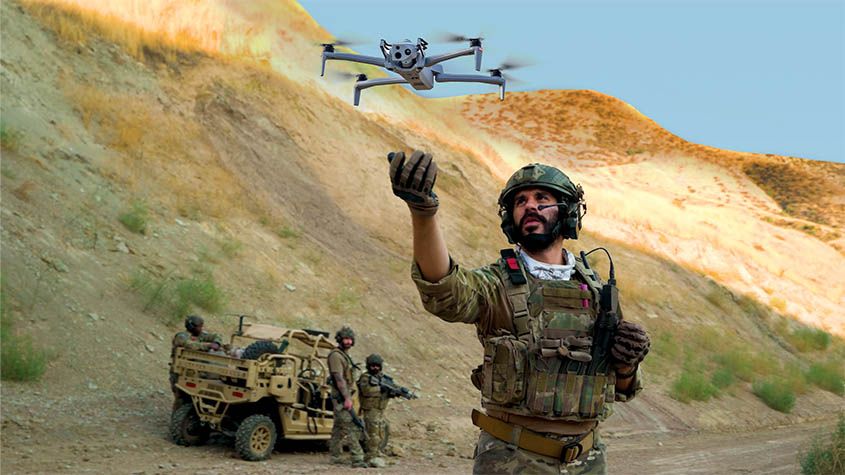
- Pentagon places large order for Skydio X10D drones
- The X10D has been used to identify targets in the Ukraine war
- DJI ban means US government departments must look elsewhere
The Pentagon went from “we’d like to order some drones” to “here’s $52 million” in 72 hours. It’s less time than it takes most government departments to approve a new office coffee machine, but the US Army has just placed the largest single-vendor drone order in US military history: just under 3,000 Skydio X10D drones at around $17,300 (approx £12,900 / AU$24,700) each.
The speed tells you all you need to know about the urgency of this drone operation. Standard Pentagon procurement for contracts like this usually takes months, sometimes years.
Instead, the Army routed this through a commercial contractor vehicle specifically designed to cut red tape, clearly deciding that these drones were needed to reach soldiers yesterday. With U.S. forces currently engaged in conflict in Iran, there are obvious reasons to rush — even if there’s no indication that’s where they’re headed.
The article continues below
In addition to a large drone order, this is a loud statement that DJI, the company that makes virtually every consumer drone worth owning, has been shut out of the US military market entirely.
And it’s not necessarily because Skydio makes better drones – it’s because DJI is Chinese, and in 2026 it’s a huge no-no for the US government.
What kind of drones are they?
The X10D is a so-called “hunter” drone – a flying spotter that finds targets so that other explosive-laden kamikaze drones can destroy them.
If you’ve been following the war in Ukraine, you’ve probably read about this hunter-killer combination. Cheap reconnaissance drones fly overhead looking for tanks, artillery positions or troop concentrations. When they spot a suitable target, they relay the coordinates to FPV racing drones equipped with munitions that finish the job.
It is devastatingly effective, horrifically effective, and has pretty much redefined modern warfare. The US Army just ordered 3,000 of the fighter’s half of that equation.
The X10D itself is smart technology. It navigates using six cameras (three on top, three below) that map terrain in real time, meaning it can fly and return home even when the GPS is jammed.
The multiband radio hops frequencies to maintain connectivity in electromagnetically noisy battlefields. And the sensor package is nothing to be sniffed at: 48 MP telephoto, 50 MP wide-angle, 64 MP narrow camera, not to mention the first thermal system on a small military drone with 640 x 512 resolution. All that comes in a 2.1 kg package that fits into a backpack and launches in 40 seconds.
Analysis: How Skydio lost to DJI, still won
Skydio couldn’t come close to beating DJI in the consumer market. After the release of Skydio 2+, which came with some really impressive autonomous flight technologies, it broke the white flag and abandoned regular customers entirely. DJI’s consumer alternatives were just too good, too cheap and too dominant.
Skydio instead shifted its focus to a much more lucrative market. While DJI was busy selling Minis and Mavics to photographers and hobbyists, Skydio was cozying up to the US government. And in February 2022, that strategy paid off when the Army selected Skydio as the sole supplier for its Short Range Reconnaissance program in a five-year deal worth just under $100 million.
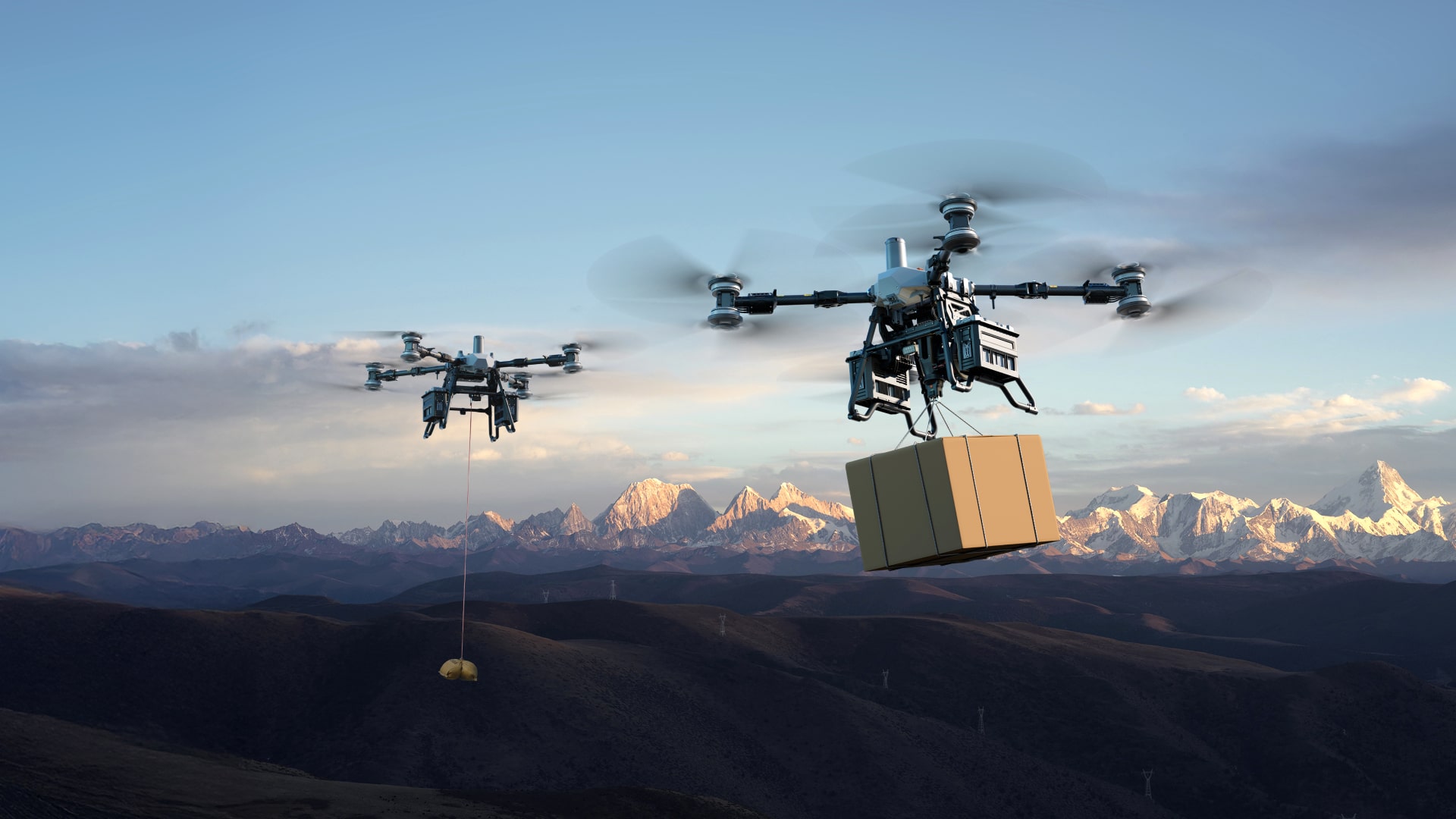
Why Skydio? Here’s the simple reason: The Department of Defense, the FBI, and the Department of Homeland Security have all declared Chinese drones a national security threat.
Whether that’s entirely fair or driven by genuine technical concerns is up for debate, but the practical result is that US government agencies can no longer buy DJI drones, meaning Skydio essentially won by default. It’s like being the only restaurant in town that opens at you don’t have to be the tastiest or the best value – just available.
And Skydio is very accessible. The company’s California factory can churn out drones on an impressive scale: despite each X10D going through 550 quality control points, one can be assembled every nine minutes. Current production runs at over 1,000 units per month, meaning this order for 3,000 drones represents just three months of production.
What happens next is the real question. Spain has already signed an $18.7 million deal with Skydio, Norway’s recipient of its aircraft systems, and you can bet allied nations are following this order very closely.
For DJI, which has dominated the consumer and professional drone markets globally for years, the message couldn’t be clearer: The US military has chosen someone else, and with geopolitical tensions as they are, that decision won’t be reversed anytime soon.
Follow TechRadar on Google News and add us as a preferred source to get our expert news, reviews and opinions in your feeds. Be sure to click the Follow button!
And of course you can too follow TechRadar on TikTok for news, reviews, video unboxings, and get regular updates from us on WhatsApp also.


