
In the growing political moment for securities tokenization, the House Financial Services Committee gathered views on the innovation at a Wednesday hearing, even as the specter of President Donald Trump’s family crypto ties arose more than once.
Lawmakers broadly agreed that tokenized securities generally need the same regulatory railings as traditional securities trading, matching the position of US Securities and Exchange Commission Chairman Paul Atkins, who has said his agency is on the verge of issuing a formal rulemaking proposal to move forward with such crypto policies.
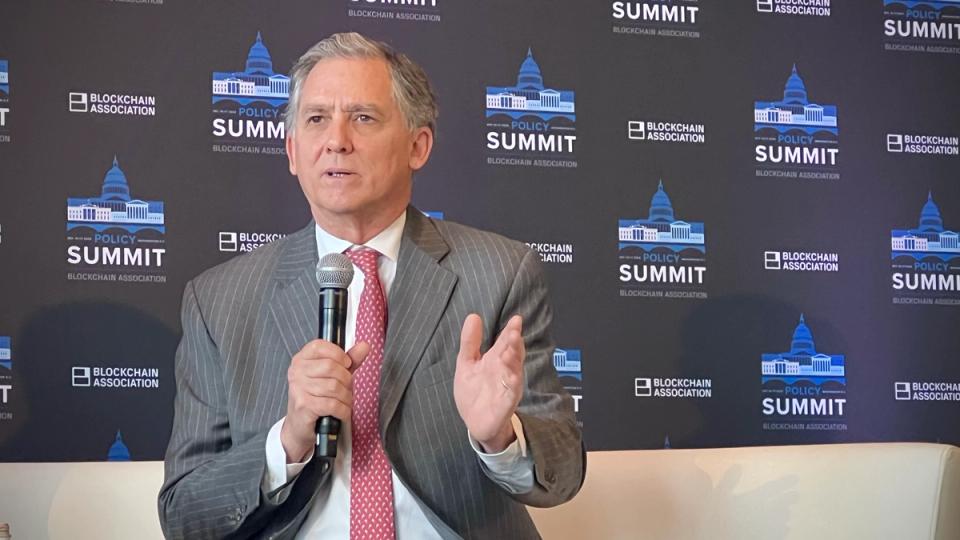
“We are on the cusp of a significant transformation in our financial landscape,” said committee chairman French Hill. But as tokenization emerges, regulatory gaps and risks need to be explored, he said. “Obviously, we will maintain market integrity regardless of the technology we choose.”
Both parties have questions about oversight and how tokenization will interfere with traditional markets, which still need to be answered by regulators and potentially by crypto legislation. Concerns raised by the panels’ Democrats included anonymous wallets that could mask foreign ownership, know-your-customer issues and decentralized finance (DeFi) governance. But the hearing effectively recognized the onset of the technology as an inevitable rather than a theoretical future.
The committee’s ranking Democrat, Rep. Maxine Waters of California, said she is concerned about tokenization moving further toward the gamification of commerce.
“This committee has already examined how trading apps use behavioral design to game investing,” she said. “Tokenization could make these trades faster, always on and with fewer roadblocks.”
However, speed and efficiency are the fundamental advantage of tokenizing shares. Blockchain Association CEO Summer Mersinger offered that non-custodial, non-discretionary DeFi code brings efficiency gains because “you remove a lot of middlemen that add costs to the trade.”
“Regulatory approaches should clearly distinguish between entities that perform intermediate functions and infrastructure that enable user-directed activity, and ensure that obligations are calibrated to the presence of parental authority, control and discretion,” she said in her testimony. Mersinger also called for an “iterative approach” by the SEC to get policy moving quickly on tokenization.
As the Senate tries to finalize the Digital Asset Market Clarity Act that would establish laws to regulate such tokenization, Atkins has said his agency will grant an “innovation exemption” that lets companies test such new arenas as tokenization without immediate registration rings. Even before any of that comes, the crypto industry and the broader financial sector are building tokenization platforms.
“Tokenization is just the next iteration of the technology,” said Ken Bentsen, who heads the Securities Industry and Financial Markets Association. He said new entrants should have the same rules and guardrails as companies currently involved in stock trading.
This week, BlackRock Chairman and CEO Larry Fink argued in his annual shareholder letter that digital assets and tokenization could “refresh the plumbing of the financial system.” News also emerged that investment giant Franklin Templeton secured a tokenization partnership with Ondo Finance and that $2.2 trillion asset manager Invesco had taken over management of Superstate’s $900 million fund of tokenized US Treasury bonds, USTB.
But committee Democrats also criticized the Trump administration’s push on behalf of the crypto sector, which Waters said is paired with “obvious corruption” involving the Trump family’s personal involvement in digital asset companies, which includes a stake in World Liberty Financial Inc., which announced a deal with Securitize last month to tokenize loan proceeds tied to hotel projects.
“The Trump family has made an estimated $1 billion dollars in profits from their crypto ventures,” Waters noted. “When the government officials who approve the regulations also profit from the market they would regulate, the American people rightly ask whose interests really come first.”
“The ties between the Trump family and this industry have unfortunately cast a cloud over the legitimacy of moving forward with this important market structure legislation,” said Salman Banaei, the general counsel at tokenization firm Plume, who had also worked at the SEC and the Commodity Futures Trading Commission.


