
Hyperliquid is decentralized, but geography still matters, as new research from Glassnode shows that traders closer to its infrastructure have a clear speed advantage.
Trades from Tokyo-based users can reach the protocol’s validators in as little as 2 to 3 milliseconds. That’s far better latency than European users, who face delays in excess of 200 milliseconds.
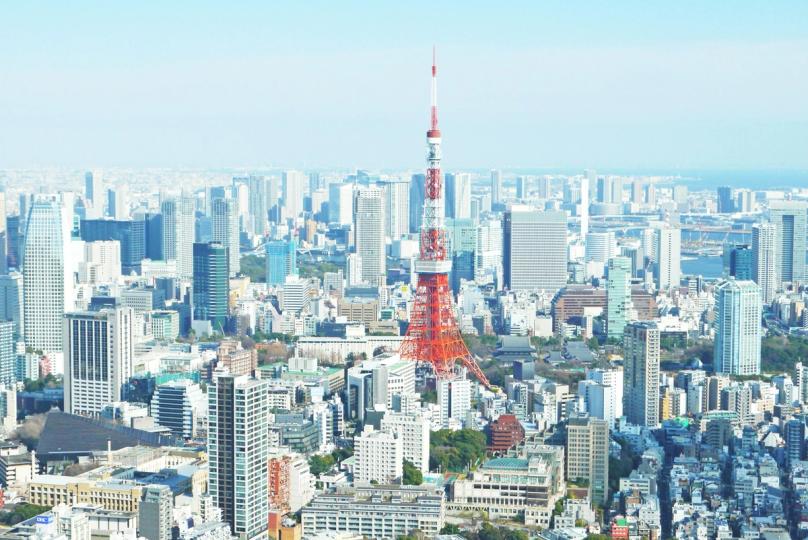
That’s because Hyperliquid’s 24 validators are clustered in Tokyo, deployed across multiple Availability Zones in Amazon Web Services’ ap-northeast-1 region. The API layer routes through AWS CloudFront, but the validators sit in a single Japanese cloud region.
This shows that while decentralized platforms like Hyperliquid retain the core principles of open access, transparency and the absence of centralized oversight to remove control asymmetries, speed and execution asymmetries still exist. So even if the market remains structurally fair and permissionless, traders with better proximity to infrastructure may still have an advantage, highlighting an inherent tension between decentralization and equal participation in practice.
In a timed system, geography determines queue priority. A trading desk in Tokyo can reach the matching layer hundreds of milliseconds ahead of its competitors in Hong Kong, Singapore or the US, ensuring a better position, tighter spreads and a higher probability of filling.
Hyperlatency’s order-to-fill metrics put numbers on the gap. From AWS Tokyo, the median round trip to place and confirm an order is 884 milliseconds, of which approx. 879 milliseconds is server-side processing and only 5 milliseconds is network transit.
From Ashburn, Virginia, the total rises to about 1,079 milliseconds. The edge is about 200 milliseconds on a one-second fill, a margin that combines across an exchange that regularly handles more than $4 billion in daily perpetuals volume.
However, this research is not without its critics. Someone on X pointed out that more complicated order instructions submitted from the Tokyo region can hit a 400ms delay time.
Tokyo’s role as crypto’s infrastructure capital is not new. Centralized exchanges have clustered deployments around the city’s AWS region for years, attracted first by proximity to Asian trade flows and then by a regulatory framework Japan modeled after Mt. Gox’s collapse.
At Token2049 in Singapore last year, crypto executives described Tokyo as the center of gravity for digital asset infrastructure in Asia.
“Japan had no regulation for a long time, remember, that’s where crypto basically happened and then it went super strict and nothing happened for a long time,” Konstantin Richter, CEO of Blockdaemon, told CoinDesk during Token2049. “But people kept chipping away, and now they actually have a regulatory infrastructure that is institutionally scalable and ready to jump.”
Richter said his firm’s clients in Japan are willing to pay for institutional infrastructure.
BitMEX CEO Stephan Lutz put it more directly. “We were in Ireland before … but it became more and more difficult because pretty much everyone except the American players is in the Tokyo data centers,” he said.
The switch boosted liquidity by about 180% in BitMEX’s main contracts and up to 400% in some altcoin markets, gains Lutz attributes to the latency reduction from being in Tokyo, not market-maker recruitment.
AWS Tokyo: cryptos Mahwah
Hyperliquid is not unique in this regard. Binance and KuCoin also run significant infrastructure on AWS ap-northeast-1.
An AWS outage in April 2025 caused service degradation across multiple platforms, underscoring how much of crypto’s plumbing runs through a single cloud region and Amazon itself (data shows that around 36% of all Ethereum nodes are powered by AWS).
In traditional finance, exchanges neutralize this kind of geographic advantage.
The NYSE uses optical backscatter reflectometry in its Mahwah data center to equalize cable lengths to the nanosecond.
Deutsche Börse normalizes cross-connections to within 2.5 nanoseconds. IEX routes each order through a 350 microsecond speed bump, 38 miles of coiled fiber, to eliminate proximity advantages.
Europe’s MiFID II mandates clock synchronization to 100 microseconds and externally audited cable length equalization. These safeguards took decades to develop. There is no equivalent in decentralized markets.
For now, crypto traders seem comfortable with that asymmetry. Hyperliquid has experienced sustained growth despite its centralized infrastructure concentration. But as processing times compress and institutional capital enters DeFi, the dynamic is clear: speed determines position, and position determines liquidity.
The pending arms race that reshaped Wall Street arrives in decentralized finance. It runs through Tokyo.


