
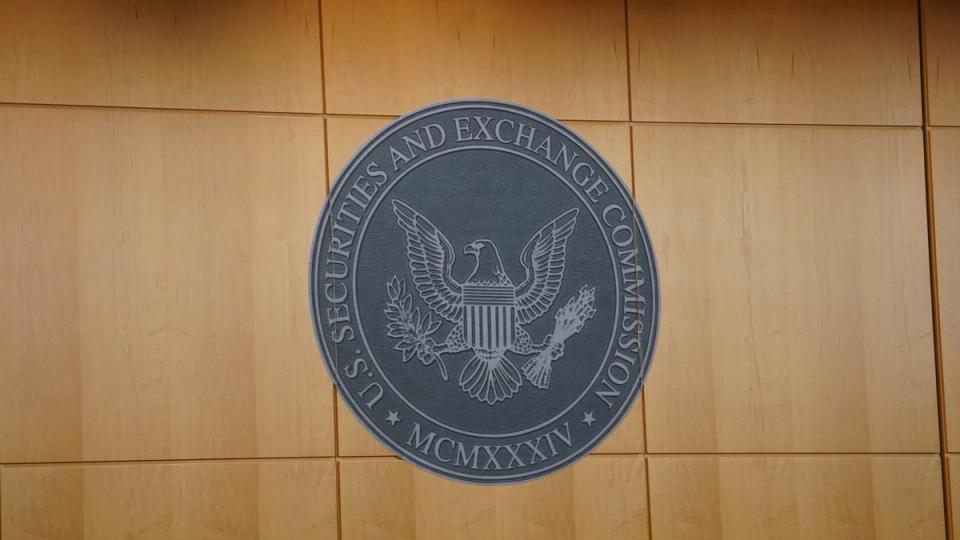
On Tuesday, March 19, the SEC issued joint guidance with the CFTC to “finally” provide clarity on how securities laws apply to digital assets. On many issues, including staking and meme coins, the SEC’s new guidance is a welcome development and a marked improvement from the Gensler days. It also rightly acknowledges that the agency’s “regulation by enforcement” campaign under Chairman Gensler had confused compliance obligations and stifled industry. But in important ways, the guidance stops short of the full course correction the crypto industry needs.
The biggest shortcoming is the SEC’s articulation of Howey test for “investment contract” securities. Everyone agrees that most digital assets are not in themselves investment contracts. Even Gensler SEC admitted (eventually) as much, and the SEC’s new guidance reiterates this position. The key question, however, is when a digital asset is sold as part of an investment contract so that the sale becomes subject to securities legislation.
The statute provides the answer. As a matter of text, history and common sense, an “investment contract” means a contract – an express or tacit agreement between issuer and investor, according to which the issuer will deliver current profits in return for the buyer’s investment. Most digital assets are not investment contracts because they are not contracts. A digital asset can be subject of an investment contract (like any other asset), but it can still be sold separately from the investment contract without implicating securities laws. In the cases brought by Gensler, crypto companies vigorously defended the correct interpretation of the law.
Yet the SEC’s new guidance is silent on whether an investment contract requires contractual obligations. Instead, it says that an investment contract travels with a digital asset (at least temporarily) when “facts and circumstances” show that the digital asset developer “induces[ed] an investment of money in a joint venture with representations or promises to undertake significant management efforts,” leading buyers to “reasonably expect to make profits.” It does not clearly confirm a clean break from the SEC’s previous view Howey avoids “contract law” and requires “a flexible application of the economic reality surrounding the offer, the sale and the whole arrangement, which may include a series of promises, undertakings and corresponding expectations.”
Gensler the SEC’s know-it-when-I-see-it approach Howey was deeply problematic. That allowed the agency to piece together an “investment contract” from various public statements by digital asset developers — tweets, white papers and other marketing materials — even without concrete promises from the issuers. And it failed to distinguish securities from collectibles like Beanie Babies and trading cards, whose value depends heavily on their manufacturer’s marketing and attempts to create scarcity. The SEC missed an important opportunity to clearly reject this approach and restore an important statutory dividing line between assets and securities – a contract.
The SEC can still address this issue, but to do so it must further clarify how the agency intends to apply Howey going forward – and finally make a clean break with Gensler’s overall interpretation of the securities laws. For example, Gensler the SEC repeatedly cited various “widely distributed promotional statements” as a basis for pushing a digital asset into the realm of investment contracts. The SEC’s new guidance puts some restraints on this approach by requiring that a developer’s representations or promises be “explicit and unequivocal,” that they “contain sufficient detail” and must occur before the purchase of the digital asset. But even the improved approach leaves too much room for interpretation. It could be used expansively by private plaintiffs, the courts, or a future SEC. Instead of continuing down the path Gensler took, the SEC should make clear that mere public statements affecting value are insufficient, and that promises and representations must be made in connection with the specific sale at hand — not chained together from white papers or social media that many buyers likely never considered.
The SEC should also clarify its approach to trading in the secondary market. Thankfully, the agency now recognizes that digital assets are not investment contracts “in perpetuity” just because they were once “subject to” investment contracts. But the agency also says that digital assets remain “subject” to investment contracts traded on secondary markets (such as exchanges) as long as buyers “reasonably expect” the issuers’ “representations and promises to remain associated” with the asset. The SEC says little about how to assess these reasonable expectations, providing only two “non-exclusive” examples of when an investment contract is “separated” from a digital asset. And it says nothing about whether a secondary market buyer has to have a contractual relationship with the token issuer. That leaves it unclear whether the SEC has truly moved on from the Gensler-era view that investment contracts “travel with” or are “embodied” by crypto-tokens.
Instead of these mixed messages, the SEC should impose meaningful limitations on the application of securities laws to secondary market transactions by adopting the approach of Judge Analisa Torres in Ripple. Judge Torres recognized that it is unreasonable to infer an investment contract in the context of “blind bid-ask” transactions – that is, transactions where the counterparties do not know each other’s identities (as is common in secondary market trading). Because buyers have no idea whether their money is going to a token’s issuer or to an unknown third party, they cannot reasonably expect the seller to use the buyers’ money to generate and deliver profits. The SEC should expressly support Judge Torres’ analysis.
These are not academic quibbles. The current SEC may not read or enforce its new guidance in a way that threatens the viability of the crypto industry in the United States. But by failing to clearly repudiate the excesses of the Gensler era, the SEC’s new guidance leaves the industry exposed to a future SEC that could exploit ambiguities in the SEC’s current guidance to resume regulation by enforcement. Private plaintiffs could attempt to do the same in lawsuits against key industry players (such as the leading stock exchanges). And in the meantime, the SEC’s interpretations can distort the securities law baseline during market structure litigation negotiations.
The SEC invited comments on its guidance, and the industry should commit. The SEC should get credit where credit is due. But industry should not hesitate to highlight the persistent flaws and ambiguities in the agency’s approach and advocate for clear, meaningful and permanent limitations to ensure regulatory clarity and stability. Simply giving the legal architecture of the last enforcement campaign a facelift is not enough.


