They urged immediate steps to protect civilians, facilitate humanitarian access and enable IDPs to return safely and with dignity.
“South Sudan is at a critical juncture,” the expert group said. “All parties must immediately cease hostilities and engage in meaningful dialogue to prevent further escalation of conflict and protect civilians.”
Jonglei state at the epicenter
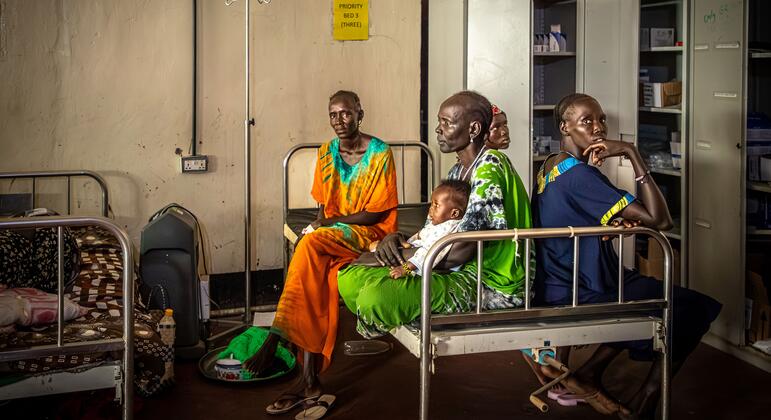
Over 267,000 people have reportedly been displaced in Jonglei state alone by 2026.
Women represent the majority of the displaced, while children under the age of 18 make up a significant proportion.
Displaced populations face acute food insecurity, lack of shelter and limited access to essential services. Conflict and climate shocks have also disrupted education, affecting over 300 schools and around 300,000 students.
“The reported destruction of water sources as well as the looting and burning of homes, hospitals, schools and places of worship are particularly alarming. If confirmed, they would constitute serious violations of international humanitarian law and may amount to war crimes,” the experts said.
Independent rights experts receive no remuneration for their work and are not employed by the UN.
New Guidelines for Opioid Treatment and Support
The World Health Organization, WHO, announced the update to guidelines for the treatment of opioid dependence and community management of opioid overdose.
Opioids continue to account for the largest proportion of drug-related fatal overdoses. With around 600,000 deaths attributed to drug use globally
about 450,000 are due to opioid use, according to the World Health Organization.
Affordable, ethical, high-quality and evidence-based support and care is essential for people with opioid dependence or at risk of opioid overdose, WHO said, as fewer than 10 percent of the 64 million people worldwide with substance use disorders currently receive treatment.
Continued use of methadone is recommended
The WHO issued updated advice on the treatment of opioid dependence and reaffirmed that medications such as methadone and oral buprenorphine should continue to be offered by trained health professionals as part of proper medical care.
It also now includes a new option: long-acting injectable buprenorphine, which it recommends with some caution while more evidence is compiled.
The full guidance document with evidence, rationale, practical advice and research gaps is being finalized and is expected later in 2026 or early 2027.
The humanitarian situation in DR Congo continues to deteriorate
The humanitarian situation in the eastern provinces of Ituri, North Kivu and South Kivu continues to deteriorate due to the ongoing violence, UN spokesman Stéphane Dujarric said on Thursday.
In Ituri province alone, UN humanitarians reported that at least 30 people were killed Wednesday in armed attacks in Bafwakoa in Mambasa territory, bringing the number of civilians killed there to more than 100 since March 11 and the number of people abducted in the same period to 390.
The violence has sparked new waves of displacement, adding to the more than 50,000 people already displaced in the territory, and caused nine health facilities in Mambasa territory to suspend operations since March 11.
New waves of displacement
In South Kivu province, UN agencies report that at least 20 civilians have been killed and around ten others injured in clashes since March 23 in Uvira, Kalehe and Mwenga.
In neighboring North Kivu, fighting in Masisi territory displaced around 6,000 people between March 28 and 29, adding to the more than 180,000 people already displaced there.
Despite the uncertainty, UN partners continue to provide assistance. However, the humanitarian response plan for the DRC remains critically underfunded. The $1.4 billion humanitarian appeal is only 30 percent funded, with just over $421 million received so far.