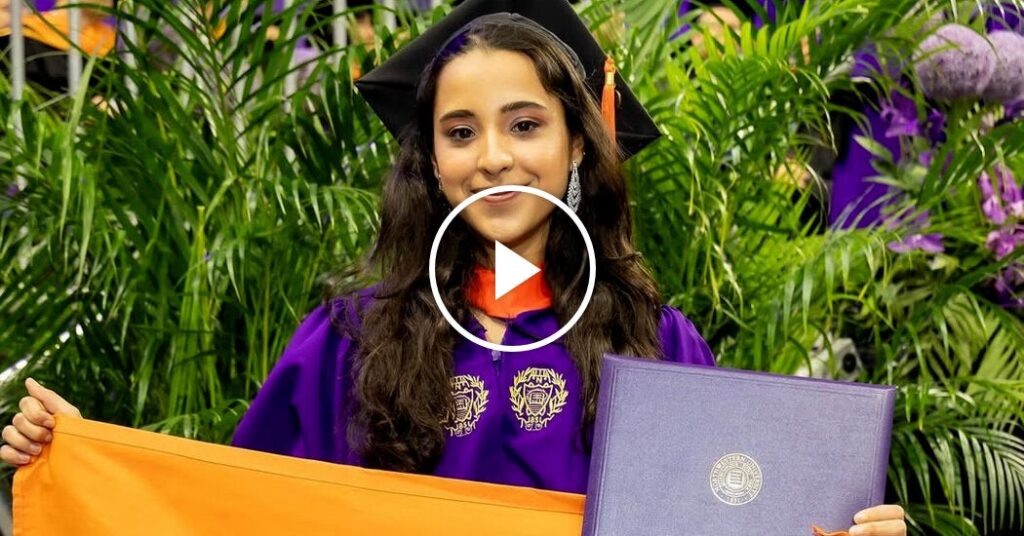
These highly educated, highly skilled foreign workers have documented the challenges of trying to build a career in the U.S. “If I don’t find a job, I have to leave the country.” “I sent out 907 applications.” “Did I ever really relax in America?” They need an H-1B visa, which is granted through a lottery system that allows U.S. companies to hire highly skilled international professionals for up to six years in industries such as technology and medicine. But the Trump administration has made changes to the program that require companies to pay a high fee and enforce new rules that prioritize higher-paid foreign workers in an effort to make more jobs available to Americans. This has forced some foreigners to rethink their career plans. “I think the United States is still the gold standard.” Wen-Hsing Huang came to the United States from Taiwan in 2022 for the tech scene and was hired by Amazon on an H-1B visa. “I want to use my talents to change the world, and I think the United States was the best platform to do that.” Ananya Joshi came from India to attend a master’s program in Chicago in 2022. “So it was actually my father’s dream that I had inherited because my father could not go because of his financial situation.” Haina, a Chinese national, fell in love with the United States while studying in New York. She got her H-1B in 2022. “I remember there were a lot of companies they would be able to sponsor.” Haina said she has seen a shift recently where it has become harder to find companies that sponsor H-1B visas. “This time when I applied for a job I didn’t realize it could be a deal breaker. I just had my second interview in 2026 and it was a pretty short call.” (Recruiter) “I do not believe we are qualified or able to sponsor this role at this time.” “They don’t even really get to know if I’m qualified, if I’m experienced or anything. The decision is already made at that point.” “Please make sure the company you are about to work for has experience handling international recruitment.” Joshi said a startup she interned with during high school reneged on their promise to sponsor her H-1B visa. “Ask for everything in writing. And then there were jobs, there were contract jobs. They would just turn me away. They would only need people with a green card or US citizenship.” Even with an H-1B and a six-figure salary, Huang said he felt himself growing anxious as tech layoffs accelerated and Trump’s immigration policies continued to change. “I woke up every morning with this knot in my stomach because my whole life depended on the politics I couldn’t control. The United States doesn’t seem very welcoming to immigrants who contribute to this country.” “The signals are, like, pretty clear at this point. They’re going to make this H-1B, is like, risky and also, like, more difficult.” Hello everyone.” Despite that, Haina says she is determined to keep looking for a job until she is forced to leave the country. “The pressure of where I want to be next in my career or as my life. I would like to lose the ability to enjoy my life or just be happy.” “So I had to leave the US I of course expanded my search beyond the US. Found a job in Germany.” Joshi packed up his life and started a new role at a European biotech company in January. “I think I left at a good time because there would have been more stress. I would have been stuck in a loop.” “It’s an endless cycle of anxiety.” After quitting his job at Amazon, Huang is now back in Taiwan and planning to start his own company. “Betting on building an AI company that gives me full control over my time, location and future. Staying in the US is no longer the only way to achieve my American dream.”
Educated foreign workers are considering leaving the United States