
ISLAMABAD:
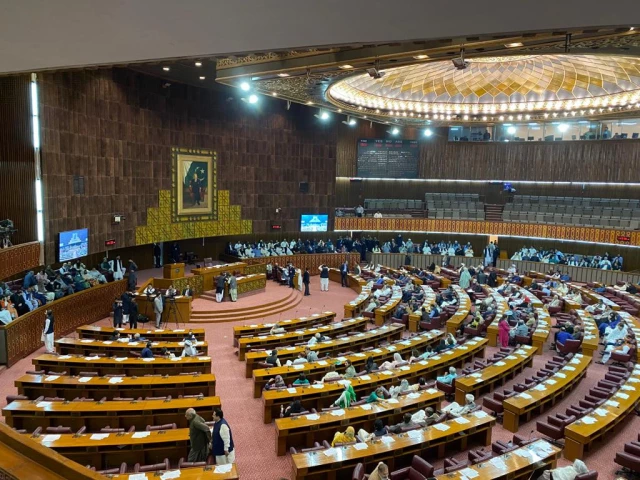
The National Assembly on Tuesday witnessed a second straight day of heated debate over the rise in oil prices amid a war in the Gulf, with the Treasury and opposition members exchanging sharp criticism over economic policy and governance.
The session, presided over by speaker Sardar Ayaz Sadiq, began with prayers for those who were martyred in terror incidents in Bannu and other areas and for the father of MNA Ejaz Jakhrani. Lawmakers then held detailed discussions on energy, the economy, foreign affairs and the internal security situation.
PPP MNA Naveed Qamar has made a notice regarding changes in net metering policy and imposition of tax on solar panels. He questioned why green energy was discouraged at a time when electricity remained expensive and largely dependent on polluting fuels.
Responding to the concerns, Defense Minister Khawaja Asif said the government is maintaining a “delicate balance” in the energy sector.
He said long-standing agreements had tied the government’s hands, making it difficult to walk away from commitments such as capacity payments. He added that the government remained bound by commitments made over the past 35 years, although there were efforts to find some flexibility through recent negotiations.
Minister of Energy Shaza Fatima Khawaja told Parliament that Pakistan was moving towards clean energy. She said reliance on imported coal was reduced in favor of local coal, while the net metering policy continued to benefit consumers and solar power would remain encouraged.
During the debate on oil prices, PPP’s Sharmila Faruqui criticized the government’s policy as unclear and said repeated price hikes were seriously affecting the public. She noted that heavy taxation of petrol and rising diesel prices were driving inflation.
MNA Noor Alam Khan also criticized the hike, saying it puts an unbearable burden on citizens and makes it difficult for farmers to afford wheat harvest. He also took a strong stance on relations with Afghanistan and the prevailing security situation.
Engineer Hameed Hussain raised the issues faced by the victims of the Tirah operation, prompting the speaker to seek a report from the relevant authorities.
Opposition MNA Junaid Akbar Khan questioned why new oil prices were used when stocks bought at older prices were still available. He also criticized the lifestyle of the ruling elite and alleged misuse of public funds, including claims of luxury spending, and argued that ordinary voters were being ignored in favor of those who controlled election results.
MNA Aliya Kamran highlighted a revenue shortfall of Rs 430 billion. in the previous financial year and stated that oil price increases were used to bridge the gap.
Responding on behalf of the government, Foreign Minister Bilal Azhar Kayani said maintaining the primary balance was a key objective. He stated that the oil tax had been reduced by up to Rs 80, while the tax on diesel had been brought down to zero.
He added that digital invoicing had been introduced in sectors such as cement, tobacco and sugar and efforts were being made to widen the tax net. Despite financial challenges, he said, the government had tried to reduce the burden on the public wherever possible.
MNA Atif Khan said the opposition was not given sufficient opportunity to speak and urged the leadership to adopt austerity measures, suggesting that senior officials should use commercial flights until fuel prices were reduced.
PPP MNA Mirza Ikhtiar Baig also criticized the government, saying that sudden increases in oil prices had benefited businesses, while heavy taxation had fueled inflation. He maintained that while adjustments in line with global prices were understandable, placing an excessive burden on the public was not justified.
National Government
Opposition leader Mahmood Khan Achakzai called for reducing political tensions and building national consensus. He called for an end to frequent parliamentary recesses and stressed the need to give all members the opportunity to speak to strengthen democratic processes.
He said that the current system had effectively collapsed and that all political leadership must come together to form a national government. He also warned that any attempt at “minus PTI founder” policy would face resistance.
He highlighted regional challenges and stressed the importance of improving relations with neighboring countries, including Afghanistan, and called for a balanced relationship between political and military leadership. He said that only collective wisdom could steer the country out of crisis.
Fly to Punjab CM
Opposition members questioned the reported purchase of an aircraft worth Rs 11 billion for the Punjab Chief Minister, calling it indefensible in the current economic climate.
MNA Zain Qureshi pointed out that the Khyber Pakhtunkhwa Chief Minister did not have an official plane and argued that such expenditure in other provinces added to public distress. He demanded that the government reduce its spending and secure public relief in negotiations with the IMF.
In response, Khawaja Asif said it was inappropriate to target a single person, noting that chief ministers of all four provinces had access to official aircraft. He clarified that the Prime Minister had not bought a new plane but had upgraded an existing one.


