According to the United Nations World Health Organization (WHO) joint report with the European Union, 74% of the countries in the bloc use AI tools for medical imaging, disease detection and to aid clinical decision-making.
The survey also found that 63 percent of EU countries offer a chatbot service to patients, as part of health systems’ efforts to use AI safely, fairly and responsibly, the UN agency said.
Legal and ethical responsibilities
As AI technology becomes more deeply embedded in clinical settings, the WHO emphasized how important it is that healthcare professionals have the skills and knowledge to use these technologies safely and effectively to maintain high standards of patient care.
The development comes as the EU prepares to implement the world’s first legal framework specifically regulating AI. The WHO-backed report stresses the need for wider consultation with patients and the public “to strengthen confidence” in AI.
But without meaningful public input, the UN agency warns that AI-supported systems “may face resistance or rejection”, potentially worsening the care people receive.
UN welcomes humanitarian access agreement in DR Congo
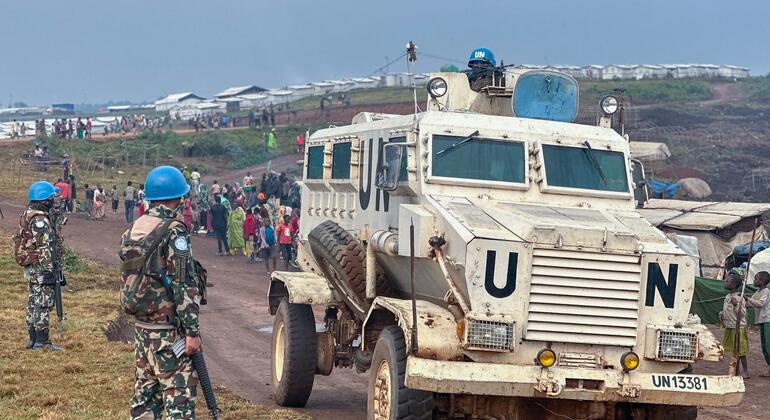
The United Nations peacekeeping mission in the Democratic Republic of Congo (MONUSCO) has welcomed a new agreement aimed at easing the flow of aid to conflict-affected regions.
Following negotiations in Montreux, Switzerland, the Congolese government and AFC/M23, both prominent armed groups operating in the eastern part of the country, signed a protocol on humanitarian access and legal protection.
MONUSCO described the signing as an “important step towards rapid, secure, sustained and unimpeded humanitarian access.”
‘Huge burden’ on civilians
This is essential to ensure that life-saving aid reaches civilians who continue to bear an “enormous burden” due to the ongoing violence.
MONUSCO spokesman Ndeye Khady Lo said Pakinomist that it was important for all combatants “to continue their engagement for the benefit of the civilian population of eastern DRC.”
A separate memorandum was also signed to operationalize the Enhanced Joint Verification Mechanism Plus, a move aimed at strengthening on-the-spot monitoring. However, MONUSCO warned that for these mechanisms to remain “credible, secure and effective”, specific security conditions must be maintained.
UN experts warn of torture and deaths in the Belarusian penal colony
Independent UN human rights experts on Monday raised serious concerns over reports of torture, suicide attempts and deaths at the Navapolatsk penal colony in Belarus.
The experts highlighted the case of journalist and blogger Ihar Losik, who was reportedly held in long-term solitary confinement and denied contact with his family or legal advisers.
According to experts appointed by the Human Rights Council, Mr. Losik attempted suicide twice in custody; but instead of receiving medical attention, he was reportedly placed in disciplinary isolation.
“Punishing prisoners for attempted suicide instead of ensuring urgent psychological and medical treatment is deeply disturbing,” the experts said.
Serious concerns
They warned that such practices, if confirmed, “could amount to torture and ill-treatment and, under certain circumstances, could result in enforced disappearance.”
The warning also described the death in 2023 of an elderly prisoner who was allegedly held in solitary confinement without adequate health care. The experts stressed that deaths in custody due to allegations of denial of care raise “the most serious concerns under international law.”
The experts calling for an urgent investigation are not UN employees and do not receive remuneration for their work. They have called on the Belarusian authorities to ensure humane conditions in the future and to protect the inmates from reprisals.
Children bear the heaviest burden of war in Ukraine
With the war now in its fifth year, “children in Ukraine continue to bear the heaviest burden of this war,” said the top UN official advocating for children caught in armed conflict, Vanessa Frazier.
Concluding a five-day mission to Ukraine, where she sought to strengthen protections for war-affected children, Special Representative Frazier warned against the continued attacks that kill and injure children, adding that “their most basic rights are being violated daily.”
In addition to killing and maiming, attacks on civilian infrastructure have also destroyed schools, hospitals, water and heating systems, affecting access to the essential services that children depend on for their well-being and development.
Empowerment for peace
“I have heard directly from children speaking up for their right to education, their longing for peace and to live their childhood without fear,” she said.
Through Prove it matters campaign, which aims for children to speak up for themselves, the UN is “also the platform for the voices of Ukrainian children and others affected by conflict to be heard by decision-makers globally,” Frazier said.
In Ukraine, children from around 1,800 schools have written more than 6,500 messages of peace on origami pigeons as part of the global initiative.