
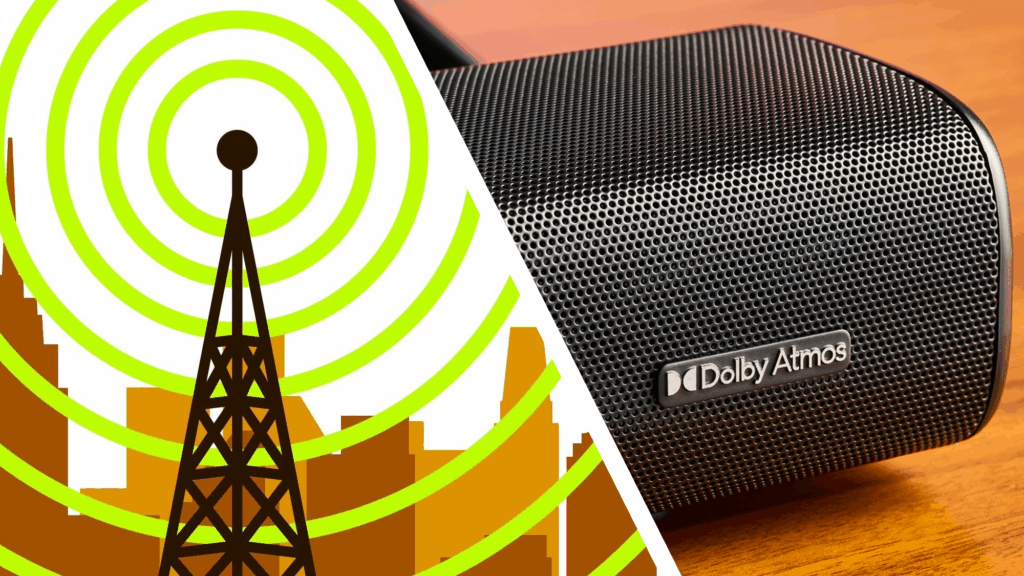
- Dolby Atmos audio will be broadcast freely wirelessly for the first time
- A Mexican TV station will be the first to offer the technology
- It will use ATSC 1.0 instead of 3.0 / NextGen TV
Something exciting is happening in Mexico for home cinema fans. Dolby Laboratories and broadcaster TV Azteca have teamed up to bring Dolby Atmos to free-to-view TV — not streaming — and they do it over the widely available ATSC 1.0 standard.
That’s important because even though the current standard in the US and Mexico for broadcasting 4K TV is NextGen TV, aka ATSC 3.0, support for version 3.0 is still quite patchy.
ATSC 1.0 tops out at 1080p HD for visual resolution, but it’s been around since 1996, so it’s much more widely supported than the newer version — and ATSC 3.0 devices are backward compatible. This means that Dolby Atmos over ATSC 1.0 should be available to many people in the future, assuming it takes off.
The article continues below
So far, this project is only taking place in Mexico, but it raises some interesting possibilities elsewhere – and it suggests that there is still plenty of life in the free broadcast model, even in the age of streaming subscriptions.
What is Dolby Atmos doing over ATSC?
According to Pankaj Kedia, vice president of the Americas, commercial partnerships with Dolby Laboratories will be particularly attractive for sporting events. “Imagine watching a match from your living room and hearing where every cheer in the stands is coming from, the sound of the ball and the voice of the commentator moving around you. This is what Dolby Atmos makes possible today in Mexico.”
It’s obviously nothing new for sports if you want a more premium cable or streaming service, but a lot of people haven’t had access to those. Although I’m not 100% sure I want the comment “moving around” me…
TV Azteca’s chief technical officer Pedro Manuel Carmona Ortiz says the collaboration is a “technological milestone… We are partnering with Dolby to demonstrate that innovation in audio can transform free-to-air television.”
This innovation could also be used by broadcasters in other territories. ATSC 1.0 is widely used in the United States, Canada and Mexico, and its intended replacement with ATSC 3.0 has been pushed back several times.
Current proposals in the US suggest delaying ATSC 1.0 from 2028 to 2030, but they are based on broadcasters doing it voluntarily. Earlier this year, America’s Public Broadcasting Stations (APTS) and PBS wrote to the FCC asking the regulator not to set a firm date for ending ATSC 1.0 broadcasts; other broadcasters are urging the FCC to do just that to increase adoption of ATSC 3.0.
On top of that, ATSC 3.0 is still hit and miss in even the best TVs. LG actually stopped including ATSC 3.0, while Samsung has also stopped (previously only including them in limited models).
Improving a 30-year-old broadcasting standard may seem odd when most of the free-to-view hype has focused on streaming rather than broadcast TV thanks to the fast-growing free-to-air TV services from the likes of Roku, Google TV and, in the UK, Freely.
But internet speeds and service have never reached the reliability of over-the-air broadcasts in many areas, so having an immersive audio upgrade delivered regardless of your connectivity options is a win-win.
The best soundbars for all budgets

Follow TechRadar on Google News and add us as a preferred source to get our expert news, reviews and opinions in your feeds.


