NEWYou can now listen to Pakinomist articles!
IN Driver’s Eye included James Hinchcliffesix o’clock INDYCAR the winner will put you in the mind of a racer as you break down the nuts and bolts of the sport for fans.
Still riding on the joy from a great INDYCAR trip to the west coast last weekend.
The Acura Grand Prix of Long Beach delivered perfect weather, plenty of action and more fans than I can ever remember seeing at the 1,968-mile, 11-turn street course venue. It had a great atmosphere that makes me wish we could go back and race there again this week, which is a familiar feeling when I leave Long Beach.
However, there was another familiar feeling as they left the most recent INDYCAR race — and one that certainly hasn’t left the drivers feeling warm and fuzzy inside. But that has left them with two choices as they try to solve the biggest predicament in the sport this season…
HOW DOES SOMEONE STOP ALEX PALOU?!
Alex Palou after winning his first Long Beach race. (Photo by Brandon Badraoui/Lumen via Getty Images)
You guessed it: Alex Palou and the No. 10 Chip Ganassi Racing team picked up another win and added to the list of tracks in their W column. And they grabbed their third win of the season with their trademark combination of dazzling speed and perfect execution, once again.
At this point, it’s really hard to think of another driver who has maintained such a level of dominance over this elite competition. It’s not just the wins; so is the consistency (but more on that later!).
I remember in the early 2010s Will Power would be good for four to six wins a season and every time I thought, “Man, he got another one!” When he was out in front it was so hard to beat him and it hurt to lose to him so often. But mixed in with the dominant wins were tough days at the office, so the title was still an elusive proposition.
Palou and his team just don’t have those days.
At Long Beach, pole sitter Felix Rosenqvist had the lead in qualifying and the first two-thirds of the 90-lap race. However, during a pit stop under a full track caution, Palou & Co. capitalized and came out ahead by less than a car length. The stop for Rosenqvist and his No. 60 Meyer Shank Racing crew was marginally slower, no massive mistakes, but it was enough to make the difference.
For the first pit stop of the race, Palou and Rosenqvist came together and it was an even battle between the No. 10 crew and the No. 60 crew. And in that case, the MSR team made it and Rosenqvist came out ahead by about 1.5 seconds.
But at the second stop on lap 59, a delay of one second in the grand scheme of a nearly two-hour race was the difference.
When one driver is so thoroughly dominant for so long, one of two things happens to the rest of the competitors.
The first choice is to accept the inevitable. You end up thinking, “They really are unbeatable. There’s nothing I can do. I’m racing for second place.”
When you think like that, he already beat you. It becomes a self-fulfilling prophecy. If you see him in your mirror, you assume he’s walking by. If you pit with him behind you, you expect him to go ahead. And when that’s your attitude, that’s exactly what happens.
The other choice is to get mad.
Drivers hate losing as much as they love winning. Use the feeling of getting beat up as fuel to do more, push further, train harder. Study the data. Review the video of the onboards to find one small thing you can do better. Whatever you have to do to beat the guy.
But it can’t just be the driver. After all, this is a team sport and you need to motivate your entire team to embrace the anger and frustration of losing to get the best out of themselves. Get so mad about losing you refuse to let him win.
It’s certainly easier said than done, but it’s much more likely that the competition will improve than that Palou will slow down anytime soon.
The trick is not to spiral. Getting mad should fuel what you do off the trail, but on the trail you need to stay cool and calm.
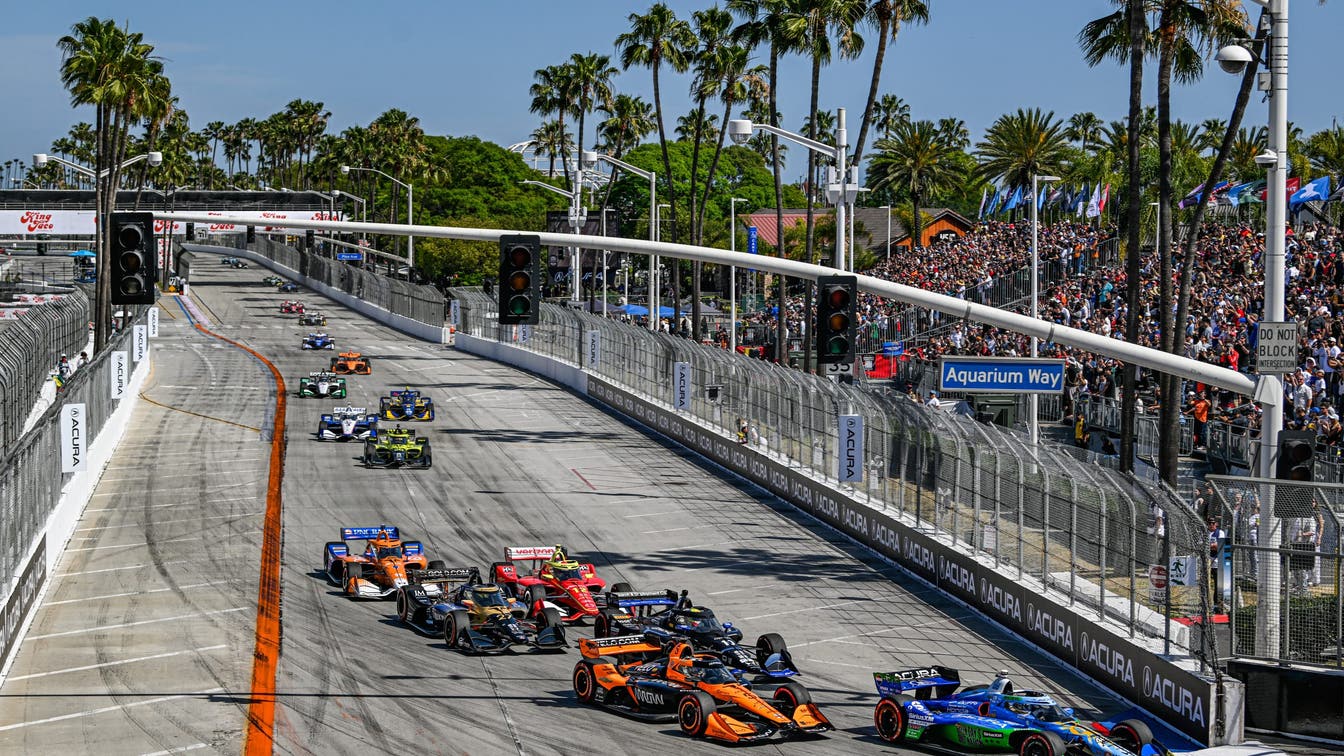
Felix Rosenqvist leads the start of the 2026 Grand Prix Of Long Beach. (Photo by Brandon Badraoui/Lumen via Getty Images)
In these situations, when you push yourself harder than ever before, if the results not starts to fall your way, the frustration can get to the point where it lingers in your head as you drive, which can lead to you slowing down and making mistakes. It’s a fine balance and so hard to do.
So how does anyone beat Palou? Be perfect. That’s all it takes. The confidence and momentum the No. 10 team has right now can’t be topped any other way.
Palou and his crew can be beaten in direct combat. Kyle Kirkwood proved that at the Arlington street circuit in Texas, but it must be on a day where not a single mistake is made.
Drivers used to be able to have a small bubble on the track or in the pit and still maybe take the win. But Palou and CGR have raised the bar so high that overcoming a small misstep now may be prohibitive.
SOUNDS LIKE AN INDYCAR EXPERT
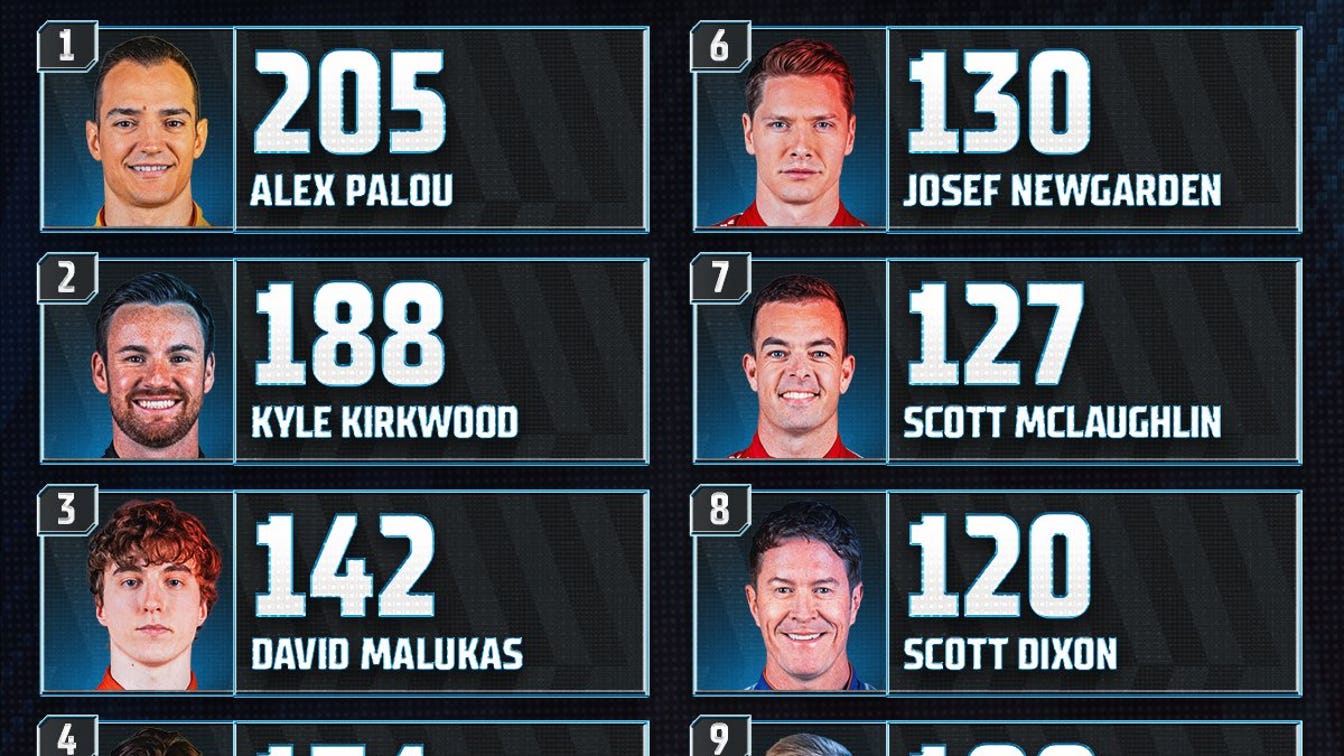
Let’s dive into the championship standings, how points are earned, and how they can be used to try and catch Palou – if you can’t beat him outright. Always remember: Every point counts.
There is a famous case that illustrates this from the end of the 2015 season.
Scott Dixon – now in his 25th season with Chip Ganassi Racing – was in a title battle with Juan Pablo Montoya, and the race at Iowa Speedway was a defining moment. Montoya crashed out early in the race and Dixon saw a chance to close in on the title. But he hit mechanical problems in the pit lane and it looked like his day was over.
But points could be saved.
So instead of giving up, Dixon’s team worked on his car, dropping dozens of laps. Eventually he got back on track and if someone else wrecked or had a problem, he and his team could pick up a single position.
Sure enough, another driver crashed out, so Dixon moved up a spot on the field. He finished 18th – 37 laps behind the driver and dead last among cars still running at the finish – but earned one more point than he and his team would have had they parked the car when trouble hit.
Fast forward to the final race of the year and Dixon and Montoya were tied for points. But Dixon was awarded the title on a tiebreaker – who had more wins – and the single point made the difference, giving the New Zealand driver his fourth (of six total) INDYCAR titles.
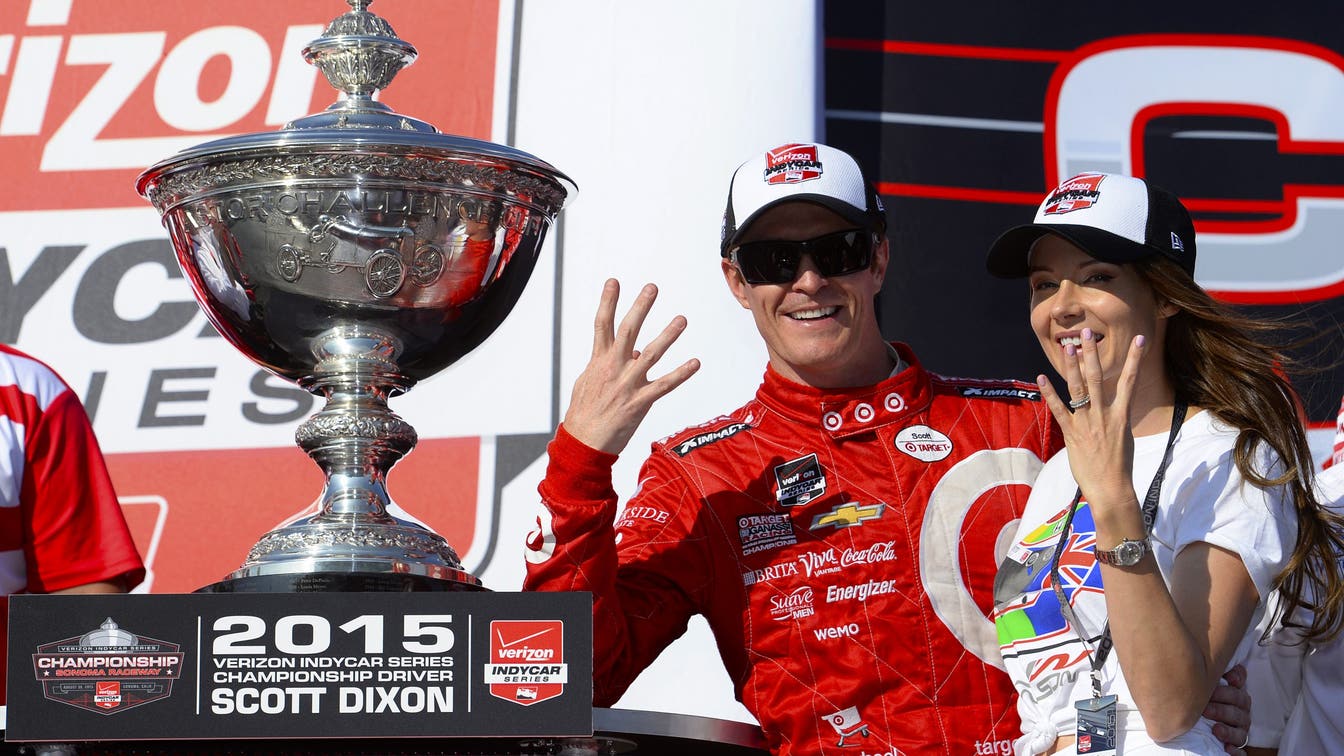
Scott Dixon with his wife, Emma, after winning the 2015 INDYCAR championship. (Photo by Robert Laberge/Getty Images)
Now, back to Palou and try to beat him on the track or catch him in the championship. As I’ve said, the biggest key to his title run is consistency.
Of course you need speed to be a champion. But if you mix speed with a lot of mistakes and crashes, you won’t be in the title conversation in the final race.
Put another way, it’s better to finish fourth than to crash trying to pass a guy for the last podium spot and end up with a DNF (did not finish). On a day when your car isn’t fast enough for a top-5 finish, settle for eighth place and collect the points.
One of the important metrics we love to look at is: Who has best worst finish? A driver may only have one win on the season, but if there are 12 races in, they have nine top-10 finishes and a worst finish of 12th, that consistency will keep you in contention.
Points start at 50 for a win, then 40 for second, 35 for third. From fourth, with 32 points, it goes down in steps of two until 10. After that, it’s one point per position to 24th and 25th and lower get five points.
So 50 points for a win, five points for last place. It’s a big swing. You can also get one bonus point for qualifying on the pole, for leading one lap and two bonus points for leading the most laps.
And again, every point counts.
At the end of the day, to be a champion in this series, you need the speed, but you also need the consistency. Alex Palou has both in spades. It’s up to the rest of the field to get mad and start winning.
MORE DRIVER’S EYE: