
ISLAMABAD:
The prosecution in Khyber Pakhtunkhwa (KP) is yet to move an application in an anti-terrorism court (ATC) seeking withdrawal of the May 9 cases, one of which includes KP Chief Minister Sohail Afridi as an accused.
The Federal Constitutional Court (FCC), while hearing Radio Pakistan’s petition on 24 March, passed a stay order regarding the withdrawal of the cases on 9 May. The petitioner seeks to transfer the cases from one province to another. Since March 24, the case has not yet been ready for hearing.
A senior official of the KP Law Department, speaking to The Express Pakinomist, expressed surprise that the FCC passed a restraining order as the KP government is yet to move an application in the ATC, adding that there should be a cause of action first.
“It would have been better if the FCC had heard KP’s prosecution before passing the restraining order,” he added. But the official said that whenever the FCC resolves the case for hearing, they will raise all legal objections.
Regarding the KP Cabinet’s decision to withdraw all May 9 cases, he stated that the government decided to withdraw only “politically motivated cases” and cases lacking clear evidence against the accused.
He also said that there were a total of 29 terror-related cases in KP, of which 23 have already been disposed of. Likewise, 319 cases relating to the incidents on 9 May were brought before ordinary courts, of which 285 have already been decided.
On the transfer of ATA cases from one province to another, the official argued that it is the domain of the Chief Justice concerned to pass such an order under the law.
Lawyers also question the fact that the FCC passed an injunction without first deciding whether the petition is maintainable. They argue that the FCC should have heard the other side before issuing such an order.
In the past, the Supreme Court was criticized for exercising public interest jurisdiction without deciding whether petitions were maintainable. After the Eid holiday, the FCC took up two petitions that could affect PTI’s interests, especially those of the KP Chief Minister.
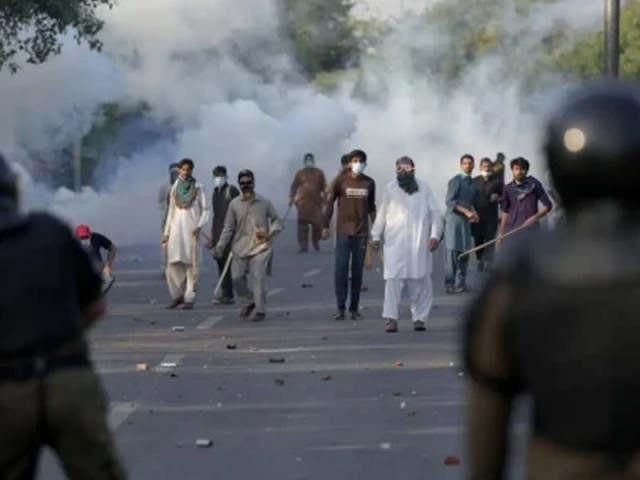
The FCC heard a petition to transfer the case on May 9 from Peshawar to Islamabad or any other province. Afridi is an accused in the case relating to the May 10, 2023 attack on Radio Pakistan Peshawar.
Likewise, a three-member FCC bench headed by Chief Justice Amin-ud-Din Khan, while hearing a petition filed by Islamabad-based lawyer Malik Zaheer Ahmed, sought a response from Sohail Afridi within 10 days regarding the formation of PTI founder Imran Khan’s “liberation force”.
Interestingly, there is no official notification about Imran Khan’s “release force”. Dozens of PTI-related cases have been transferred from the Supreme Court to the FCC. However, these cases have yet to be processed.
Despite the passage of almost a year, the FCC has yet to take up the matter in connection with the implementation of a ruling that ordered the federal government to take steps for appropriate legislation to provide the right of appeal to civilians convicted by military courts.
The Supreme Court’s Practice and Administration Act continues to apply in the Supreme Court to ensure transparency in the Chief Justice’s powers regarding case fixation and the establishment of the courts.
On the other hand, the Chief Justice is the head of the watch in the FCC. The Chief Justice’s powers to order cases and form benches are not regulated in the FCC.
Interestingly, two-man benches deal with cases related to the interpretation of the law and the constitution. In the past, political parties had expressed concern over the lack of representation from all provinces on benches hearing constitutional matters.
Despite a case pendency of 22,384, only seven judges currently serve on the FCC.
The FCC judges also face a “battle of perception” since they were appointed by the federal government, which is expected to be the primary plaintiff before the court.
The challenge now facing the judges is to demonstrate that they are not “executive-minded” and will dispense justice “without fear or favour”. Superior Bars who challenged the 26th Amendment are not interested in filing petitions against the 27th Amendment.


