
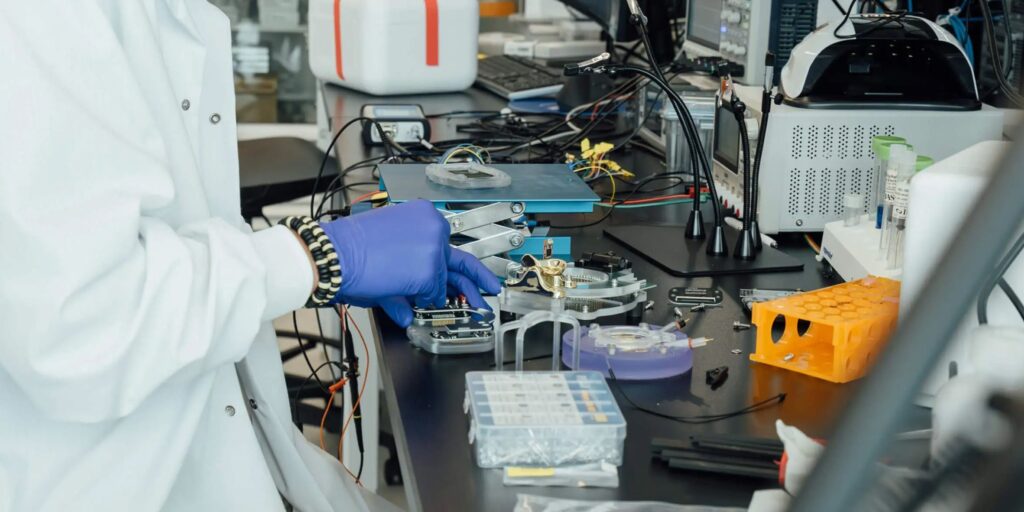
- Global effort seeks massive biological datasets to power advanced cellular AI models
- Predictive cell simulations can accelerate disease research and future medical treatments
- Questions of data ownership remain as biological datasets expand worldwide
Meta-billionaire Mark Zuckerberg is backing a sweeping $500 million push to build massive biological data sets that can power AI models capable of simulating human cells.
The effort, called the Virtual Biology Initiative, comes from Biohub, the nonprofit led by Zuckerberg and Priscilla Chan, MD, and focuses on creating what scientists describe as predictive models of life at the cellular level.
The project will split the funding with $100 million to support global data collection and $400 million to develop tools for imaging, measurement and engineering biology at an unprecedented scale.
The article continues below
Wanted: huge amounts of biological data
Building accurate digital models of cells has long been discussed as a path toward faster drug discovery and improved understanding of disease.
Researchers say the tools to begin that work now exist, but the missing ingredient is still vast amounts of high-quality biological data.
“To build artificial intelligence that can accurately represent the full complexity of biology and accelerate scientific research, we need orders of magnitude more data than is available today. We need new technologies to observe the cell, from molecular to tissue level, and in the context of health and disease,” says Alex Rives, Biohub Head of Science.
“At Biohub, we are committing our resources to solving this problem. Generating these data will require a coordinated global effort. We are excited to partner with leading institutions and consortia who are also committed to this, and to work with them to galvanize a larger effort to create the foundation for predictive models of the cell,” added Rives.
Several major research organizations have agreed to participate, including the Allen Institute, the Arc Institute, the Broad Institute and the Wellcome Sanger Institute.
The scale of the project reflects how quickly artificial intelligence is moving into biology, especially as researchers try to model how cells behave under different conditions.
Support from Nvidia will provide the computing power needed to process the huge data sets that scientists say are critical to training AI systems that can accurately simulate cellular behavior.
Zuckerberg said last year that Biohub’s long-term goal is to cure all human diseases by combining advances in AI with large-scale biological research.
Accurate digital models of cells could allow researchers to test ideas virtually before running expensive laboratory experiments, dramatically increasing the speed of discovery.
“Achieving a predictive understanding of cellular behavior will require coordination and data on a truly global scale. The Human Cell Atlas brings together a global community, the data, capabilities and expertise needed to help make this possible – and efforts like this, where leading partners, including Biohub come together, have the potential to accelerate progress in ways that no single organization and consortium could achieve alone,” said Co Muzz-Vice-Comitéen of Human-Cell.
While the scientific promise is significant, the scale of data required raises major questions of governance, ownership and trust as biological information becomes an increasingly valuable resource.
Follow TechRadar on Google News and add us as a preferred source to get our expert news, reviews and opinions in your feeds.


