
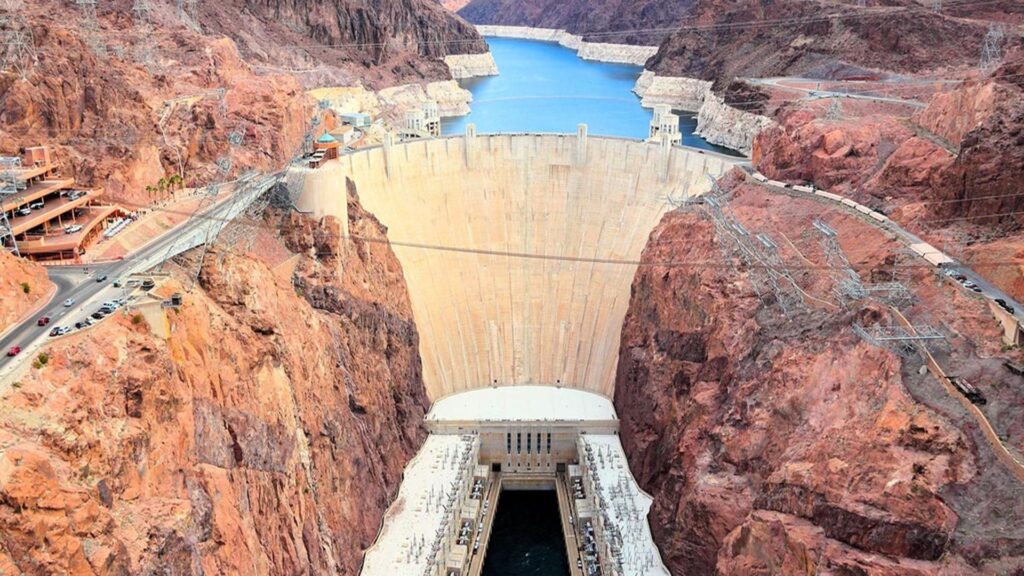
- Hoover Dam effect threatened by severe drought conditions
- Federal water management plan prioritizes upper basin reservoir stability
- Colorado River system storage drops to historically low levels
Hoover Dam, a critical power source for three US states, could see its electricity production drop by as much as 40% already this fall.
Completed in 1936, the dam currently has an installed capacity of 2,078.8 megawatts (about 2.08 gigawatts) and produces about 3.3 terawatt hours of energy annually.
The Department of the Interior has announced an emergency drought management plan that will reduce water discharges from Lake Powell to the minimum legally permitted level.
The article continues below
Upper basin rescue, lower basin sacrifice
This decision, designed to protect Glen Canyon Dam’s ability to produce power, will directly reduce Hoover Dam’s generating capacity by approximately 830 megawatts (0.83 gigawatts), removing approximately 1.32 terawatt hours of annual energy from the regional grid.
Prolonged drought has reduced Colorado River system storage to about 36% of its total designed capacity, according to the Bureau of Reclamation.
Lake Powell’s inflow forecast is at just 2.78 million acre-feet, just 29% of the historical average and among the lowest ever recorded.
Without major intervention, Lake Powell could drop below the minimum force pool level of 3,490 feet by August of this year.
The combination of record low snowpack and unprecedented March warmth has accelerated the crisis throughout the Colorado River Basin.
To help the situation, Reclamation intends to release between 660,000 and 1 million acre-feet of water from Flaming Gorge Reservoir between April 2026 and April 2027.
The agency will also reduce the annual release volume from Lake Powell to Lake Mead by 1.48 million acre-feet, bringing it down from 7.48 to 6.0 million acre-feet.
Combined, these actions are expected to raise Lake Powell’s elevation by about 54 feet, keeping it above the critical threshold of 3,490 feet.
However, these actions will further lower Lake Mead’s levels, directly affecting Hoover Dam’s ability to generate power.
Who will feel the effects?
A loss of 0.83 gigawatts of hydropower capacity will force utilities to find replacement power sources, likely turning to natural gas or renewables to fill the gap.
This shift could increase electricity costs for residential and industrial customers in Nevada, California and Arizona.
The region’s data centers — more than 500 facilities already operating on thin power margins during peak summer demand — will feel the impact most directly, facing higher prices and potential supply constraints in the coming years.
The Southern Nevada Water Authority has acknowledged that the drought announcement reveals the seriousness of regional challenges.
The Bureau of Reclamation is betting that stabilization of the upper basin will prevent a complete system collapse.
But lower basin states like Arizona, Nevada and California will bear the immediate costs of this decision.
A 40% cut to a 2.08 gigawatt plant is not a marginal reduction, and replacing 1.32 terawatt-hours of annual water production would require investment in alternative power sources.
No emergency planning can produce snowpack that does not exist in the mountains.
Until rainfall patterns change dramatically, the region’s hydroelectric future remains uncertain.
Via Fox 5 Vegas
Follow TechRadar on Google News and add us as a preferred source to get our expert news, reviews and opinions in your feeds.


