
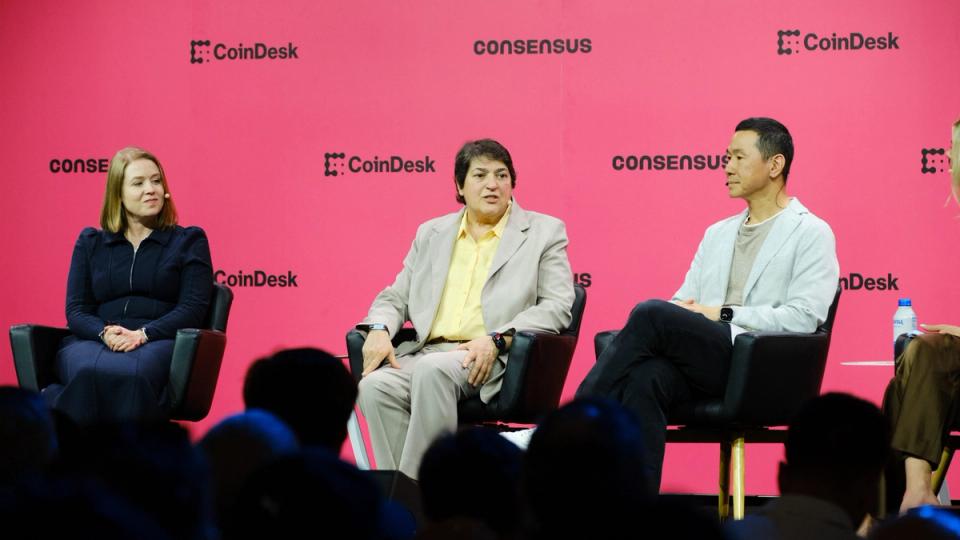
Miami Beach, FL – Tokenization won’t replace the system overnight, but it is steadily reshaping the plumbing system underneath, Wall Street executives said at Consensus 2026 in Miami.
Digital asset executives from Citi, JPMorgan and DTCC said during a panel discussion that blockchain-based rails are moving into production, with real volumes and real customers shaping how the technology is deployed.
A year ago, Citi’s tokenized deposit system handled millions. “Now we’re moving billions,” said Ryan Rugg, who heads digital assets for the bank’s treasury and trade solutions unit.
The demand, she said, comes from customers who want to move money around the clock, not just during banking hours.
JPMorgan sees a similar pattern. Its blockchain platform, Kinexys, has processed more than $1 trillion in transactions, said Kara Kennedy, who heads market development for the bank’s digital enablement unit.
The focus is less on building parallel systems and more on sewing blockchain rails into existing infrastructure to enable faster settlement and continuous operations, she said.
At the center of the US plumbing market, DTCC is looking further. The firm is working to bring parts of its $150 trillion securities infrastructure onto a shared digital layer, with initial rollout plans already underway.
“You can’t just replace what exists,” said Nadine Chakar, who heads digital assets at DTCC. “This is an evolution.”
That approach reflects a broader shift in the market. Early tokenization efforts were often looking for problems to solve. Now companies are targeting specific pain points, particularly in areas such as collateral, cross-border payments and liquidity management.
For large companies, the ability to move money in real time – across time zones and holidays – is changing how finance functions work. Instead of pre-positioning cash days in advance, companies can respond instantly to margin calls or investment opportunities.
Still, panelists pushed back on the idea that blockchain will eliminate intermediaries entirely. Core functions such as risk management, compliance and settlement guarantees are still difficult to replicate in fully decentralized systems.
“We’re always going to need some level of dissemination,” Chakar said.
However, crypto-native players see a longer arc. Evan Auyang, president at Animoca Brands, said the industry is still in a transition phase where blockchain is gradually proving its effectiveness before a major structural change.
“The card of blockchain is that it’s transformative,” Auyang said, pointing to faster processes like loan approvals that can shrink from weeks to days. But he added that fully native onchain markets are “not ready yet,” given the scale of existing systems and regulatory constraints.
At the same time, he claimed that the direction is hard to ignore. “If there are efficiencies and cost savings, it will be adopted,” he said, adding that traditional finance and decentralized systems are now “converging.”


