
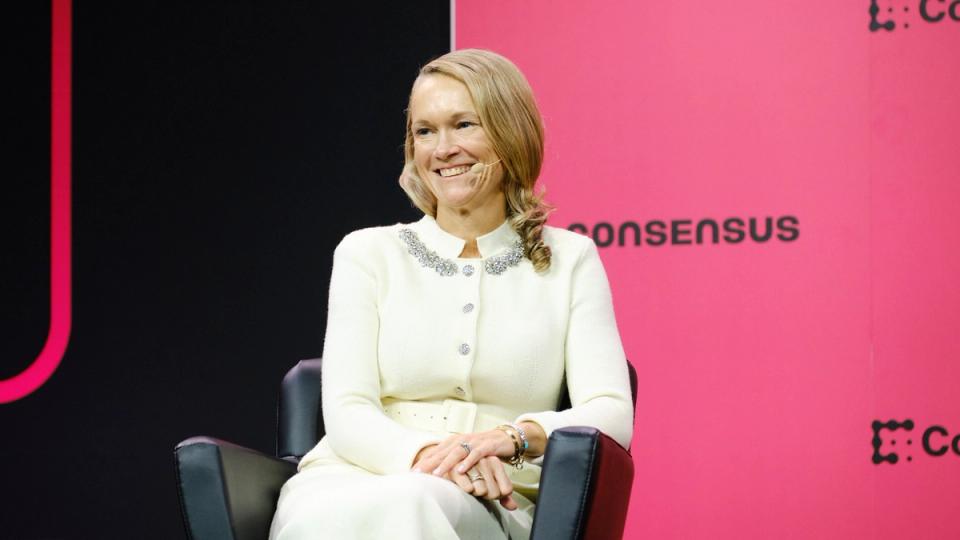
Miami Beach, FL – Tokenized money will fail to live up to its promise if it remains languished in individual banks, according to Ryan Rugg, Citigroup’s head of digital assets for finance and trade solutions.
Speaking at Consensus in Miami, Rugg said large corporate customers are not looking for single bank solutions, but systems that work seamlessly across financial institutions. “Nobody just wants a Citi token,” she said. “They want the multi-bank aspect of it.”
The comment reflects a core challenge in the push to bring blockchain-based payments into mainstream finance. While banks have begun issuing tokenized deposits and building internal platforms, many of these systems operate within closed networks.
For global companies, that approach falls short. Rugg said Citi’s clients often manage “hundreds, if not thousands, of bank accounts across multiple banks globally,” creating complexity in moving money for payroll, suppliers and investments.
These customers are increasingly demanding real-time capabilities. In a survey Citi conducted several years ago, Rugg said the response was “basically unanimous” that faster, always-on payments were a top priority.
Blockchain technology offers one path to this goal, but only if systems can be connected. Citi has built its own tokenized platform and linked it to its wider banking network, including a 24/7 clearing system for US dollars with more than 300 banks. Still, Rugg emphasized that internal upgrades alone are not enough.
“This is another tool in the toolbox,” she said, adding that banks also need to modernize traditional infrastructure and connect it with digital systems.
The wider industry faces fragmentation. A growing number of banks, fintech companies and crypto projects are building separate networks, often using different standards. It risks reproducing the same inefficiencies that blockchain aims to correct.
Rugg argued that shared infrastructure — built “for the industry, by the industry” — will be key to scaling tokenized finance, citing models like Swift’s global messaging network.
At the same time, regulation remains a limitation. Large banks require a clear legal framework before rolling out new products. “Unless it’s 100% allowed, we’re not going to do it,” Rugg said.


