
- Genesis AI robot hands handle frontier tasks
- They can make eggs and solve a Rubik’s cube
- The training takes place in part via cheap, portable gloves
If there’s a single obstacle preventing humanoid robots from entering our homes and workplaces, it might be “frontier tasks.” These are complex tasks with several steps, such as acting as a laboratory assistant, solving a Rubik’s cube or making a delicious smoothie or omelette. These are the kinds of things most humans can do without thinking, but for robots and artificial intelligence, it’s nearly impossible to match your average lab technician or lowly chef on these skills.
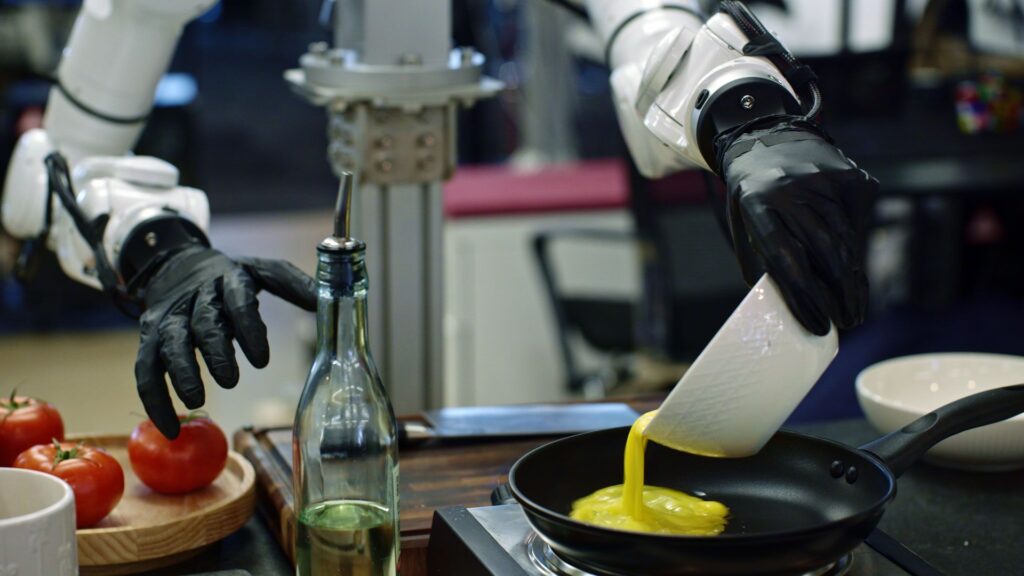
Today, however, I saw a robot randomly wiping some egg yolk off its fingers while making some lightly scrambled eggs. It was such a normal thing to do in the course of successfully preparing a meal that I momentarily forgot I was watching disembodied robotic hands perform the task.
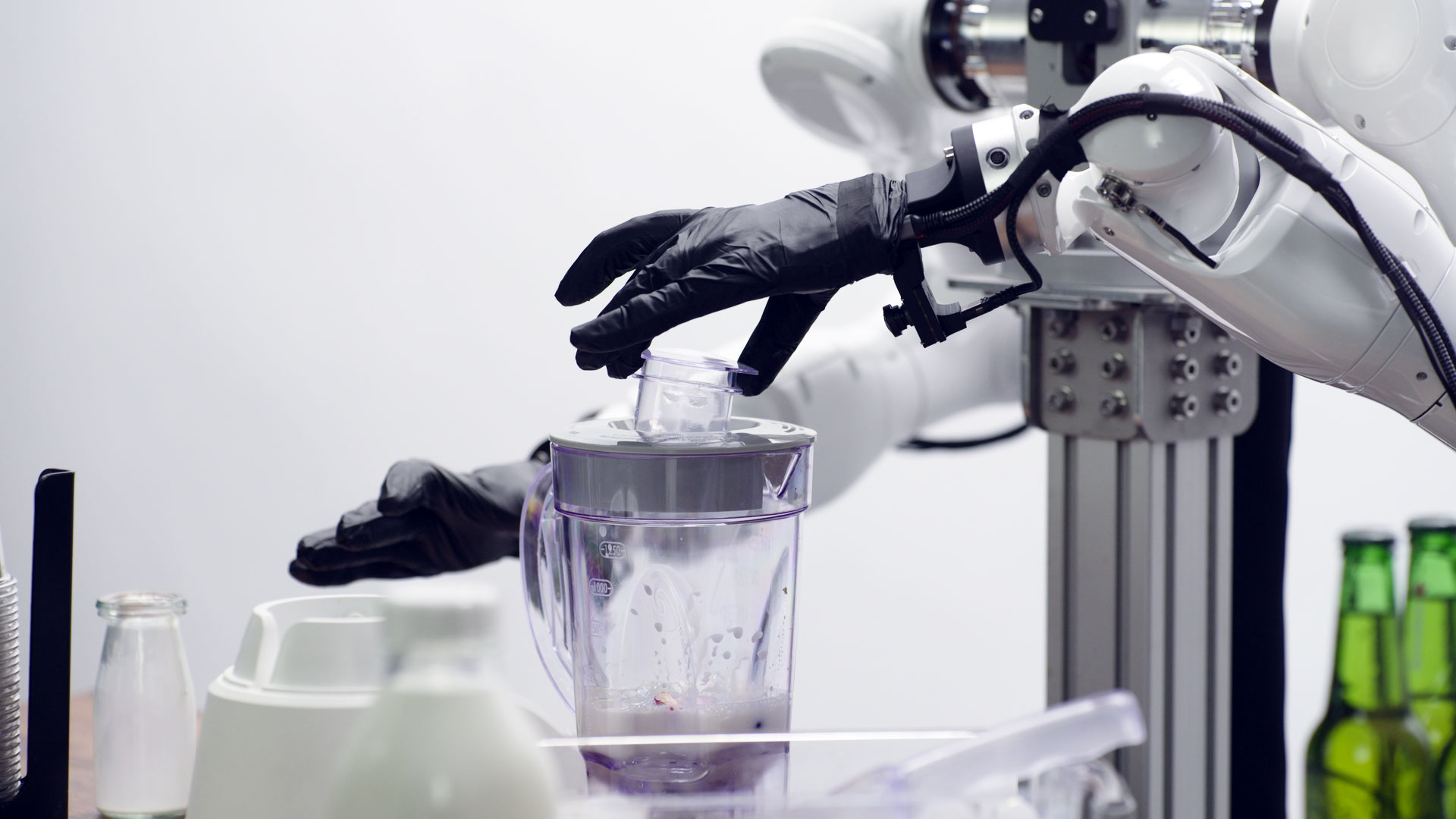
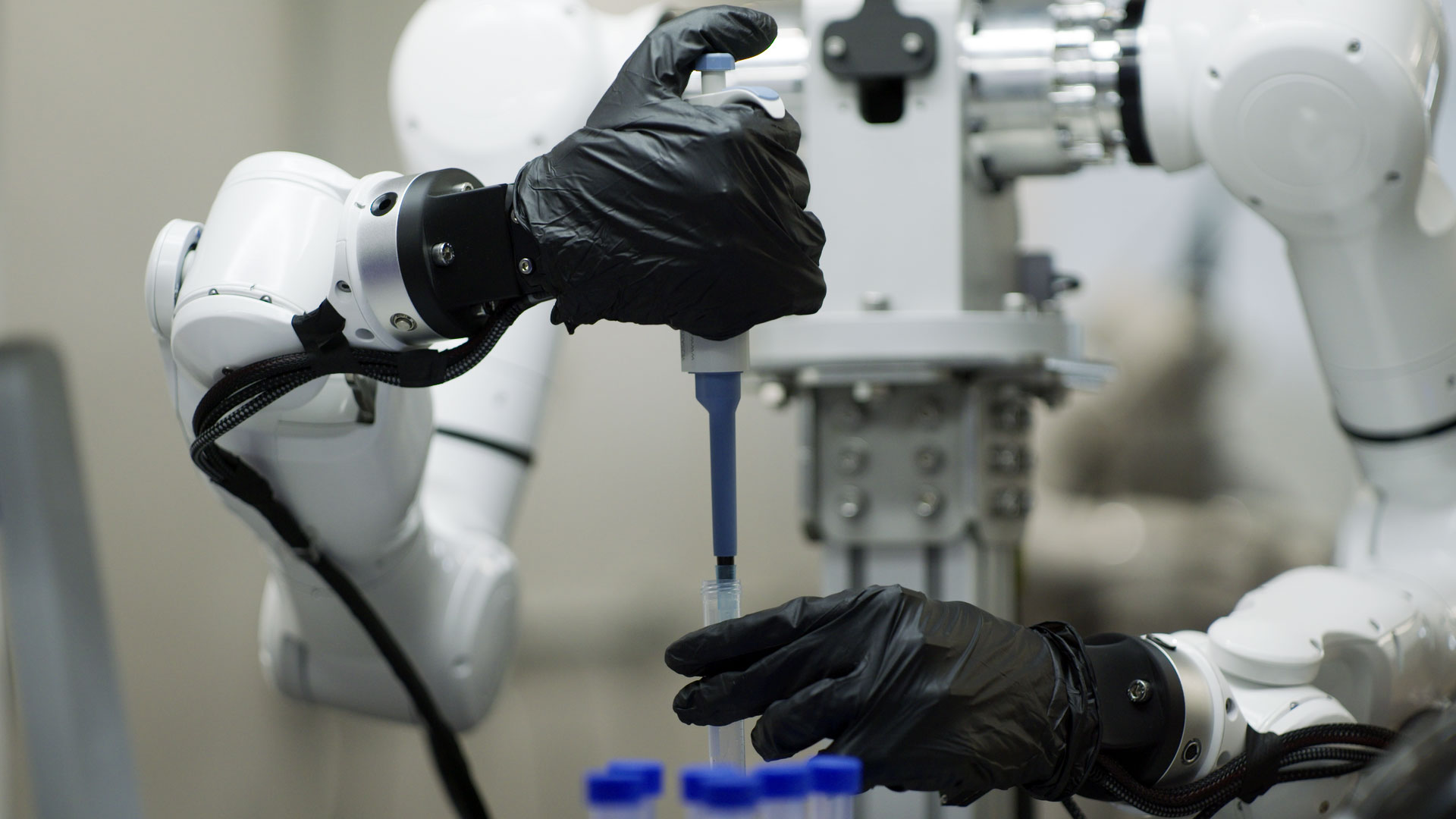
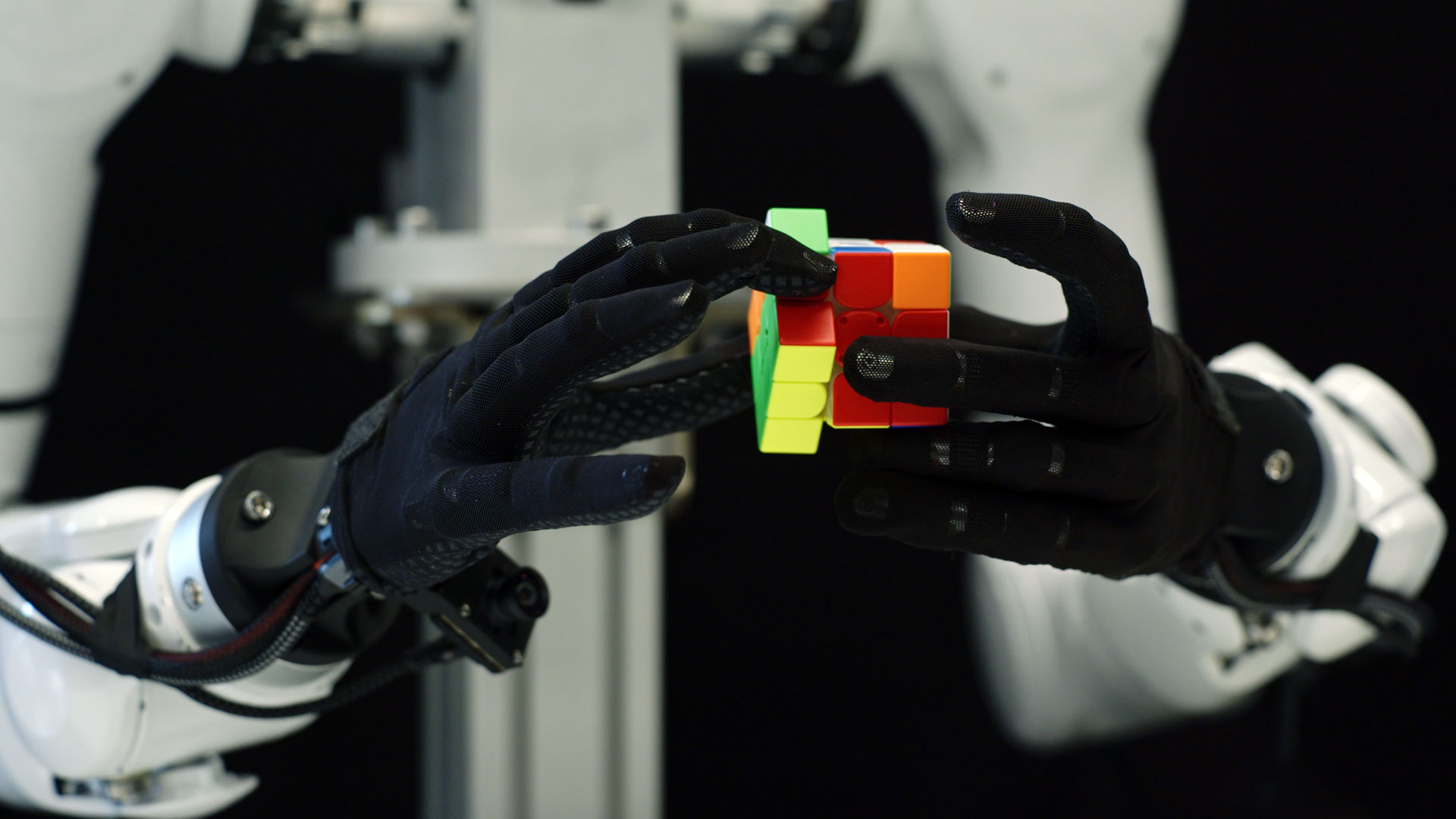
The same highly dexterous robotic hands, all built and programmed by Genesis AI, also solved a Rubik’s Cube, did more than acceptable lab assistant work, and even made a delicious purple smoothie. Part of a three-part system for AI development, training and deployment, the hands look set to change how we think about robots at home and in the workplace.
The article continues below
“I don’t know if you know this,” Vivian Sun, Genesis AI’s vice president of commercial and strategy, told me, “80% of human labor is done with their hands.” This, it turns out, poses a major problem with our long-dreamed-of and fast-approaching robotics future. The kind of work we do with our hands requires human-level patience, skill and dexterity (which is considerable).
Making and training a believable robotic hand
Solving this problem and providing a solution to its Fortune 500 customers, who have a multitude of use cases for such robots, became a priority for Genesis AI. The solution was not just a robot or even an algorithm. It’s an end-to-end solution that starts with data collection and a set of proprietary gloves.
Trainers wear the thin, wireless gloves, which are covered in sensors and even include a camera, as they perform these frontier tasks, like making an egg, hundreds of times. “[It’s] the most natural way to interact with the physical world,” Sun explained.
The same trainers also have a head-mounted camera to see how a human cracks an egg, for example.
This training data is then combined with “internet-level data”, essentially thousands of online videos showing people cracking eggs and making scrambled eggs.
It’s all valuable data that feeds into Genesis’ new Gene foundation model version 26.5, which is then used to train and power Genesis AI’s proprietary robotic hands.
Look and work like the real thing
It’s unlikely that the Genesis AI would have the same kind of success if they had to feed this intricate data into a pair of claws.
“We have the most human-like robot…hand. These hands are made proprietary to the Genesis AI…[they] looks exactly like a human hand in terms of functionality, in terms of proportions, in terms of size and shapes,” Sun said.
They close a critical domain gap, not just by looking like human hands, but, as I noted in the videos, they move like them too. In the egg video, under a pair of latex gloves, you could mistake them for human palms and 10 digits, except for the robot trunk they’re attached to.
The end-to-end process enables a virtually direct transfer of human skills to robot embodiments. It is, Geneis AI believes, a scalable solution. Sun told me that the training glove set is far more affordable and sensible than the current robotic training method: telesurgery.
Teleoperation “is quite extensive. You have to stage the setup, hire people… and most of the time you can’t even recreate that scenario. For example, if you’re trying to learn how to repair jet engines, how would you build a jet engine in your facility? It’s just impossible,” Sun said.
She couldn’t specify a price for the gloves or the robotic hands, but told me the gloves will be “50 times cheaper than the next thing in the industry,” adding that it’s 100 times cheaper than telesurgery.
What’s next
In the long term, Genesis AI envisions mass-producing the glove and shipping it to businesses and homes, where users can help train Genesis AI robots.
Of course, it’s just a pair of highly articulated hands right now, but Sun told me they’re building a full robot.
Would they call it the “Genesis Robot”? Sun didn’t want to say, but laughed, “We have a name that we will tell you very soon. We went through several workshops that came up with the name. So yes, there is a name.”
For now, though, we have this small collection of boundary-pushing task videos that highlight what might be the pinnacle of robotic dexterity. I asked Sun what she thought the first time she saw them.
“I was personally just amazed….to see it in real life, doing these types of long-term, very complicated tasks, it was like almost like a momentary reality check: This is the world we live in.”
Follow TechRadar on Google News and add us as a preferred source to get our expert news, reviews and opinions in your feeds. Be sure to click the Follow button!
And of course you can also follow TechRadar on YouTube and TikTok for news, reviews, video unboxings, and get regular updates from us on WhatsApp also.


