
For autonomous vehicles and car companies, 2016 was a heady year. Multimillion-dollar investments in self-driving technologies were heralded on a weekly basis, and then Ford made a bold prediction: It would mass-produce self-driving cars for consumers by 2021.
That era “was crazy with announcements,” said Alan Hall, a Ford communications manager at the time, “and 2021 was the magic number.”
Five years after the missed goal, fully autonomous vehicles with sensors are still not for sale, robotic axes haunt only a handful of cities, and self-driving trucks are still limited to pilot projects. Also, many of these self-driving vehicles from 2016 have since thrown in the towel, such as Luminar, which filed for bankruptcy last December, and robot taxi company Cruise, which General Motors shut down in 2024 to focus its efforts on personal vehicles.
But as the autonomous dreams of a decade ago succumbed to practical challenges, other companies have found new applications for their innovations, such as ground-penetrating radar, 3-D radar and advanced lidar (which stands for light detection and ranging).
These new applications cover a wide range of uses, including smart city systems and home care for the elderly, as well as controlling 1,500-ton gantries in shipyards and monitoring 800-foot-tall wind turbines. Such technology is even being used to improve robots and artificial intelligence systems.
Lidar has seen the widest adoption. Lidar sensors can generate three-dimensional views of their surroundings by bouncing near-infrared light from objects. The technology can create detailed data for traffic surveillance systems, where ordinary video cameras can be hindered by strong daylight or total darkness.
Ouster, a company that bought lidar pioneer Velodyne, has customers including John Deere for agricultural applications and cities for traffic management. It has sensors installed at hundreds of intersections in cities including Chattanooga, Tenn., according to Angus Pacala, a founder of Ouster.
Omer Keilaf, CEO and founder of Innoviz, another lidar company, said the technology could also measure the size of vehicles to collect tolls.
A lidar company called Outsight uses lidar to monitor pedestrian traffic at airports, including Dallas Fort Worth International. The data allows for surveillance where video surveillance may be impractical or undesirable due to privacy concerns.
The improvements to develop lidar for cars—making them smaller and more impervious to the elements—also sharpened the technology for other challenging outdoor uses, such as security systems for military installations and critical infrastructure.
“The most obvious example is a remote facility like a data center in the woods,” said Mr. Pacala. At night, video cameras can’t see very far, and metal fences and power lines cause problems for traditional radar, Mr. Keilaf from Innoviz. Human guards therefore often have to patrol the fence lines of such facilities, whereas lidar can do the same job, seeing far into the dark without blinking.
At the same time, standard radar systems used in cars for collision avoidance and adaptive cruise control have evolved into what are known as millimeter-wave radar systems to compete with lidar. In cars, these sensors can see further and with more accuracy in bad weather than previous radar systems.
Now the technology is looking for wider applications.
Not quite a decade ago, a company called Pontosense used “mmwave” radar to alert drivers to the presence of a child in the back seat. It can also monitor a passenger’s or driver’s health by recording a person’s breathing and heart rate.
Still, the auto industry was slow. So about four years ago, Pontosense began to capitalize on the growing demand from older people who want to stay safely in their homes, but who can’t afford or don’t yet need constant care.
These surveillance systems can track people, even in private spaces like bathrooms and bedrooms, without intrusive video recording. The data is detailed enough to raise an alarm when a person has fallen or is having trouble breathing, but because there is no video image, the homeowner maintains a sense of privacy.
Another technology once hoped to guide self-driving cars is ground-penetrating radar. It can see several meters underground and was used commercially to detect buried pipes and wires and was originally conceived for military applications, including autonomous armored vehicles.
In 2017, a ground-penetrating radar company called WaveSense was founded, which intended to track the location of self-driving cars without GPS and in situations where the road surface might have changed – e.g. thanks to resurfacing or snow accumulation. However, when this market did not materialize, WaveSense changed its name to GPR Ground Positioning Radar and began developing its technology for shipping and seaports.
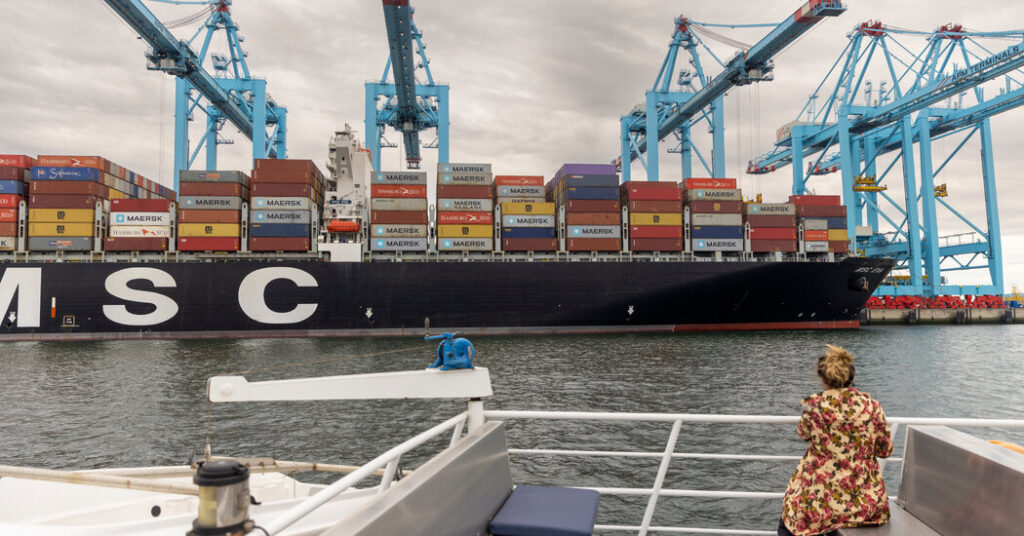
To automate seaports like the one in Rotterdam using established technology requires tearing up infrastructure to bury transponders and create geotagged locations. But with ground-penetrating radar, “we don’t have to bury anything,” said Tom Cashman, the chief technology officer at BTG Positioning Systems, a Dutch company that manages automated container ports and acquired GPR last fall. Mr. Cashman said the technology was being tested, but suggested further advances could allow municipalities to use the technology to detect potholes and sinkholes — before they occur.
Self-driving technology was the darling of futurists a decade ago, and now its advances are trickling down to the latest fascination: artificial intelligence and robots.
At Boston Dynamics, Zack Jackowski, chief product and technology officer, said robotics benefits from lessons learned from the automotive industry. Among them are improved high dynamic range cameras, microprocessors that meet strict safety standards and more affordable lidar sensors.
Boston Dynamics, whose majority owner is Hyundai, is collaborating with the automaker on a humanoid robot called Atlas. Mr. Jackowski said nearly everyone on the company’s safety and perception team had come from autonomous vehicle companies like Waymo and Zoox. “They’re struggling with the same security issues we’re dealing with,” he said.
Costs are also falling, allowing this technology to appear in consumer electronics such as robotic lawnmowers and vacuum cleaners equipped with lidar sensors, said Stefan Sellhusen, director of technical automated driving at Bosch.
Even with all the consolidation and delays, veterans of the self-driving car wars are convinced that autonomous vehicles are still the future. Before founding self-driving truck technology company Kodiak, Don Burnette began his career at Google’s self-driving program (now Waymo) and then co-founded Otto, which was later acquired by Uber. Referring to Kodiak’s commercial truck test program, he said, “We’re out there. It’s here. It’s small, but you have to start small.”
Mr. Hall is now with a robotaxi company called Motional. “It’s going to take time, but it’s going to happen,” he said, acknowledging the tendency of some in the industry to be a little too optimistic. “It’s like 2026 is the new 2021.”


