
- Decentralized GPUs enabled the generation of AI at scale without cloud providers
- Peer-to-peer computing significantly reduced the cost of image generation
- The system scales automatically during peak load without manual intervention
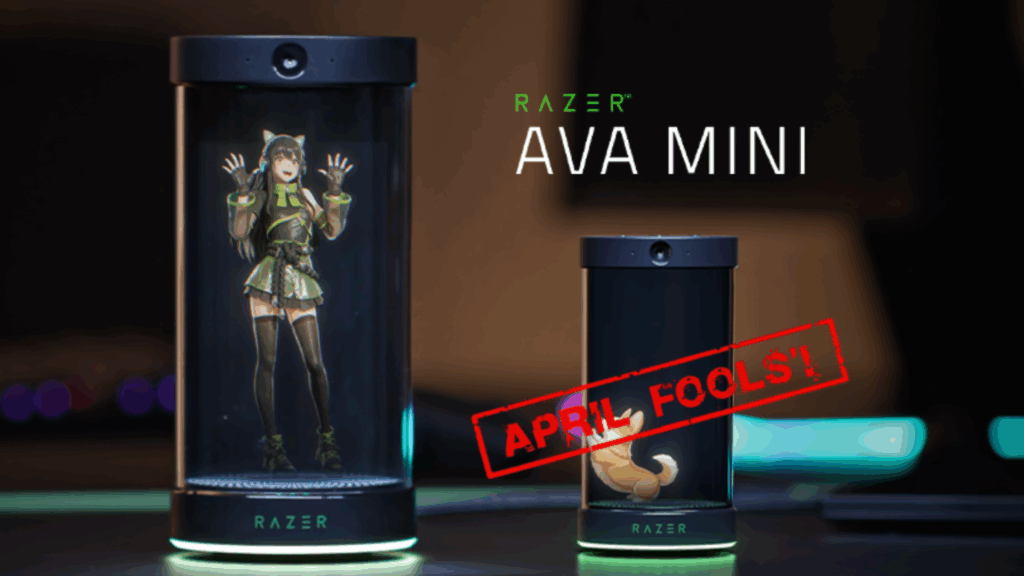
During April Fools 2026, Razer asked users to upload pet photos and receive personalized 3D AI companion characters through a promotion called AVA Mini.
The initiative generated over 11,000 unique images between March 31 and April 4 without relying on any hyperscale cloud providers.
Razer instead partnered with the Akash Network, a peer-to-peer computing marketplace where GPU owners compete on price in real-time.

Abandonment of cloud subscriptions for competitive bids
Generalist inference APIs typically charge between $0.03 and $0.15 per image for corresponding Flux family generation workloads.
These rates would have made a free consumer-facing campaign financially unsustainable on any meaningful scale.
AkashML sourced data processing from individual providers powering RTX 4090 and RTX 5090 cards across a decentralized marketplace, reducing the cost per image for $0.01.
Multiple Razer AIKit containers ran on separate machines behind a single OpenAI-compatible endpoint that AkashML managed automatically.
The service handled load balancing, enforced a configurable rate limit of 500 requests per minute, and maintained graceful degradation under heavy traffic conditions.
As campaign traffic increased towards its peak on April 1, additional AIKit instances popped up across the provider pool without any manual intervention.
Throughput reached 30 frames per minute, while the average response time held at 3.24 seconds end-to-end, a measurement that includes each user’s upload and download of images.
The 4 billion parameter Flux model from Schwarzwald Labs operated entirely within the memory limits of a single consumer GPU throughout the campaign.
No capacity caps appeared at any time, and no engineers on duty received distress alerts during those five days.
Scaling decentralized infrastructure for production environments
“We are excited to leverage Razer’s AIKit on Akash’s distributed computing network and see it in action during the April Fools’ Day campaign,” said Greg Osuri, founder of Akash Network.
“The unit economy couldn’t work better. I’m excited to collaborate further on the Akash Homenode and deploy Razer products to expand Akash’s computing landscape.”
Sustained production environments with high concurrency still require technical coordination beyond what typical local first-come, first-served tool chains can provide.
But while this specific marketing event was successful, industrial applications require consistent performance across volatile hardware nodes that lack centralized monitoring.
Decentralized marketplaces introduce a layer of uncertainty that can affect time-sensitive business workflows that require absolute stability.
However, this campaign showed that peer-to-peer GPU networks can deliver personal AI at costs that no hyperscaler currently approaches.
“The future of AI isn’t just better models – it’s efficient infrastructure. With Razer AIKit, many use cases are already running locally,” said Quyen Quach, Vice President, Software, Razer.
“With the Akash Network, it extends that to a decentralized cloud to scale efficiently.”
Such findings suggest that decentralized computing models may eventually overcome reliance on massive, expensive data centers.

Follow TechRadar on Google News and add us as a preferred source to get our expert news, reviews and opinions in your feeds.


