
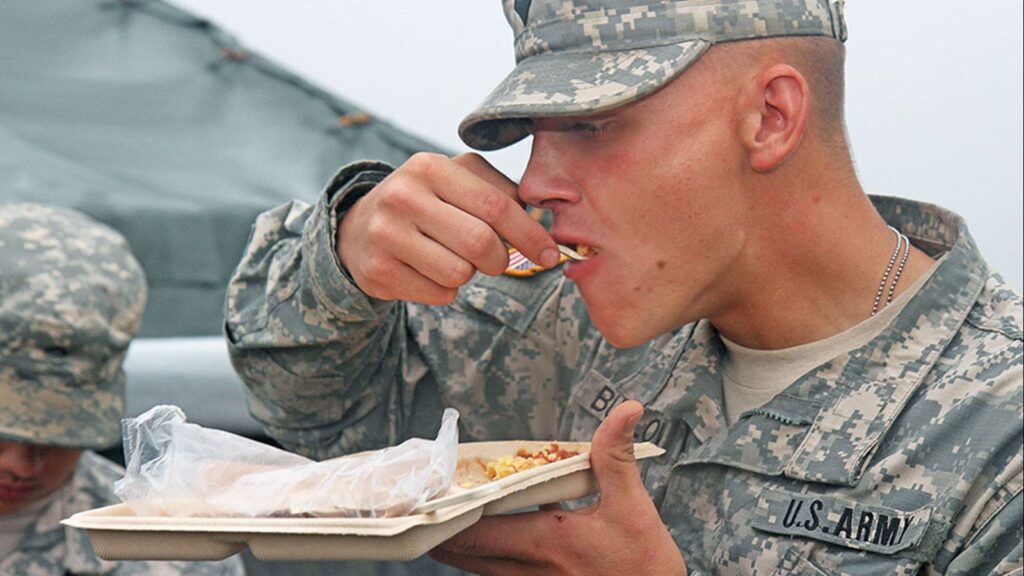
- The US Army is seeking lighter rations to significantly reduce battlefield logistical burdens
- Gel and powder meals under review for development of combat rations
- Insect and lab-grown meat excluded from the current Army investigation
The US Army wants to change what soldiers eat during combat operations through a new unsourced announcement.
The military department is asking for help in developing alternative protein technologies for field rations in the near future.
The stated goal is to create light and nutritious meals that reduce the logistical burdens on individual troops.

Lightening battle rations
Anyone who’s carried heavy MREs on a long march understands why lighter rations matter to survival—but the suggested delivery formats don’t sound very appetizing to anyone who’s eaten military food before.
The military is seeking innovative technologies such as fermentation and other biomanufacturing methods for alternative protein production.
Alternative meat products may eventually join the standard MRE lineup for soldiers operating in combat zones.
The Army also wants extensive consumer research to understand what troops will actually eat under field conditions.
Food samples will go to public taste testers for evaluation of sensory acceptability and other performance characteristics.
“Gel/semi-solid formats, dry powder mixes, [and] sauce-style components” are all under consideration for future ration components.
The Army specifically excludes cell cultured lab-grown meat and insect protein from this particular announcement, so soldiers will likely understand that there will be no mistakes in their immediate future of military eating.
Past MRE preferences may predict future success or failure
Vegetarian MRE options from twenty years ago were surprisingly popular among soldiers who normally ate meat without hesitation—perhaps because these meals replaced the usual military mystery meat with something far more appealing to eat out of a sealed envelope.
Soldiers chose the vegetarian rations not for ethical compliance with any personal philosophy about animal products—but simply wanted a meal that didn’t taste terrible after a 15-mile march with heavy gear on their backs.
The same logic will apply to any future alternative protein ration that the Army develops for use in the field.
If a fermented mushroom gel or dry protein powder tastes bad, no soldier will eat it regardless of its logistical advantages.
The Army’s current research into gels, sauces and semi-solid formats must prioritize palatability over all other technical requirements.
Beef frankfurters and compressed meatloaf gained a famously bad reputation among soldiers serving in the early 2000s.
The Army should learn from these mistakes before asking troops to swallow unholy shakes or fermented mushroom from a bag.
A lighter ration is useless if soldiers throw it away and march on empty stomachs instead.
The veteran’s perspective matters here because past behavior predicts future behavior under similar stressful conditions.
Soldiers will always choose the least horrific option available, regardless of what food scientists think sounds innovative or effective.
Via the registry

Follow TechRadar on Google News and add us as a preferred source to get our expert news, reviews and opinions in your feeds.


