
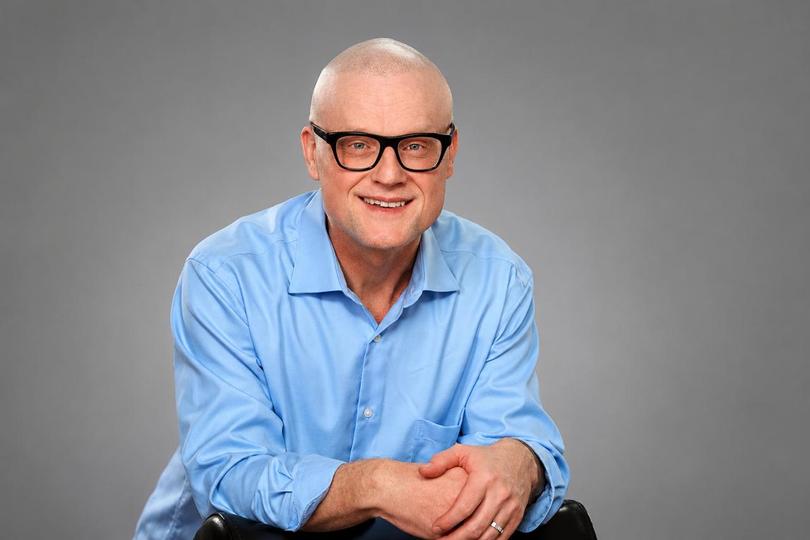
AmericanFortress researchers introduced a patent-pending post-quantum signature scheme that could secure the global crypto ecosystem against future quantum attacks without requiring mass fund migration.
According to the company, the breakthrough means that even Satoshi Nakamoto’s massive 1.1 million bitcoin holdings, along with nearly 5 million BTC in dormant accounts, can be salvaged with a total value of around $400 billion.
In an interview with CoinDesk, Michal Pospieszalski, CEO of AmericanFortress, explained that inactive and dormant wallets need not remain vulnerable to unscrupulous hackers who could sweep up the loot and dump it on the market with unpredictable consequences.
However, Pospieszalski said a major point of confusion is the older bitcoin. Because the Satoshi era wallets are “Pre-BIP32” addresses without seed phrase derivation and therefore cannot be automatically upgraded like the more recently created wallets. Instead, AmericanFortress’ protocol would perform a defensive freeze via a backwards compatible soft fork.
“Our quantum-resistant protocol would automatically freeze and protect these funds until governance decides what to do with them after Q-day,” Pospieszalski said, noting that the community would ultimately have to vote to move, burn or redistribute the frozen assets.
“But this means that even Satoshi wallets can be protected with a smaller BIP, which we are working on,” Pospieszalski said. “This means integrity for Bitcoin going forward – and that’s just BTC. It also applies to all other major chains, like Ethereum, Solana and Tron.”
The announcement follows an $8 million seed funding round led by SAVA Digital Asset Fund, Moon Pursuit Capital and 0G Labs. Along with the funding round, the firm released a cryptographic paper that identifies the specific network performance bottlenecks that have plagued other post-quantum experiments.
This week, a standard quantum security test worked on the BNB Chain, but it significantly slowed transaction throughput by 40%.
Unlike traditional approaches that require entirely new blockchains or exhaustive address rotations, AmericanFortress’s approach uses zero-knowledge (ZK) proofs to prove master seed ownership at the time of consumption. The strategy implements three different solutions: Pre-BIP32 raw key protection, standard BIP32 quantum protection, and a high-speed “QBIP32” derivation scheme. Because it integrates naturally with existing curves, it causes no performance degradation.
“It’s just a node and wallet software update in that order,” Pospieszalski noted.
The threat to crypto is highly concentrated, the AmericanFortress CEO said, adding that while quantum computers can’t crack master seed sentences, they can reverse engineer individual private keys from wallet addresses whose public keys have been revealed on-chain.
Research shows that over $600 billion in cryptoassets are in this exact vulnerable state, including 100% of Solana addresses, Pospieszalski said, describing this as “common knowledge.”
For active users, migrating to a quantum-safe level takes only 50 milliseconds via a simple wallet prompt, he explained, adding that for dormant seed-derived wallets, protection can be done programmatically at the base layer.
Pospieszalski said the cost of this quantum hedge is extremely low, equivalent to the cost of a single roll-up transaction, rather than paying for each historical transaction individually.
Pospieszalski revealed that AmericanFortress is actively licensing the SDK for Layer 1 and Layer 2 blockchains in exchange for marketing positioning, though he said the firm is open to exclusive acquisitions.
The cryptographic methods for bitcoin are expected to be ready for discussion within the next few weeks ahead of an official presentation on June 2 in Paris, AmericanFortress said.
Ultimately, Pospieszalski sees this as a turning point for the lifespan of digital assets. “Sudden quantum correction of BTC is now possible,” he said.


