
ISLAMABAD:
ISLAMABAD: Only a few years ago, even a routine call of opposition protest would send shock waves through government circles. The authorities often set up containers, imposed restrictions and blocked roads long before the protesters arrived, creating an atmosphere that itself demonstrated the strength of the opposition.
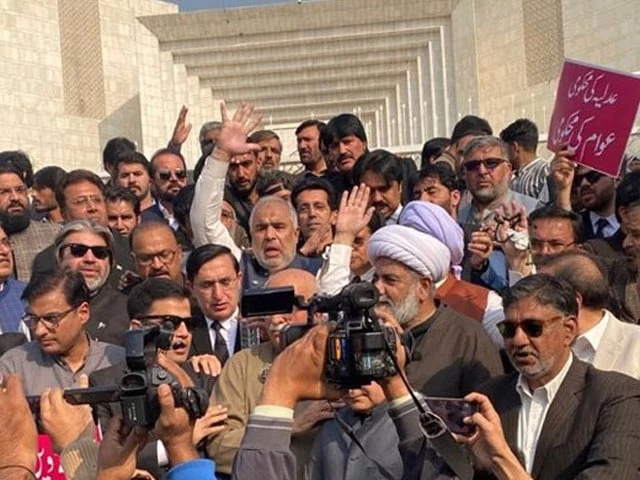
However, Friday’s protest call by opposition parties, including the grand alliance of Pakistan Tehreek-e-Insaf, Jamiat Ulema-e-Islam (F) and Jamaat-e-Islami, unfolded very differently.
Unlike previous occasions, there were no widespread precautionary measures, extraordinary restrictions or visible signs of official alarm. By the end of the day, the opposition’s protest campaign had largely ended without any major mobilization.
Political analysts say the decline in the opposition’s street power has been gradual, but became more pronounced after the November 26, 2024 protest in Islamabad, when PTI protesters faced a strong state response, arrests and dispersal operations.
Since then, analysts believe the party’s ability to mobilize supporters has been weakened by legal pressure, organizational disruption and growing fear among its workers and supporters.
Attempts over the following months to revive agitational politics, including leadership reshuffles within the party’s provincial structure, have so far failed to restore the momentum the PTI once had. Analysts argue that the opposition’s strategy now appears fragmented and inconsistent.
Political analyst Raza Rumi said the weak mobilization was due to multiple factors rather than a single cause. According to him, repeated cycles of protest, fear generated by arrests, surveillance and legal crackdowns over the past two years, along with organizational strain in the ranks of the opposition, have collectively undermined street mobilization.
He said many supporters may still sympathize with the opposition’s narrative but remain reluctant to participate physically because of the political and legal costs involved.
“Street politics in Pakistan historically depends not only on public anger, but also on organizational coherence, local networks and confidence that mobilization can produce tangible political results,” he said.
Referring specifically to the PTI, Rumi noted that the party had once demonstrated an unparalleled ability to mobilize crowds quickly, often prompting preemptive state action even before protests materialized.
However, he said that the crackdown on PTI’s leadership, workers and organizational structure after May 2023 had significantly reduced its ability to organize open mobilization on the scale seen in the past.
“At the same time, the state may believe that the PTI’s capacity for disruptive street power has diminished, reducing the need for aggressive preventive measures,” he said.
He added that the party’s biggest challenge now was whether it could convert its electoral and digital support into a sustainable political structure on the ground under the prevailing conditions.
Senior political analyst Hassan Askari Rizvi said the result was not surprising. He noted, “It’s not surprising that people aren’t coming out,” pointing to two key reasons: economic pressure and fear of the state.
According to Rizvi, worsening economic difficulties have made it difficult for ordinary citizens, especially daily wage earners, to participate in protests because “if they don’t work, they can’t earn”.
He further noted that “the state has become very strict,” explaining that while bail in political cases used to come within days, “it takes months” now, creating fear among people about the consequences for themselves and their families.
According to him, “there is a feeling of uncertainty, disappointment and fear of the state, which makes it difficult for people to come out”.
Rizvi also noted that earlier arrests generally fell under common law provisions where bail was relatively easier, whereas stricter laws are now increasingly invoked, making “custody easier and bail difficult”, something people are very aware of before joining protests.
Despite weak street mobilization, however, he maintained that the opposition’s support could still translate electorally, adding that “people will come out to vote.”
Separately, Ahmed Bilal Mehboob, president of the Pakistan Institute of Legislative Development and Transparency, said that “traditionally, no street agitation has succeeded in Pakistan unless intelligence services covertly back such agitation”.
He also argued that “any such agitation must be led by a credible and trusted leadership, which is currently unavailable”.
Mehboob maintained that the government had performed relatively well in dealing with economic pressures, saying that while inflation continues to hurt citizens, it is often explained to the public as a result of “international factors”.
He further claimed that “popular support for the federal government and the armed forces has increased” following recent developments, including what he described as a “decisive victory over India” and Pakistan’s diplomatic efforts to facilitate dialogue between Iran and the US, which he said “gave people a sense of positivity”.
He added that “decisive and timely use of force against PTI protesters, arrests and long periods behind bars are some of the factors that discourage agitation”.
In his assessment, the opposition’s warnings and statements by leaders such as Mahmood Khan Achakzai were “just political acts to stay relevant and to demonstrate political activity”.


