
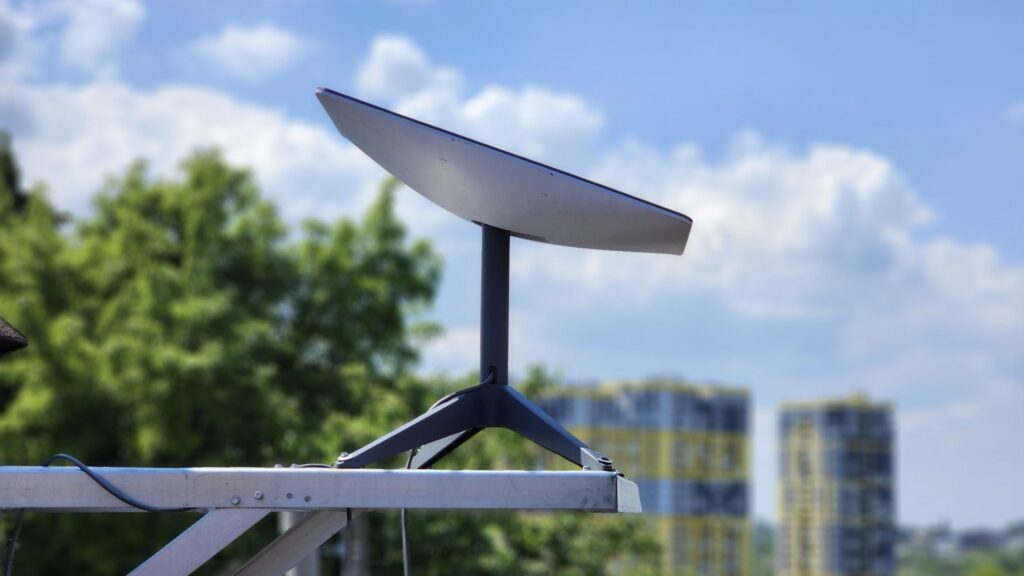
- The European 2GHz satellite spectrum is likely to be divided into European and non-European allocations
- Starlink and Amazon Leo could bid for space in the remaining third from May 2027
- Great Britain and Norway will be allowed to bid for places in the European two-thirds allocation
While the European Commission plans to reserve around two-thirds of the 2GHz mobile satellite spectrum for European companies, non-EU rivals are reportedly scrambling to snap up the remaining third.
And none other than Elon Musk’s Starlink and Amazon’s Leo, formerly Project Kuiper, are rushing to acquire the remaining allocation.
There will of course be some exceptions to the EU-only rule, as UK and Norwegian companies will also be able to bid for space on the European two-thirds allocation, leaving the remaining third up for grabs by some of the biggest players in the game.

A third of the European allocation is likely to be snapped up by Starlink, Amazon Leo
Currently, the spectrum is owned by American companies Viasat and EchoStar, whose contracts expire in a year. Instead of renewing them, Europe’s restructured allocation rules will not only give European companies a fighting chance to acquire space, but will also allow other non-EU companies to bid for space.
IRIS2, a 290-satellite constellation, will be among the European schemes to gain space under the two-thirds allocation, an exclusive Pakinomist report details.
Commission spokesman Thomas Regnier cited “resilience, security and capacity” when asked for comment – the Commission’s recent efforts to improve the market share of European companies and reduce dependence on US tech giants have not gone unnoticed across the industry.
The report also introduces the possibility of reserving the entire spectrum for European companies, however the VP for technological sovereignty, security and democracy, Henna Virkkunen, is believed to have expressed a desire not to exclude any company from the bids, hence the likely third/two-thirds proposal.
More details are expected to come from the Commission soon, but no update was given at the time of writing.

Follow TechRadar on Google News and add us as a preferred source to get our expert news, reviews and opinions in your feeds.


