
Dr. Farooq Sattar alleges illegal excavation at Hill Park, while KMC insists no park land has been allotted
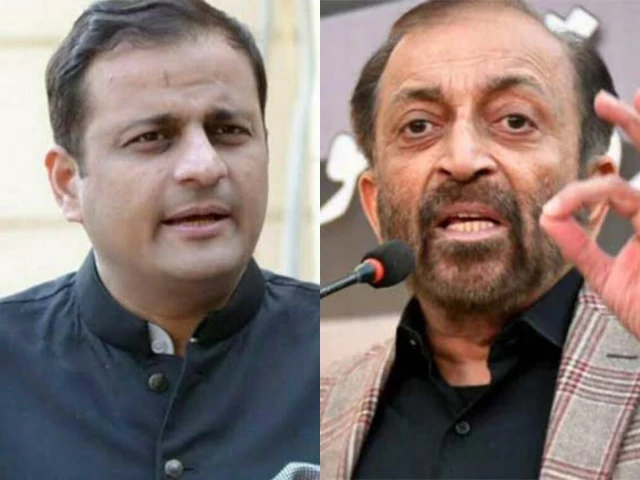
A combination of archive photos showing Karachi Mayor Murtaza Wahab (left) and MQM-P senior leader Dr. Farooq Sattar.
A new political confrontation erupted over the future of Karachi’s public spaces on Sunday, when the Muttahida Qaumi Movement-Pakistan (MQM-P) accused the authorities of facilitating illegal land allocations and environmental destruction in Hill Park, while Karachi Mayor Murtaza Wahab vehemently denied the allegations and insisted that no land belonging to the Karachi Metropolitan Party (Karachi Party) had been handed over to a Karachi party.
During a press conference at Hill Park along with senior MQM-P leaders Syed Aminul Haque, former Karachi mayor Waseem Akhtar, Sindh opposition leader Ali Khurshidi and other party officials, MQM-P senior leader and MNA Dr Farooq Sattar alleged that Karachi’s public lands were being systematically handed over to provincial government land grabbers.
Dr. Sattar alleged that a portion of Hill Park had recently been altered through unauthorized excavation and plotting, claiming that the development was not in the PECHS master plan. He accused officials of KMC and PECHS of issuing illegal No Objection Certificates (NOCs) and demanded an inquiry by the accountability authorities as well as suo motu action by the Sindh High Court.
Read: Sindh accuses IRSA of violating water deal, calls for federal intervention amid growing crisis
“If the hill is sold today, the whole park could be sold tomorrow,” he warned, calling for action against officials allegedly involved in the case.
The MQM-P leader also criticized what he described as the resurgence of encroachments on public lands across the city, including areas around Nehr-e-Khayyam, Beach View and Benazir Bhutto Park. He maintained that his party had previously fought legal battles to remove illegal structures from public spaces, including Bagh Ibn-e-Qasim, Kidney Hill Park and Empress Market.
Former mayor Waseem Akhtar called on government institutions to intervene, claiming that Karachi’s public assets were once again threatened by powerful interests. He warned that continued inaction could result in the loss of valuable public land.
During the press conference, Dr. Sattar also ex-Sindh Governor Kamran Tessori for welfare and education initiatives, especially free IT training programs for thousands of students. He further criticized the Sindh government’s handling of local government affairs and reiterated MQM-P’s long-standing demand for implementation of Article 140-A of the constitution to ensure greater autonomy for local bodies.
Reacting to the allegations, Karachi Mayor Murtaza Wahab categorically denied claims that KMC had allotted part of the Hill Park land.
“Hill Park was, is and will remain KMC property,” Wahab said, adding that KMC had neither allotted nor intended to allot “another inch” of land in the park.
Also read: MQM-P, PPP trade barbs
The mayor stated that he had personally ordered work in the Hill Park area to be stopped after reports of activity surfaced during the Eid holiday. According to Wahab, KMC officials visited the site on the fourth day of Eid and stopped the work immediately.
He clarified that while Hill Park falls under the jurisdiction of the KMC, ownership and regulatory issues relating to surrounding lands and housing societies, including PECHS, are separate issues. Wahab also noted that PECHS is regulated under federal authorities.
Defending his administration’s record, Wahab said the KMC was focused on preserving Karachi’s heritage and public spaces. Citing ongoing plans to establish a history museum at Beach View in collaboration with Citizens Archive Pakistan and the Sindh government, he argued that the project demonstrated the city’s commitment to preservation over commercialization.
The exchange marks the latest chapter in an escalating political dispute over land management, urban development and the protection of Karachi’s shrinking public spaces, with both sides trading accusations of responsibility for the city’s planning and governance challenges.
Mayor claims Eid cleanup success, JI cries foul
A massive post-Eidul Azha clean-up operation in the city has sparked a fresh political confrontation, with Mayor Barrister Murtaza Wahab claiming record waste collection and sanitation, while Jamaat-e-Islami (JI) dismissed the exercise as inadequate and accused the city administration of failing to address the metropolis’s chronic social problems.
Addressing a press conference on the Eid sanitation campaign, the mayor said authorities had remained on the ground throughout the operation along with Sindh Solid Waste Management Board (SSWMB) officials, elected representatives and sanitation workers.
Wahab praised the efforts of sanitation workers working in extreme temperatures and said the clean-up drive continued for five days, from the Bohra community’s Eid celebration to the fourth day of Eid observed by the Ahl-e-Hadith community.
According to official figures, a total of 169,961 tonnes of offal and waste were transported to landfills at Jam Chakro, Gond Pass and Sharafi Goth waste transfer station. Of this, 81,525 tonnes were sacrificial animal remains, while 88,436 tonnes consisted of litter and animal waste.
The mayor said all vehicles participating in the operation were monitored through a centralized tracking system. Authorities collected 9,293 tonnes of offal on the first day of Eid, 27,750 tonnes on the second day, 35,508 tonnes on the third day and more than 8,968 tonnes on the fourth day.
Read more: PTI, JI agree on need for no-confidence motion against Karachi Mayor Murtaza Wahab
He said 99 collection points had been established across Karachi’s cities, while 9,326 pieces of additional machinery and equipment, including 341 big dumpers, were deployed for the operation. More than 23,400 sanitation workers participated in the campaign.
Wahab said citizens were given access to a 24-hour helpline and mobile application for complaints and service requests. Of the 1,330 complaints received during the operation, about 90 percent were dealt with, he added.
The mayor rejected criticism from opposition parties, particularly JI and MQM-P, saying political rivals had continued to criticize the operation while remaining engaged in their own activities during Eid.
“Instead of holding press conferences and plunging into criticism, all stakeholders should work together for the city,” he said, adding that partisan politics often hindered efforts to improve municipal services.
Referring to remarks made by JI chief Hafiz Naeemur Rehman on Eid day, Wahab questioned how conclusions about the failure of the operation could have been drawn before the clean-up process was fully unfolded. Wahab claimed that this year’s operation had surpassed previous years.
However, JI’s elected union presidents strongly disputed the mayor’s assessment, accusing the city administration of trying to hide poor performance through political rhetoric and publicity.
In a joint statement, the party said residents had continued to report complaints of uncollected offal, garbage and unsanitary conditions throughout the Eid holiday. It noted that pictures and reports showing piles of garbage in various parts of the city remained visible on television channels and social media platforms until the fourth day of Eid.
“If the arrangements were truly exemplary, why did residents throughout the city continue to complain?” asked the statement.
JI claimed that Karachi’s problems extend well beyond the Eid period, pointing to persistent problems including the accumulation of garbage, deteriorating roads, sewage failures and water shortages.
The party said citizens were no longer interested in official claims or advertising campaigns and instead expected tangible improvements in municipal services. It accused the Sindh government and local government institutions of failing to address basic urban problems, resulting in growing public frustration.
The statement further criticized the mayor’s remarks about welfare activities, saying that public service initiatives carried out through charities should not be ridiculed or politicized.


