
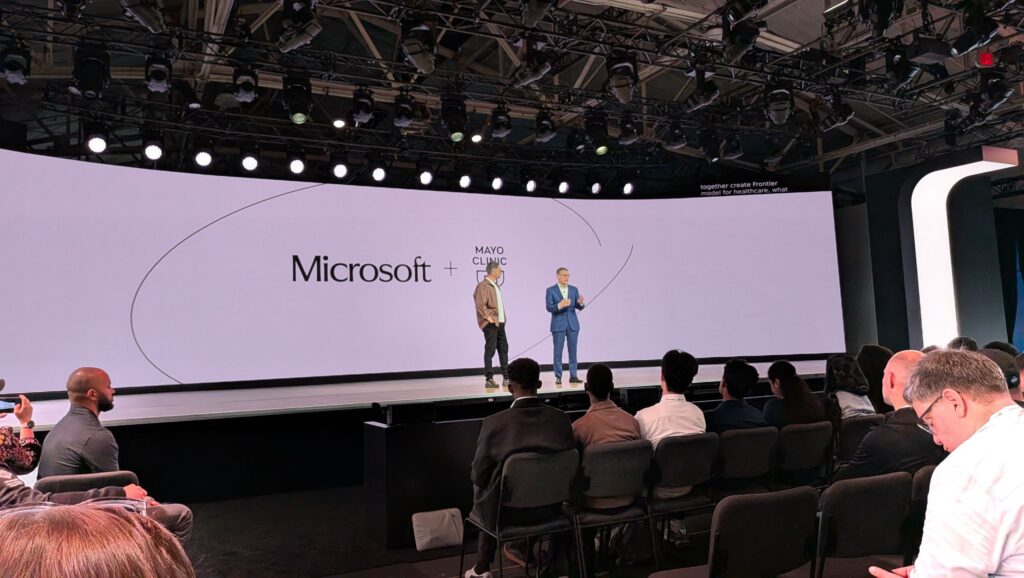
- Microsoft unveils seven new AI models
Microsoft’s AI chief has unveiled a slew of new AI models from the company as it looks to encourage developers to keep pushing the boundaries of the technology.
Mustafa Suelyman, CEO of Microsoft AI, took to the stage at Microsoft Build 2026 to announce the new launches, but also explain more about the company’s reasoning in its AI development.
He noted that Microsoft’s AI work would always seek to support human workers and users, not replace them, as it looks to create what the company calls “humanistic superintelligence.”

“Humanistic Superintelligence”
“We really live in the most remarkable times,” said Suleyman, “since I started working in artificial intelligence, the computing we use to train frontier models has increased by 1 trillion times—that’s 12 orders of magnitude in just 15 years. It’s now clear that a consistent, exponential increase in computation is leading to predictable advances in the next few years, and we’ll see orders of magnitude of computation applied to train frontier models.
“Intelligence is now a function of computation, long linear hill climbing has become the norm, the laws of scaling clearly hold, and it’s a remarkable time in our industry.”
Suleyman said his company is working toward a goal of “humanistic superintelligence” with state-of-the-art AI capabilities expressly designed “to serve humans, not replace them.
“The type of AI we create really matters,” he added, “we need an AI that puts humanity first, that always prioritizes human well-being and human progress. This is the core philosophy and motivation behind our superintelligence efforts at Microsoft—and it shapes everything we do.”
Continuing his goal of “keeping developers building at the absolute edge,” Suleyman announced no less than seven new Microsoft AI models across the fields of image, voice, and transcription.
But it also includes coding, with Microsoft’s new MAI-Code-1 model designed specifically for GitHub and MAI-Thinking-1, its first reasoning model, trained using what Suleyman called “pure and commercially licensed data,” with high performance and low token costs.
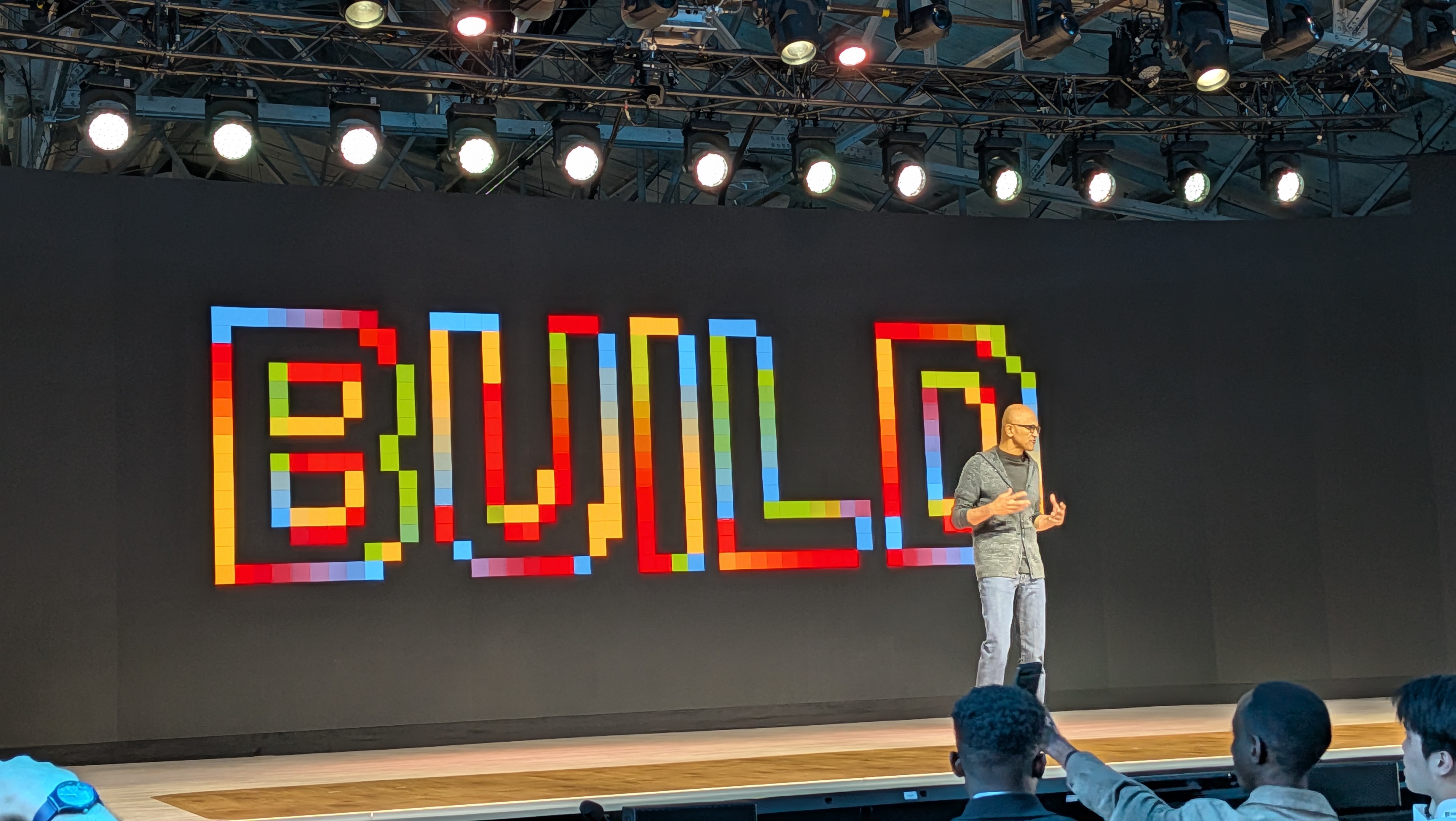
To help spur AI use and development in the scientific fields, the company also revealed more about Microsoft Discovery, its agentic AI platform focused on “a new era of research and development.”
Now generally available, including an app now in early preview, the Microsoft Discovery app uses specialized agents deployed by humans to mimic the scientific method across large amounts of knowledge to generate hypotheses and validate theories in a continuous loop.
Microsoft says the tool will be particularly useful for customers in highly demanding and regulated industries such as food and energy, who may now be able to use agent discovery for their research and development, greatly speeding up the research process across industries.

Follow TechRadar on Google News and add us as a preferred source to get our expert news, reviews and opinions in your feeds.


