
The opposition is labeling the plan “Karachi’s worst budget” and is promising a new no-confidence motion
KARACHI:
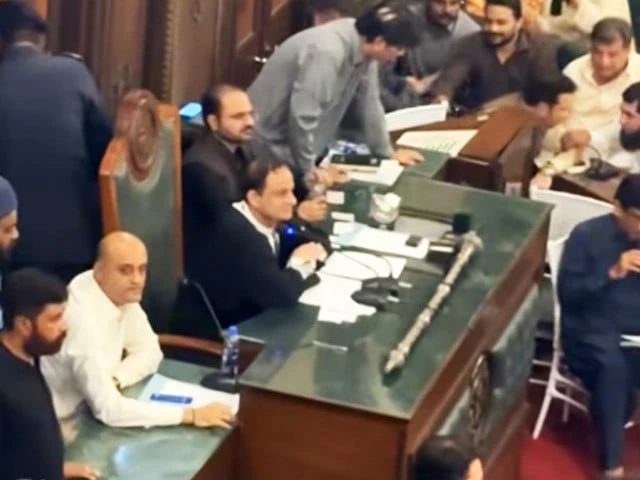
The Karachi Metropolitan Corporation (KMC) on Sunday approved its Rs60 billion budget for the 2026-27 financial year after a stormy city council meeting, with Mayor Barrister Murtaza Wahab describing it as a road map for continued development, while the opposition dismissed it as grossly inadequate for Pakistan’s economic hub.
The budget was passed by majority vote after hours of debate, capping a session marked by sharp exchanges between the ruling Pakistan Peoples Party (PPP) and opposition members over Karachi’s economy, governance and development priorities.
Presenting the third budget of his tenure, Wahab said the economic plan had been prepared with a focus on infrastructure development, municipal services and employee welfare despite financial and administrative challenges inherited from previous administrations. “We have tried to present a balanced budget in line with the needs of the city, while keeping infrastructure improvement and citizen services at the forefront,” he told the council. The mayor added that party chairman Bilawal Bhutto Zardari had prioritized Karachi’s development with the aim of making it an international city.
Defending his administration’s performance, Wahab highlighted projects completed during the outgoing financial year, including the reconstruction of Shaheed-e-Millat Road, Jinnah Bridge, Khalid Bin Waleed Road and Azim Pura Flyover, along with extensive road repairs, sewerage upgrades and pavement works across the city.
He also announced a number of governance reforms for the coming year, including GIS mapping of all KMC properties, a fully digital payment system through e-transfers, introduction of pension cards for retired employees and issuance of municipal bonds – making KMC the first municipal authority in Pakistan to formally approve the financing instrument.
Wahab said the civic body had also expanded employee welfare by moving salaries and pensions to SAP’s digital system, extending health insurance to about 11,500 employees and ensuring that monthly salaries are paid before the first day of every month for the first time in nearly 25 years.
He highlighted further restoration of heritage buildings, expansion of parks and sports facilities, improvements in public hospitals, solarization of street lights and environmental initiatives including urban forests and mangrove plantations. “The development work speaks for itself,” the mayor said, adding that the projects had improved citizen services while preserving Karachi’s historical heritage.
After the budget was passed, opposition leader Saifuddin Advocate launched a scathing attack on the fiscal plan, calling it “Karachi’s worst budget” and arguing that the Rs60 billion allocation fell far short of the city’s needs. “The Rs 60 billion budget is a cruel joke. Karachi needs at least Rs 300 billion,” he said, arguing that a city that contributes the lion’s share of the country’s tax revenue could not be run on what he described as an inadequate allocation. Saifuddin questioned how meaningful development could be undertaken when KMC’s own projected revenue stood at just Rs6.5 billion. He accused the Sindh government of maintaining control over Karachi’s key institutions and financial resources, claiming the city had been deprived of the funds needed to tackle its deteriorating infrastructure.
He also claimed opposition members were prevented from fully debating the budget during the council meeting, describing the procedure as being “bulldozed”.
The opposition leader further questioned why the KMC had failed to recover Rs850 million in outstanding dues from K-Electric, describing the financial plan as “anti-Karachi” and arguing that it offered little to address the city’s long-standing civic challenges.
Saifuddin maintained that despite contributing the overwhelming share of Sindh’s revenue, Karachi continued to receive an inadequate financial allocation, making meaningful development impossible.
Despite the heated debate, the council approved the budget by majority vote. The opposition announced it would once again seek a no-confidence vote against Mayor Wahab after the budget meeting once it secures the necessary numbers, signaling that Sunday’s approval of the budget is unlikely to end the political battle over Karachi’s finances and governance.


