
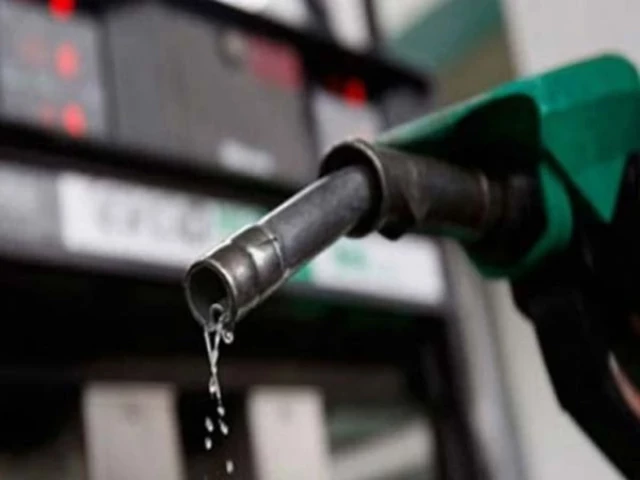
Petrol will now cost Rs 310.71. per liter while high speed diesel has been priced at Rs 323.30.
The federal government on Friday raised the prices of petrol and high-speed diesel (HSD) by Rs 13.18 and Rs 13.80 per liter respectively for the next week as global oil markets remain volatile following the latest escalation between the US and Iran.
According to a press release issued by the Petroleum Division, the new petrol price has been fixed at Rs 310.71. per liter while HSD will cost Rs 323.30.
The revised prices will come into effect from midnight on Friday.
Also read: Government cuts petrol and diesel prices by Rs1.97 per litre
The latest rise follows renewed tensions between the US and Iran, which have again pushed up global oil prices after both countries exchanged strikes this week. The escalation comes despite the two sides last month reaching a tentative agreement to end a four-month conflict that had disrupted global energy supplies.
Over the past month, the government had reduced oil prices by up to Rs 76 per liter following an easing of tensions and the signing of the Islamabad Memorandum of Understanding.
Last week, the government cut petrol and high-speed diesel (HSD) prices by Rs1.97 per litre. liters each. However, the biggest reduction came last month when it cut the price of petrol by Rs74 per liter and HSD by Rs67 per litre.
The latest increase came as global oil supplies posted their biggest monthly increase in months in June, with a rebound in shipments through the Strait of Hormuz boosting production in the Gulf, although production remained well below pre-war levels due to persistent security disruptions, the International Energy Agency (IEA) said on Friday.
According to the IEA’s latest Oil Market Reportglobal oil production nevertheless remained about 9.4 million barrels per day (bpd) below levels recorded before the US-Israeli war, despite the sharp rebound in June.
The report said oil supplies from Gulf producers rose by about 3.5 million bpd during the month after output partially reversed following the U.S.-Iran framework agreement. However, periodic disruptions to shipping through the Strait of Hormuz continued due to security concerns and continued reliance on US naval escorts, leaving regional oil production about 11.4 million bpd below pre-war levels.
Read more: Global oil output recovers as Hormuz shipments resume, IEA says
Production from the Opec+ group, which includes the Organization of the Petroleum Exporting Countries (Opec) and its allies, rose by about 2.45 million bpd in June to 38.39 million bpd.
Saudi Arabia accounted for about 900,000 bpd of the increase, while Kuwait contributed about 630,000 bpd.
Production from non-OPEC+ producers rose by about 1.63 million bpd to 60.37 million bpd, with the United Arab Emirates accounting for more than half of the increase of approximately 940,000 bpd.


