
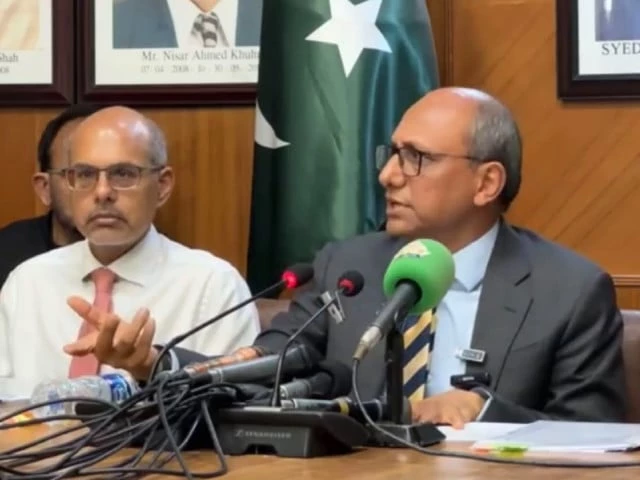
Sindh Minister for Labour, Human Resources and Social Protection Saeed Ghani addressing a press conference at the Sindh Assembly Committee Room on July 14, 2026. Photo: Express
Sindh Labor Minister Saeed Ghani said on Tuesday that the number of people diagnosed with human immunodeficiency virus (HIV) linked to Karachi’s Kulsum Bai Valika (KBV) hospital outbreak rose to 120 and announced that cases will be registered against those found guilty of negligence.
Addressing a press conference in the Sindh Assembly’s committee room, Ghani said that more than 10,500 people were screened for the virus at Valika Hospital and the surrounding area, resulting in the HIV-positive diagnosis of 120 people.
He highlighted that the infected children received treatment in five major hospitals across the country.
Out of the 120 affected people, Ghani said, 81 were registered beneficiaries of the Sindh Employees’ Social Security Institution (SESSI) and the remaining 39 people, though not covered by the institution, were still getting free treatment from the government.
Highlighting additional measures, the minister said, around 2,000 people were screened at SESSI’s Landhi Hospital, out of which 10 were diagnosed as HIV positive.
“The government will continue the screening campaign despite fears that additional cases may emerge,” he said, maintaining that early diagnosis remained the most effective means of controlling the spread of the disease.
Read: Total number of HIV cases at Karachi’s KBV hospital rises to 80 as pre-teens, toddlers test positive
He confirmed that all cases identified so far were linked to infections acquired before October 2025, and no new outbreak was reported thereafter.
Rejecting allegations that the provincial government remained indifferent to the outbreak at the SESSI-run Valika Hospital, the labor minister said the government acted as soon as the cases surfaced in October last year.
He said the health ministry’s communicable disease control team began screening residents the day after the first cases were reported, while an inquiry committee was set up within days.
According to the minister, the initial investigation had confirmed HIV infection among 16 children and recorded two deaths, and a subsequent investigation report identified 78 confirmed cases and six deaths.
“Show-case notices have been issued to 37 doctors and staff members,” Ghani said, adding that all those found responsible would face strict disciplinary and legal action.
Read more: CM orders probe after Valika HIV outbreak
“Those involved will not only be dismissed from service, but first information reports will also be registered against them and they will face trial,” the minister claimed during the press conference.
Ghani said the Sindh government had established a Rs2 billion endowment fund for the treatment and welfare of the infected children, stressing that the amount would be increased if required.
To protect children and families from social stigma and discrimination, the minister pledged to keep the identity of those infected “confidential” in accordance with the Sindh HIV and AIDS Control, Treatment and Protection Act 2013.
Responding to a question about medical waste disposal, which was the main reason behind the HIV outbreak, the minister said that clinical waste management operated under Sindh Hospital’s waste management rules, but some people refused to follow the prescribed procedures for personal gain.
He said punitive action was underway against such elements.
At the press conference, Indus Hospital and Health Network founder Dr. Abdul Bari Khan that the prevalence of HIV and hepatitis C in Pakistan remains a matter of serious concern and called for coordinated efforts by the government, health institutions and other stakeholders to reduce the number of cases.
Aga Khan University Hospital Associate Chief Medical Officer and Infectious Disease Specialist Dr. Faisal Mahmood emphasized that the problem was not endemic to a single hospital or locality.
He called for stricter implementation of infection prevention and control protocols across all health facilities, including private clinics.


