At these workshops, however, men often begin by drawing soccer jerseys or their favorite team, the doctor said. Soon these drawings become conversations about everyday anxiety – showing how sport can open doors that traditional discussions about mental health often cannot.
“On the pitch, absolutely no one wins alone“, said Dr Al Nahari. “The players rely on an entire ecosystem – defenders, midfielders, coaches, doctors and fans in the stands – all have important roles. When we approach youth mental health, we require exactly the same ecosystem.”
Dr. Speaking alongside UN Assistant Secretary-General for Youth Felipe Paullier at UN headquarters on Tuesday, Al Nahari highlighted how sport can improve young people’s mental health – and reduce stigma.
On Friday, just two days before the men’s World Cup final across the river from Midtown Manhattan in New Jersey, the United Nations Office on Youth will host young leaders, politicians, civil society, athletes and more celebrate football as a catalyst for youth mental health.
The event is part of the Youth Office’s flagship initiative on young people’s mental health and well-being, which aims to move the conversation beyond clinical answers.
Youth matches
This was found by a UN report in February one in seven people aged 10 to 19 have a mental disorder75 percent of adult mental disorders were already present in the mid-twenties, and depression among adolescents and young adults has increased in recent years.
It noted that young people’s mental health is strongly shaped by a wide range of inequalities and social determinants – including education, employment, family dynamics, poverty, technology and societal attitudes – all of which require cross-sectoral policies to address.
“Young people are navigating a very complex world with very unpredictable changes in terms of digital disruption, economic uncertainty, the consequences of armed conflict, displacement and social isolation,” said Mr. Paullier.
As a result, the World Health Organization (WHO) recommends interventions that build resilience, improve alternatives to risky behaviors, integrate multiple delivery methods, and promote supportive social environments.
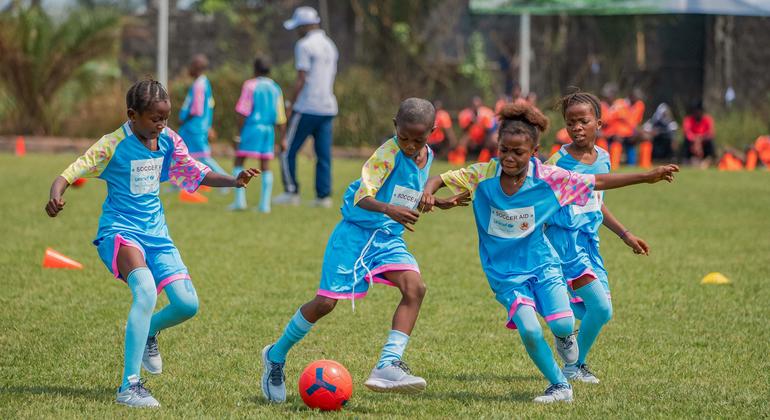
One such intervention is youth participation in sports.
Mental game
That’s what the same report found team sports are associated with lower rates of depression and anxietyregardless of country, but that many young people face barriers to meaningful participation in sport.
As the world’s number one sport, says the Youth Office football can build belonging and social connection, strengthen emotional resilience and promote inclusion and collective well-being.
“We believe that football and sport are a really powerful messenger, not only because of what they represent in connecting people, because we know that football legends can be powerful messengers to transform narratives,” said Mr. Paullier.
Both speakers emphasized that football is unique because it acts as a universal language that gives young people a sense of belonging.
Dr. Al Nahari stressed that young people are already building effective solutions to support each other’s mental health, and that it is the duty of the UN and the international community to listen – and become productive partners with them.
“The most important players are the youth themselves,” she said. “They don’t wait on the sidelines to be rescued.”
Football is not enough
The “One World, One Game, One Goal” event on Friday demonstrates football’s ability to tackle social isolation, but it is just one example of the UN’s multi-sectoral approach to addressing youth mental health around the world.
For example, WHO and the United Nations Children’s Fund (UNICEF) provide an evidence-based framework to help governments implement effective psychosocial support programs in schools through the Helping Adolescents Thrive (HAT) initiative.
“We don’t just want to use sports,” said Mr. Paullier. “We want to meet the young people where they are.”
In addition to UN efforts to raise awareness of youth mental health and support implementation programmes, Mr Paullier said the world needs to do a better job of playing a supportive role with funding.
Most countries allocate less than two percent of their annual health budgets to mental health, creating a financing gap of 200 billion dollarsAccording to WHO.
“Behind these numbers are actually millions of young people who bear a pain that is often unseen, unspoken and unsupported,” said Mr. Paullier.