
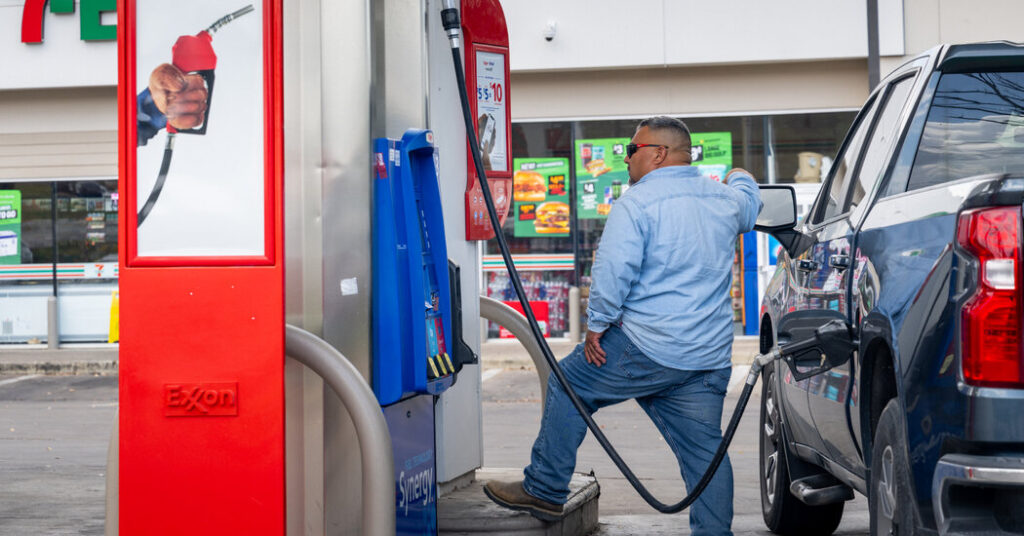
The average price of diesel in the United States rose to over $5 per gallon on Thursday. gallon, up 33 percent since the start of the war with Iran, as the resurgent conflict continued to inflate energy prices.
The average national price Thursday was $5.01 USD, according to the AAA motor club, an increase of 7 cents from the day before.
Rising prices for diesel can reverberate throughout the rest of the economy due to its many uses, including industrial machinery, commercial transportation and power generation.
US diesel prices first exceeded 5 dollars per gallon in March, the highest level since 2022, when Russia invaded Ukraine. Prices retreated below $5 in June after Iran and the United States announced they had signed a memorandum of understanding intended to quell fighting in the Strait of Hormuz, a critical passageway for the world’s oil.
But renewed strikes between the US and Iran in the strait have slowed shipping almost to a standstill. On Monday, President Trump said he would reimpose a naval blockade of Iranian ports and considered getting Gulf states to invest in the United States in exchange for military protection while transiting through the strait.
And while the market for oil is tight, the pressure on the market for diesel and petrol has been even tighter. Many refineries around the world that convert crude oil into fuel are closed or producing at lower levels.
A number of oil and gas facilities across the Persian Gulf were damaged in attacks at the start of the war, which started on 28 February. Refineries around the world are processing about 4 percent less oil than they were a year ago, according to the International Energy Agency.
That decline has been particularly severe in Russia, whose refineries have suffered extensive damage from Ukrainian drone strikes. Russia is typically one of the world’s biggest exporters of diesel, but it banned overseas sales of the fuel in early July to preserve domestic supplies. The ban is in place until 31 July. While the US does not import fuel from Russia, the lost exports have further tightened global supplies.
China has also cut back on its refinery processing due to weakened domestic demand and increased crude oil prices. It has also slowed its fuel exports for the past four months to shore up its own supplies.
As a result, the difference between current prices and pre-war prices is much greater for petrol and diesel than for oil. The average national gasoline price was $3.94 Thursday, according to AAA, a 32 percent increase since the start of the war. The price of Brent oil, the international benchmark, was close to $85 a barrel. barrel Thursday.
The IEA said in a report this month that while more crude hit the market, “refinery activity and product supplies have been much slower to respond.”
“Gulf exports of refined products and LPG in June remained less than half of pre-war levels, compared with crude oil flows that reached nearly three-quarters of their rates in February,” the report said, referring to liquefied petroleum gas.


