
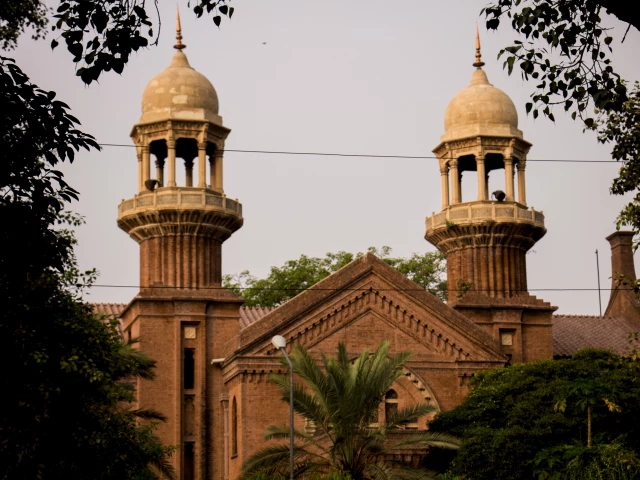
The petition also claims to strike down, giving members of the provincial assembly the right to official passports
LAHORE:
In a petition raising wide-ranging constitutional questions about separation of powers and the limits of the provincial legislature, the Lahore High Court was asked on Thursday to strike down a provision in the provincial assembly in the Punjab Privileges Act, 1972, which allegedly allows lawmakers to exercise exclusive judicial powers.
The respondents include the Province of Punjab through its Chief Secretary, the Law Department, the Provincial Assembly of Punjab through its Secretary, the Speaker of the Punjab Assembly and the Parliamentary Affairs Department.
The constitutional petition claims that the Punjab Assembly cannot constitutionally set up a ‘Judicial Committee’ empowered to prosecute alleged offenders, record evidence, determine guilt and impose punishment, arguing that such powers belong exclusively to the independent judiciary under the Constitution.
The petition also asked the court to strike down another provision that entitles members of the provincial assembly to official passports, arguing that issuing passports falls within Parliament’s exclusive legislative competence.
The petitioner, Sana Afzal Malik, sought the court’s declaration that Section 11-C, which sets up a judicial committee in the Punjab Assembly, is unconstitutional as it allegedly empowers elected legislators to perform functions reserved exclusively for the judiciary.
According to the petition, the Constitution vests judicial power exclusively in courts constituted under Article 175, while Article 10-A guarantees every individual the right to a fair trial by an independent and impartial tribunal.
The petitioner argued that members of the provincial assembly, who are elected politicians, cannot constitutionally adjudicate disputes, record evidence, determine guilt or impose penalties.
Read: District settlement committee deprived of judicial powers
The petition argued that merely labeling an assembly committee “judicial” does not make it a constitutional court, maintaining that the substance of the powers exercised – not the title of the body – is the crucial constitutional test.
It further argued that the impugned provision undermines the constitutional doctrine of separation of powers by transferring key judicial functions from the courts to the legislature. The petitioner has described the legislation as a case of “colourable legislation”, arguing that although it is framed as a law regulating parliamentary privilege, its true effect is to create a judicial forum outside the constitutional framework.
The petition also challenged Section 15-C of the Act, which entitles members of the provincial assembly to official passports. It contends that issuance of passports falls within the exclusive legislative domain of the Federation under Item No. 3 of the Federal Legislative List and Article 142(a) of the Constitution.
The petitioner contends that the Punjab Assembly lacks legislative competence to enact provisions relating to official passports.
The petitioner requested the court to declare Sections 11-C and 15-C of the Provincial Assembly of the Punjab Privileges Act, 1972 unconstitutional and strike them down. Pending final decision, the petition also seeks suspension of implementation of the impugned provisions.


