
Talks remain at an early stage and could still be complicated by heightened tensions between the US and Iran
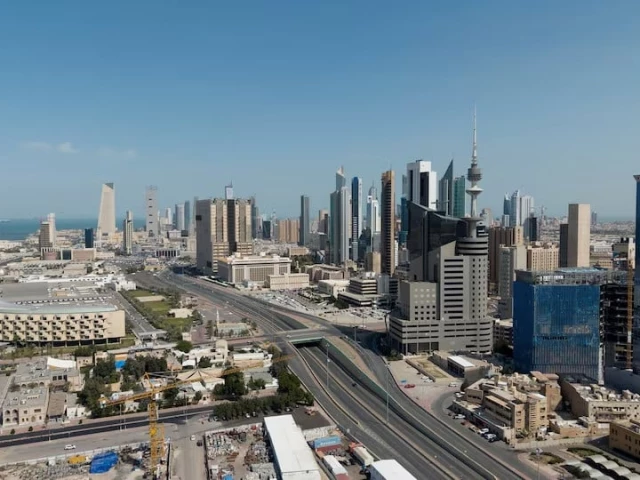
A drone photo shows Kuwait City, in the wake of the Israeli and US strikes on Iran, in Kuwait February 28, 2026—REUTERS
Pakistan has negotiated an expanded defense pact with Kuwait in exchange for energy cooperation and investment, according to five sources with knowledge of the talks.
The talks remain at an early stage, all sources said, and could still be complicated by heightened tensions between the United States and Iran, one source said.
Reuters reported on Thursday that there was growing concern in Islamabad that its mutual defense pact with Saudi Arabia, signed last year, could draw Pakistan into the US-Iran war. After the Houthis launched an attack on Saudi Arabia on Monday, nuclear-armed Pakistan told Iran it would treat attacks on the kingdom as attacks on itself.
Any defense deal with Kuwait, which has come under heavy attack from Iran this year, would also raise questions about Pakistan’s role in future US-Iran mediation.
Kuwait has had a more limited defense agreement with Pakistan on training and joint exercises since 2023. It is now seeking a show of force from Islamabad that would be similar to Pakistan’s pact with Saudi Arabia, including “thousands of Pakistani troops on the ground, fighter jets, drones, an air defense system and other official Pakistani installations,” a Pakistani official said.
It is unclear whether Pakistan is willing to go that far, given that its deal with Saudi Arabia was the result of a decades-old close alliance with Riyadh.
“Kuwait’s wish list includes everything,” said a Pakistani security official with knowledge of the talks. “But let me be clear on one thing: We are not, and we cannot consider, the deployment of combat troops at this time.”
A Middle Eastern source confirmed that Kuwait has been in talks with Pakistan, including on defense procurement, but said it was “not clear that this will constitute a defense pact in itself”.
Reuters spoke to four Pakistani sources and one Middle Eastern source, none of whom were authorized to comment.
Inter-Services Public Relations and Kuwait’s Ministry of Information did not respond to requests for comment.
Search for defense alternatives
Over the past year, Pakistan and the Gulf States have seen the benefits of entering into new regional defense pacts.
Pakistan has a large military and produces its own fighter planes. This has made it a possible alternative or addition to US protection among the Gulf states as they have become more wary of US reliability as an ally.
Pakistan is seen in Kuwait as a safe bet, said a Middle East source familiar with Kuwait’s security planning.
“They’re already with the Saudis, they have a long history of defense development, they’re Sunni Muslims, they have a good relationship with the Americans, so it’s not as sensitive as some other options,” the source said.
Turkiye, Pakistan and Saudi Arabia have prepared a draft agreement on a mutual defense pact, separate from the one Islamabad has with Saudi Arabia. Meanwhile, Bahrain is interested in a similar pact, one source said, and Jordan has expressed interest in an arms and training deal, three sources said.
Barrels for boots
Pakistan has seen defense deals with neighboring countries as a way to support investments it urgently needs.
As part of the possible deal with Kuwait, Islamabad will seek cooperation on energy security – part of a broader push by the energy ministry to increase Pakistan’s oil and fuel reserves.
Kuwait is exploring a bonded fuel storage with Pakistan that would build on an existing government-to-government diesel supply agreement between the two countries, a Pakistani source familiar with the talks said.
Such offers could still be sufficiently attractive for Pakistan’s leadership to pursue a major defense deal, two sources said, adding that talks were expected to pick up once tensions between the United States and Iran ease.
Analysts warned that this could turn out to be wishful thinking. “Pakistan needs to be aware of the dangers of over-commitment,” said Muhammad Faisal, a South Asia researcher at the University of Technology in Sydney.


