
Islamabad:
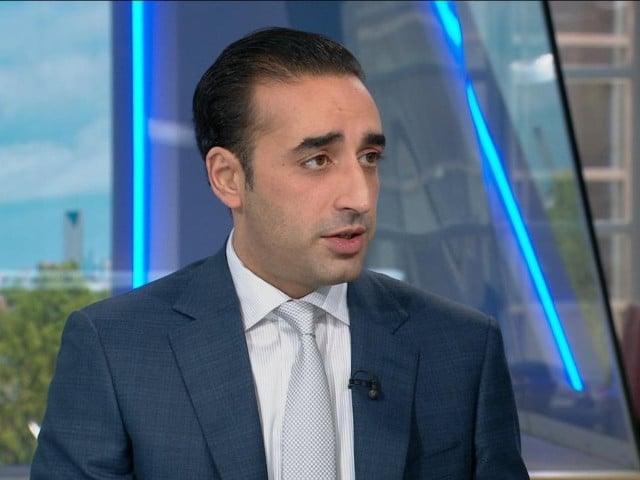
Bilawal Bhutto Zardari, head of a parliamentary delegation touring world capitals to gather support to Pakistan after a recent confrontation with India, has warned that Pakistan can take more aggressive steps if India constructs new channels or dams on the three rivers within its territory.
“India’s threat to close the water supply to 240 million people in Pakistan is a violation of the UN Charter. If they were to act on it, Pakistan has been very clear: We would consider that a war of war,” he said in an interview with Sky News during his visit to Britain on Monday.
He referred to India’s unilateral suspension of the Indus Waters Treaty (IWTT) after the April 22 of the April Militant attack in the Pahaldam area of the Indian illegally occupied Jammu and Kashmir (IIOJK).
The attack brought the two nuclear armed countries to the brink of the war, with both of the hostile neighbors launching missile, drones and air strikes within each other’s territories during a four-day conflict, suddenly led to a ceasefire announced by US President Donald Trump.
Judgmented weapons of water by the eastern neighbor, Bilawal said, “We cannot allow this precedent to be canceled; we cannot weapon water if they were to build new channels or a new dam on the three rivers in Pakistan’s domain, we should take a more aggressive step.”
Bilawal, also the chairman of PPP, said that Pakistan had been at war with India before and also had many exchanges, but had never been such a drastic step.
“Currently, the threshold of conflict between India and Pakistan is the lowest it has ever been in our history. We have achieved a ceasefire, but we have not achieved peace.”
He said through the recent escalation, Pakistan had acted with restraint and responsibility, and even today, “Pakistan’s message is that we want peace, peace through dialogue and diplomacy. We believe there is no military solution to any of the problems between India and Pakistan.”
He said India unfortunately refused to speak, and the delegation went from capital to capital and engaged in the international community and sought their help in this persecution after peace.
“Pakistan believes that there should be dialogue and diplomacy where we discuss all questions – terrorism, Kashmir or water – and begins to move on.”
The former Foreign Minister said there is no legal term for suspending or holding the Indus Water’s Treaty (IWT) in Abeyance which, in addition to Pakistan and India, also includes international institutions such as a party that requires agreement for any changes.
To a question, he said the water had not stopped flowing into Pakistan as India lacked capacity at the moment to stop it completely, but they have delayed the release.
To a question, Bilawal told the interviewer that Pakistan had taken effective actions against terrorist groups during the Financial Action Task Force (FATF) frame and was removed from the FATF Gray list, proving the International Society’s endorsement of Pakistan’s actions against such groups.
He said the terrorist attack that took place on April 22 in India had nothing to do with Pakistan – performed by an original group in India.
When he repeated Pakistan’s attitude that US President Trump deserved the honor of the ceasefire Pakistan-India, he said throughout this episode, India had engaged in wrong information and disinformation.
“They have not been honest with their own public, the media or their allies, and this is an extra thing they are not honest about going to war on the basis of a lie, and then they could not win that war.
“They lied about the aircraft we shot down, they lied about the details of this terrorist attack,” he said.
Bilawal said India could not name a single terrorist involved in this attack, reveal his identity or border crossing information.
He emphasized Britain’s “unique role” throughout the situation and said the country should encourage India to participate in dialogue with Pakistan.
“India said no to an independent investigation when we asked for one into the terrorist attack. They say no to mediation, be it from Britain or the United States, and they say no to dialogue with Pakistan.
“If they are stuck in the status quo, we have lowered the conflict threshold between India and Pakistan to the point where any terrorist attack means war.”
He called Pakistan’s commitments with Britain “really positive,” he said the British government was eager to encourage both sides to participate in dialogue to deal with all questions. “Only the Indians are difficult to do this,” he said.
Meanwhile, the Pakistani parliamentary high -level delegation was employed by Bilawal, with prominent members of the British think tank, Academy and the decision -making community in the prestigious Chatham House, one of Britain’s leading thinking tanks focused on foreign and security policy issues.
The closed door discussion was held under “Chatham House Rules”, used around the world to encourage inclusive and open dialogue at meetings.
Bilawal and other delegation members conveyed Pakistan’s perspective on recent escalation in South Asia, while expressing serious concern over India’s unprovoked military aggression, resulting in civilian losses and posing a significant threat to regional stability.
They emphasized that India’s actions constituted a clear violation of Pakistan’s sovereignty, international law and the charter of the United Nations.
The Pakistani delegation said that Pakistan’s armed forces with full support from the population of Pakistan had given an appropriate answer to India and demonstrated Pakistan’s decision to defend its sovereignty and avert India’s ambitions to put any new so -called “normal” in the region.
The delegation noted that the pending solution of the Jammu and Kashmir blanket remains the most important stumbling block for lasting peace and stability in the region.
They urged the international community to support meaningful dialogue and ensure respect for international obligations and human rights.


