
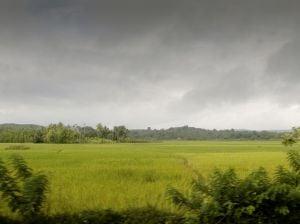
Islamabad:
Since Pakistan Seles for a 13% increase in rainfall in 2025 -Monsun season, environmental experts have warned that inadequate drainage infrastructure could aggravate flood risks and financial losses.
Pakistan Meteorological Department (PMD) predicts the monsoon to begin around June 23 and continue until September with potential flash floods and urban floods, especially in regions such as Koh-E-Suleman, Sindh, AJK, KPK, Punjab and Islamabad.
Experts emphasize that without proactive maintenance of drainage – such as clearing of waste and the removal of blockages – facing significant financial consequences.
Monsun-induced flood has historically caused serious financial damage in South Asia. For example, the floods in the region caused an estimated $ 105 billion in compensation, with Pakistan alone accounting for $ 1.5 B. Similarly, in 2024, Nepal experienced flooding, resulting in over RS17B in losses, which primarily affects agriculture and infrastructure.
These recurring disasters emphasize the urgent need for improved drainage systems to mitigate financial losses and increase resilience to future floods.
In Islamabad, sectors such as G-10, F-10, I-10 and I-9 face chronic drainage problems. Drainage is often clogged with solid waste, including plastic bags, bottles, food waste and construction residues.
Under the monsoon, these drains are further hindered with soil, sand and shrubs, which significantly reduces their capacity and causes water to flow into residential areas. Residents have repeatedly called on the authorities to clean and maintain these drains to prevent property damage.
Environmental experts emphasize that the deteriorating flood situation is not only due to increased rainfall, but also due to climate change, neglected infrastructure and inadequate public awareness of the consequences of dumping waste in drainage channels.
Informal settlements, especially in sectors such as G-6, F-6, G-7, F-7 and G-8, are often located along drainage channels. These areas have a high risk of penetration of flooding water, which can cause significant damage to the infrastructure.
Experts recommend issuing timely warnings to these communities to take the necessary precautions. Experts note that accumulation of sediment in drains reduces their width and capacity. For example, a drain that was once 100 meters wide can now only be 50 meters wide due to sediment structure.
This narrowing increases the risk of overflow and flooding as the same amount of water is forced through a much narrower channel. Low -cost houses, especially those with basements or illegal connections to drains, are especially vulnerable to the penetration of flooding water.
Experts encourage authorities to prioritize drainage maintenance and improvements in infrastructures prior to the Monsun season. Proactive measures, such as regular cleaning of drainage and increased public awareness of the importance of proper waste disposal, are important for mitigating flood risks and financial losses.
Environmentalist Muhammad Aslam called on authorities to take immediate action in informal settlements, especially in sectors G-6, F-6, G-7, F-7 and G-8, where many homes are built along drainage channels.
“These areas are very vulnerable to floods and residents should be issued timely warnings for taking precautions,” he said. Aslam also highlighted that the accumulation of sediment reduces the drainage capacity drastically.
“A drain that was once 100 meters wide is now about 50 meters due to uncontrolled structure,” he explained. He warned that cheap houses, especially those with basements or illegal drainage connections, are at serious risk.


