
- YouTuber Linzin hacked their iPhone Air with some ingenious modifications
- The changes added a transparent back and a custom SIM card slot
- But the procedure also resulted in some notable drawbacks
Would you be tempted to buy a transparent version of Apple’s iPhone Air? You can’t get one from any official source, but a YouTuber recently documented how a “dream collaboration” with enterprising engineers at China’s Huaqiangbei electronics market helped make it a reality — albeit with a ton of sacrifices.
The device was revealed by YouTuber Linzin, who had it custom-made at Huaqiangbei Market by several of the resident traders. During the 22-minute video, Linzin explained how the paint on the iPhone’s back cover was laser stripped and its internal thermal pads removed, leaving only a clear back panel. The iPhone was then reassembled with its new look.
This did not result in a non-functional device that had been made to look pretty. According to Linzin, the transparent iPhone Air could be turned on, connected to a cellular network, and functioned more or less as normal. However, it had to be repaired later when the microphone strap had come loose, highlighting the risks of this kind of unofficial phone operation.
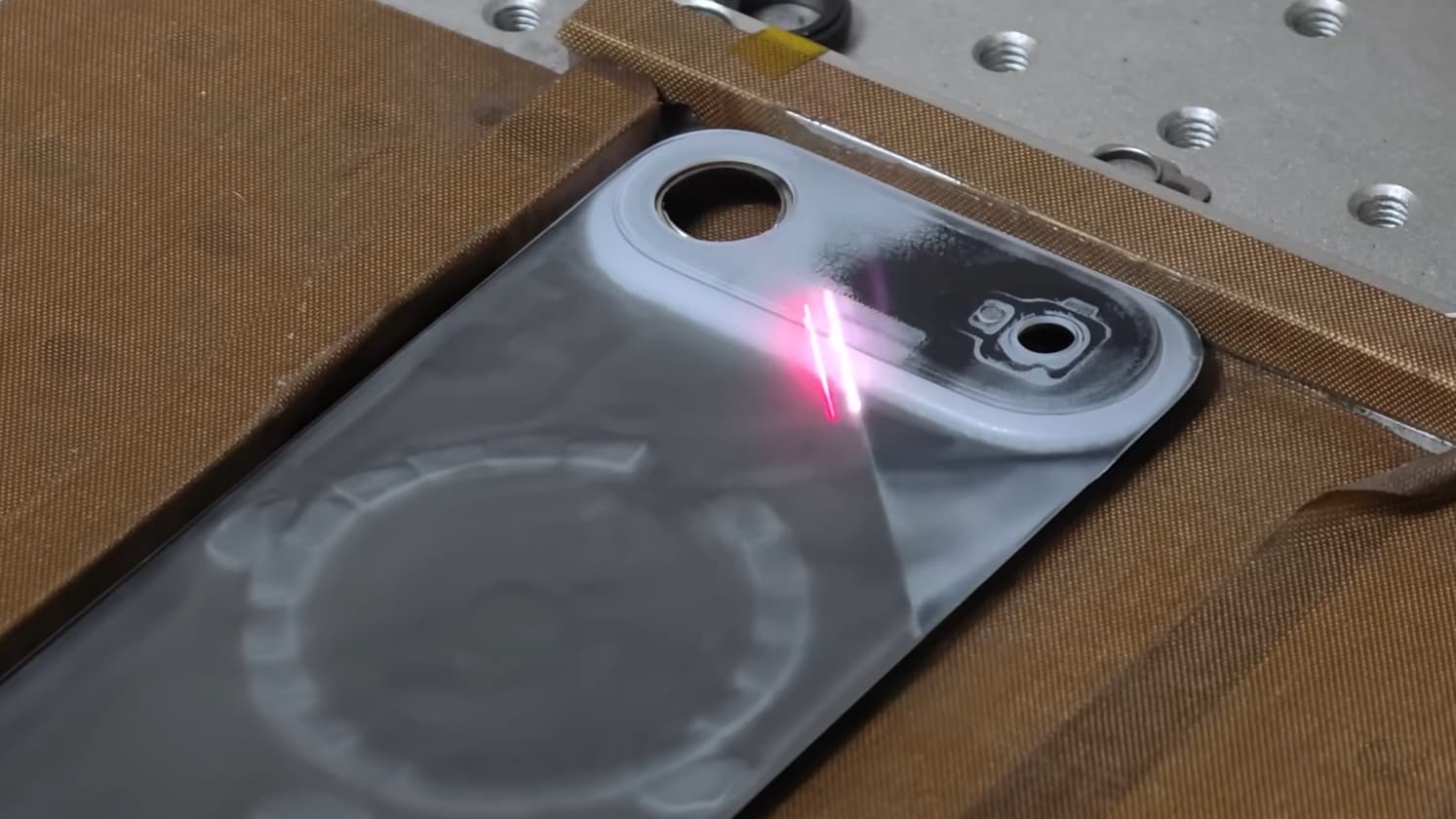
Despite that, the new iPhone Air provided a striking glimpse of the device’s internal components in action. It’s unlikely that Apple will ever release a device like this—unlike the iMac G3, the iPhone’s internals aren’t meant for public display—but it at least provides a fascinating glimpse into what’s possible if you’re the risk-averse type.
A risky procedure
Replacing the iPhone Air’s case with a transparent alternative isn’t the only adaptation to Linzin’s phone. In addition to that, they had a physical SIM card slot installed so that SIM cards could be manually added and removed.
By default, the iPhone Air lacks a SIM card slot and can only be used with an eSIM. This was not an attractive prospect for Linzin, who said they change phones so often that constantly registering new eSIMs is cumbersome.
To install a SIM card slot, one of Huaqiangbei’s dealers removed the haptic motor from the iPhone Air and replaced it with both a smaller vibration module and a SIM holder. The process involved machine-cutting the iPhone’s frame to accommodate a SIM card slot, then adding some “custom wiring” that allowed the phone to connect to the SIM card.
If you’re feeling brave and want to try something like this yourself, you’ll have to make a few sacrifices. In addition to the added cost, creating a transparent case and adding a SIM card slot resulted in hotter temperatures under load, loss of the iPhone’s water resistance, weaker haptic feedback, and a decrease in the product’s structural strength. And of course that also voided the iPhone Air’s warranty.
Still, it shows what can be achieved with a little know-how and dedication. The end result had many drawbacks, but had a dramatic new look and convenient SIM features that you won’t get from any iPhone Air bought directly from an Apple Store.
Follow TechRadar on Google News and add us as a preferred source to get our expert news, reviews and opinions in your feeds. Be sure to click the Follow button!
And of course you can too follow TechRadar on TikTok for news, reviews, video unboxings, and get regular updates from us on WhatsApp also.


