

- A Redditor has claimed that Monster Hunter Wilds runs poorly when minor DLC is owned and activated
- It seems to be due to the game’s constant DLC presence checking, which leads to a higher load on the CPU
- Capcom has several upcoming patches to further improve performance
Since launching in early 2025, Capcom’s Monster Hunter Wilds has faced consistent criticism due to its poor performance on PC, especially on the lowest hardware. Fortunately, it looks like the root of the problem may have been discovered, and it’s pretty comical.
Monster Hunter Wilds reportedly runs better on PC when more downloadable content (DLC) is owned and activated, and much worse with less, as Redditor u/de_Tylmarande claims. Using the same hardware and game settings in both tests, the user highlighted a trend of 20 to 25 frames per second (fps) while in player hubs in the game without DLC installed, and over 80 fps with a ‘DLCPresenceFix’ mod installed.
This indicates that the game’s DLC checks are putting extra load on the CPU, on top of all the CPU processes already required for the game’s content itself, and this is evident in the performance test video (available below), which shows less CPU usage and higher GPU usage when the mod is active.
The mod is a user test to essentially trick the game into thinking that all DLC is owned and installed, but in reality it’s just blocking the CPU heavy process that seems to be constantly searching for DLC.
It’s a truly bizarre discovery, and would explain why the game suffers from poor performance even on high-end hardware without relying on frame generation technology – and it might also add credence to some users’ reports of fair performance on their configurations, as they might own more DLC.
Look at
The user has promised a release of the full mod if Capcom doesn’t fix the issue themselves, and strongly recommends that consumers avoid purchasing all DLC for Monster Hunter Wilds for better performance.
Given Capcom’s stance of consistently using anti-tampering software, Denuvo, for a large majority of its recent games, there’s no guarantee it will oblige and fix this bug. One thing is for sure: this is not a good look for the developer, and while this is likely a bug, it won’t stop consumers from questioning whether it was intentional or not.
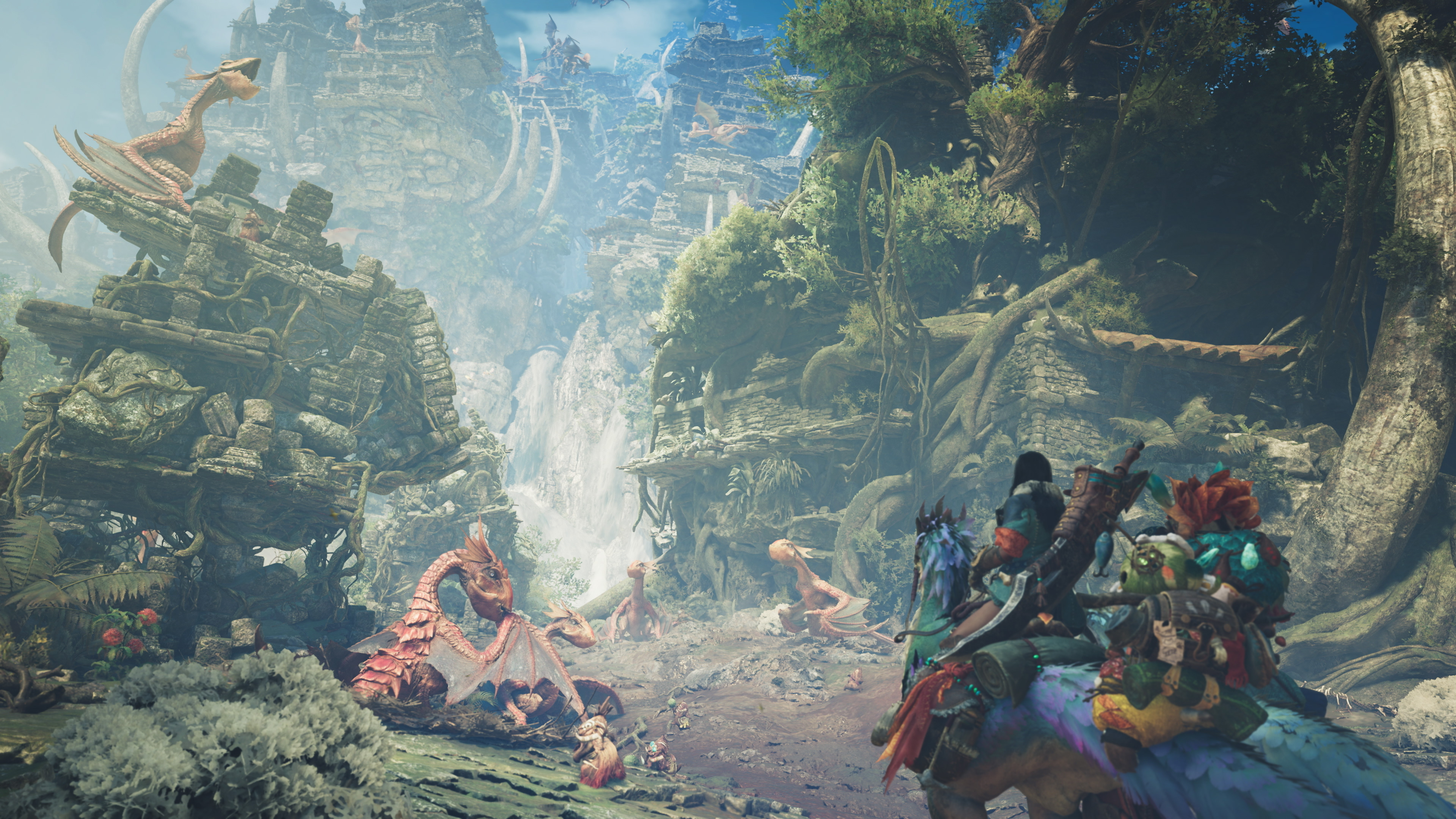
Monster Hunter Wilds, Unfortunately, it’s not the first game to suffer from major performance issues, despite the RE Engine being popular for great frame rate stabilization and optimization, specifically in Resident Evil game.
Dragon’s Dogma 2 shares very similar performance issues as a CPU-bound game and still has significant frame rate drops in main cities with multiple non-player characters (NPCs), almost equivalent to Monster Hunter Wildshub. Although patches have improved performance in both games, this discovery of DLC presence control is enough to raise the question of whether DLC ownership in Dragon’s Dogma 2 have any effect on performance.
If legit, it could easily damage the trust Capcom has gained from consumers in recent years, and rightfully so.
It is worth noting that Capcom is releasing a new patch for Monster Hunter Wildsset for January 27th, which is meant to bring ‘optimization improvements to Steam-specific processes and opportunities to reduce processing load’, and another performance update coming later on February 18th.
Capcom may already be on top of the case, but if this claim happens to be correct, I doubt it will end well for the popular developer.
Follow TechRadar on Google News and add us as a preferred source to get our expert news, reviews and opinions in your feeds. Be sure to click the Follow button!
And of course you can too follow TechRadar on TikTok for news, reviews, video unboxings, and get regular updates from us on WhatsApp also.


