
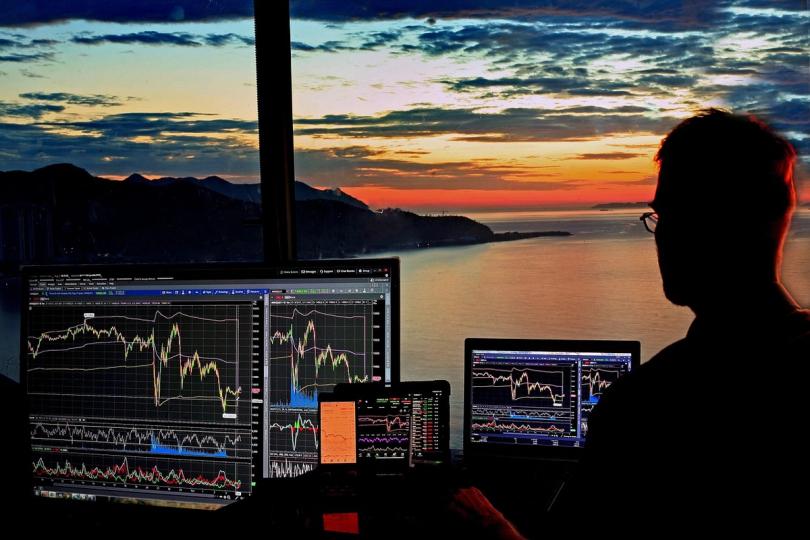
Bitcoin dipped below $63,000 in Asian hours, extending overnight weakness amid President Donald Trump’s tariffs and AI jitters dampening investor sentiment.
The leading cryptocurrency by market capitalization is already down nearly 7% for the week, trading at levels last seen on Feb. 6, when prices nearly fell to $60,000, CoinDesk data shows.
“Like stocks, Bitcoin has experienced a sharp pullback today, driven largely by renewed tariff-related uncertainty, similar to the events of April 2025. Furthermore, ratcheting geopolitical tensions are likely to prove bearish for BTC in the near term,” Matt Howells-Barby, Vice President at Kraken, and the host of CoinDe Tradings, told Pro Spacersk.
He added that the $60,000 level is a key support that bulls are watching. “If that level doesn’t hold, we could potentially see a move into the mid-to-low $50,000 range,” he noted.
US stocks fell on Monday after Trump said he would slap temporary 15% tariffs on imports from other countries, up from the 10% rate announced on Friday after the Supreme Court’s decision to strike down his tariff strategy. Meanwhile, investors continued to sell shares in companies that stand to lose the AI revolution.
History favors a deeper selloff in BTC
History shows that BTC rarely bottoms before the 50-week average price crosses below the 100-week average price. This so-called bear cross has marked the end of all major bear markets, including those of 2022 and 2018.
We are nowhere near that signal today as the 50 week average price remains well above the 100 week.
So if past data is any guide, the market could slide further, potentially to $50,000 or lower, several experts told CoinDesk at Consensus Hong Kong, before the average crosses bearish and the capitulation sets in.
The pattern may seem counterintuitive: the 50-week average falling below the 100-week signal weakens momentum further.
But it perfectly fits the limping nature of moving averages: crossovers confirm what has already happened – not predict what’s next – so long-termers have tended to mark bear market bottoms in bitcoin.
That said, as with any indicator, past record is no guarantee of future results.


