
- Charging for access to seat heating did not go down well
- BMW admits it was a mistake, but continues to explore subscription models
- More companies are targeting microtransactions to increase revenue
BMW sparked controversy in 2022 when it floated the idea of a new ‘Functions on Demand’ program which would charge owners to access pre-installed hardware. In particular, the idea that owners would have to pay a monthly fee to access heated seats raised more than a few eyebrows.
The German marque was quick to clarify at the time that if a customer were to specify heated seats, they would “remain fully functional for the life of the vehicle”. But the company said additional features, such as using existing camera hardware as a dash cam, would still be offered as a premium software subscription.
Recently, BMW product communications manager Alexandra Landers told drive.com.au that the introduction of the ‘on-demand’ service with a heated seat and a subscription model on the steering wheel was “probably not the best way to start it”.
However, Landers also defended the model, stating “you have cloud usage and that’s a cost”, adding that “if you use it, we have to pay for it”. She also confirmed that the company is still exploring the idea that customers might want to unlock additional features for a fee in the future.
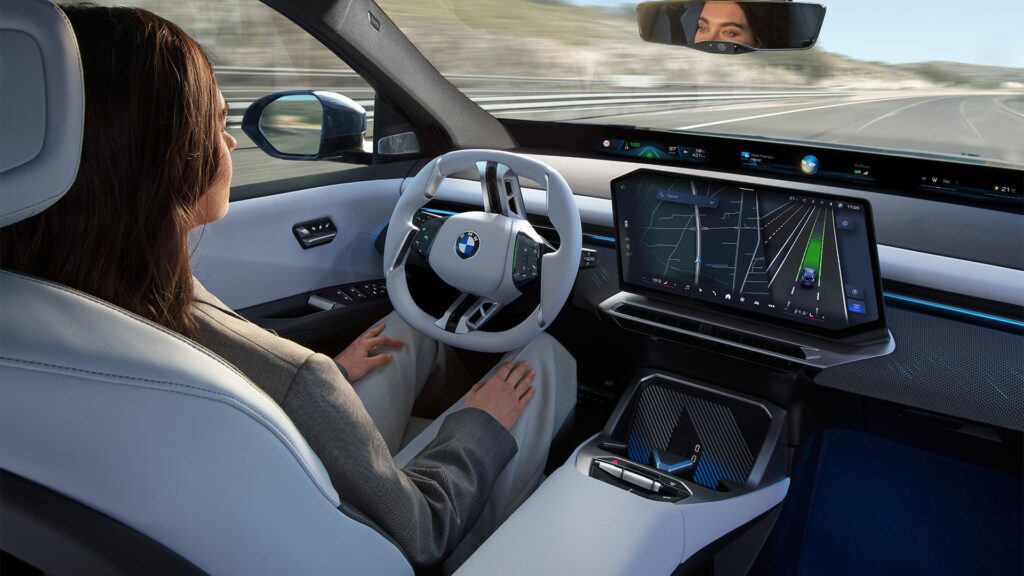
The upcoming iX3, for example, will be available with a subscription to the 360-degree camera, as well as the company’s Tesla FSD rival Driving Assistant Pro package, which offers advanced cruise control with automatic lane change and more.
“With these established digital offerings, we offer our customers even more comfort and flexibility in line with their individual wishes after they purchase a vehicle,” a BMW spokesperson told The Drive when asked to clarify its position on the matter.
But BMW is not the only manufacturer to come under fire for offering additional options as a subscription service.
Tesla recently removed the option to pay a one-time fee for its fully self-driving autonomous driving system, while General Motors has charged a fee for its OnStar emergency services for decades.
Also, any ‘always connected’ car requires paying for a data package eventually, otherwise owners need to be within range of Wi-Fi to do the simplest of software updates.
Like and subscribe
While many consumers are happy to pay a subscription fee for digital services, which are becoming an increasingly common sight in today’s Software Defined Vehicles, the real outrage came when BMW suggested owners should pay for hardware already installed in a vehicle.
The German brand backtracked on that decision, but it continues to charge a recurring fee if the owner wants to remotely control their heated seats and steering wheel. The company claims there are costs associated with mobile data and cloud storage to cover, but some buyers remain unconvinced.
But as vehicles – especially electric cars – become increasingly digitized, automakers are looking at ways to tap into the potential revenue stream associated with subscription packages.
After all, it is more lucrative to charge a whole range of owners a small monthly fee for a service than it is to offer it as a one-time purchase when the vehicle is first set up.
This also goes hand in hand with the car ownership model being rapidly changing, with more buyers leasing or renting their vehicles in one form or another than ever before.
Buying a car is no longer the massive one-time investment that is supposed to last for years, but is instead lumped together with the growling list of monthly payments that consumers must contend with.
What was right for the original buyer of a vehicle may not be right for the second person to own it just two years into its life cycle, which is where a Features-as-a-Service model has its advantages.
More than this, if BMW can streamline its manufacturing process by essentially building just one configuration of a model and then charging customers to unlock convenience features like a heated steering wheel, it will.
The car market is undergoing one of the biggest transformations it has ever witnessed, while the competition is hotter than ever. These microtransactions are seen as a way to smooth out cash flow and as a result, clearly aren’t going away anytime soon.
Follow TechRadar on Google News and add us as a preferred source to get our expert news, reviews and opinions in your feeds. Be sure to click the Follow button!
And of course you can also follow TechRadar on YouTube and TikTok for news, reviews, video unboxings, and get regular updates from us on WhatsApp also.


