
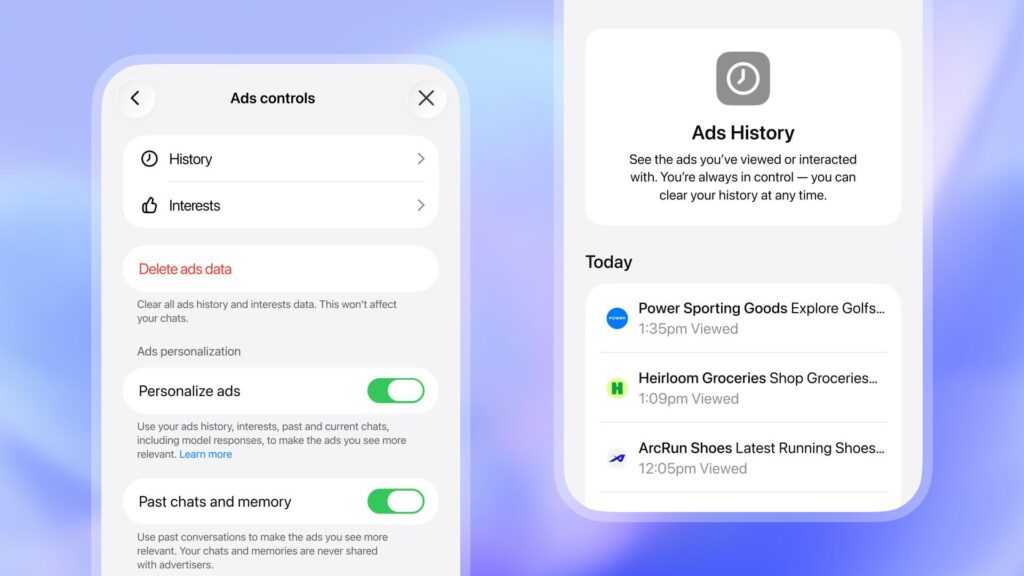
- OpenAI has started serving ads to ChatGPT users in the US
- It only affects users on the Free and Go tiers at the moment
- Many users are unhappy with the new policy
There has been much talk about how sustainable OpenAI’s business model is, with the AI pioneer reportedly struggling to make money despite charging up to $200 a month for ChatGPT’s premium plans. One way it can supplement that income is by serving ads, and they’re now rolling out to users of the chatbot’s Free and Go tiers—and not everyone is happy.
As seen in a post on the company’s official blog, OpenAI says it has begun testing ads for logged-in users who are based in the US and are on either the Free or Go tiers, meaning people on the Plus, Pro, Business, and Enterprise plans are not affected.
OpenAI tried to reassure users by saying that ads have no effect on responses from ChatGPT and that “we keep your conversations with ChatGPT private from advertisers.” That means “advertisers don’t have access to your chats, chat history, memories or personal details,” OpenAI said. “Advertisers only receive aggregate information about how their ads are performing, such as number of impressions or clicks.”
Users whom ChatGPT knows are under 18 will not see ads, while ads will not appear alongside “sensitive or regulated topics” such as health and politics. Free users can also opt out of seeing ads at the cost of “fewer daily free messages.” OpenAI did not extend this limit, nor is it clear whether Go users can opt out.
If you don’t like an ad, you can reject it or send feedback to OpenAI. This will affect which ads you see in the future. You can also delete advertising data that has been collected about you from ChatGPT’s settings.
OpenAI explained how the ads would work, saying, “During testing, we decide which ad to show by matching ads posted by advertisers with the subject of your conversation, your previous chats, and previous interactions with ads.” This may mean you see ads for meal kits or delivery services if you search for recipes, for example.
“Our goal is for ads to support wider access to more powerful ChatGPT features while maintaining the trust people have in ChatGPT for important and personal tasks,” OpenAI added. “We start with a test to learn, listen and make sure we get the right experience.”
The backlash has begun
It probably comes as no surprise to learn that many users are unhappy with the move. On Reddit, for example, user serya5555 was blunt in their view, saying, “ChatGPT is done. There are better alternatives. Unfortunately, they couldn’t keep the lead.”
Another Reddit user stated that “If I get a single ad, I’ll switch to Claude,” referring to the rival chatbot service. A thread on Reddit referencing OpenAI’s move was titled “And so the unification begins,” referring to the process by which a service that originally sought to serve its customers gradually shifts to serve its investors, with a consequent decline in product quality.
Another potential point of contention is the fact that Go users currently have to pay $8 a month to access the service, but apparently paying doesn’t exempt them from seeing ads. To some, it may feel like a nickel when people are already being charged for ChatGPT Go.
With OpenAI seemingly losing money hand over fist, there is a strong incentive for the company to find new ways to bring in cash and secure ChatGPT’s long-term future. In this case, it looks like ads are one way OpenAI hopes to do that. We’ll have to see how much of an impact it has on the overall ChatGPT experience and whether users are adequately discouraged from looking for alternatives at scale.
Follow TechRadar on Google News and add us as a preferred source to get our expert news, reviews and opinions in your feeds. Be sure to click the Follow button!
And of course you can too follow TechRadar on TikTok for news, reviews, video unboxings, and get regular updates from us on WhatsApp also.

The best business laptops for all budgets


