
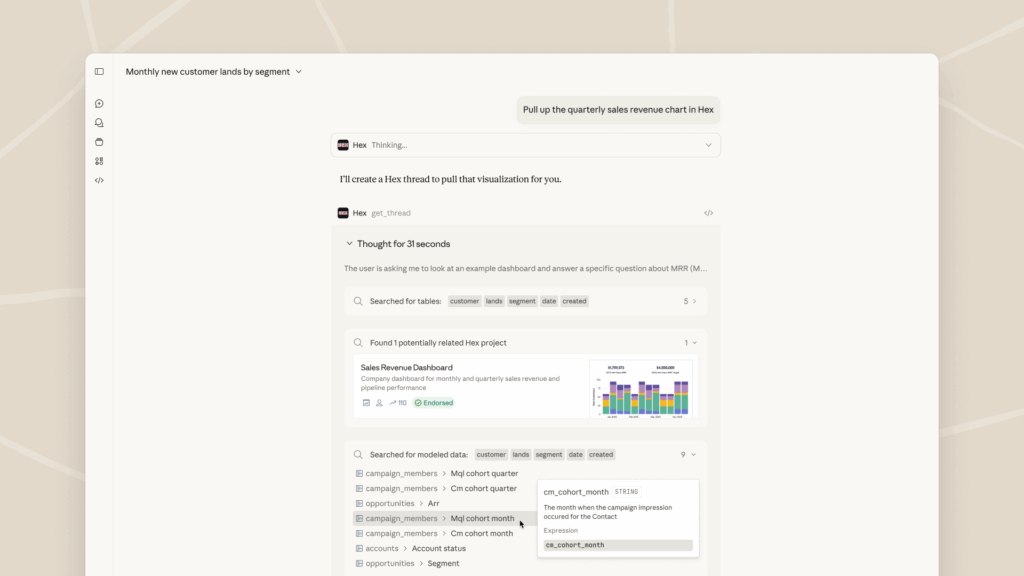
- Anthropic is pushing Claude as an AI-powered workspace with new integrations using MCP Apps
- Claude now lets users interact with tools like Slack, Asana and Figma directly in chats
- The update reduces tab switching by integrating live interfaces into conversations
Anthropic has given Claude an upgrade to incorporate many of the most common productivity and collaboration workplace apps available today directly into its AI assistant.
Claude Pro, Max, Team, and Enterprise subscribers can now draft and view Slack messages, edit Figma charts, update Asana timelines, and manipulate analytics dashboards with Claude acting as the glue between them all.
Anthropic sets Claude up to now lean into the messier, click-by-click reality of modern digital work. The tools appear in the chat with Claude. So a Slack message draft looks like a Slack message, and an Asana timeline can be tweaked with live images.
Look at
It all runs on an extension of the open source Model Context Protocol, called MCP Apps, which lets any participating tool appear in the Claude chat.
The idea is to reduce all flipping back and forth between multiple apps and browser tabs, reducing time spent hunting for the right file or view.
Anthropic’s goal would have users who ask Claude operate on behalf of the many other tabs.
If you ask it for a follow-up on a marketing timeline in Asana and assign a few items to the design lead, Claude could open the live board and update it. It could then write a Slack message for your approval summarizing the changes and send it with your approval. It is more effective than simply providing a to-do list or link as would normally be the case.
That fluidity is part of the point. Anthropic’s pitch is about reducing friction. Until now, AI productivity workflows have still relied on a kind of mental multitasking. With MCP Apps, Anthropic is clearly betting that a future can emerge where everything is handled within its AI conversations, for professionals as well as consumers.
All in Claude
OpenAI, Google and others are moving in the same direction, each with slightly different capabilities. OpenAI’s GPT-based apps can run in ChatGPT but still run semi-independently of the chatbot, while Google’s Gemini becomes ubiquitous within its Workspace. But Claude’s new tools stand out by being built into the chat itself.
Of course, giving any AI assistant direct access to platforms like Slack or Asana means that your conversations, projects and decisions are now part of its working memory. Anthropic promises tight sandboxing and clear permissions, but as with any workplace technology, the devil will be in the default settings.
Nor is it another revolution for everyone. The current rollout supports web and desktop versions of Claude, not mobile or the Claude Cowork experience yet. And if your day doesn’t involve charts, decks, timelines or whiteboards, you might not notice much of a change in how Claude works.
For those who do, this can be the beginning of a real moment of consolidation. Instead of drowning in tabs, inboxes and dashboards, AI brings everything together. A creative team can draft a concept, assign tasks, build the deck and send updates from a single Claude chat.
The big idea of the assistant becoming the platform has legs. It’s changing how we think about generative AI from sidekick to core operations. Although AI is not always perfect, the shift in where and how work is done feels like a deeper development. It’s too early to call Claude’s plans a blueprint for the next standard work interface, but if the conversation ending work pans out, this could set Anthropic up for a lot more business in the future.
Follow TechRadar on Google News and add us as a preferred source to get our expert news, reviews and opinions in your feeds. Be sure to click the Follow button!
And of course you can too follow TechRadar on TikTok for news, reviews, video unboxings, and get regular updates from us on WhatsApp also.


