
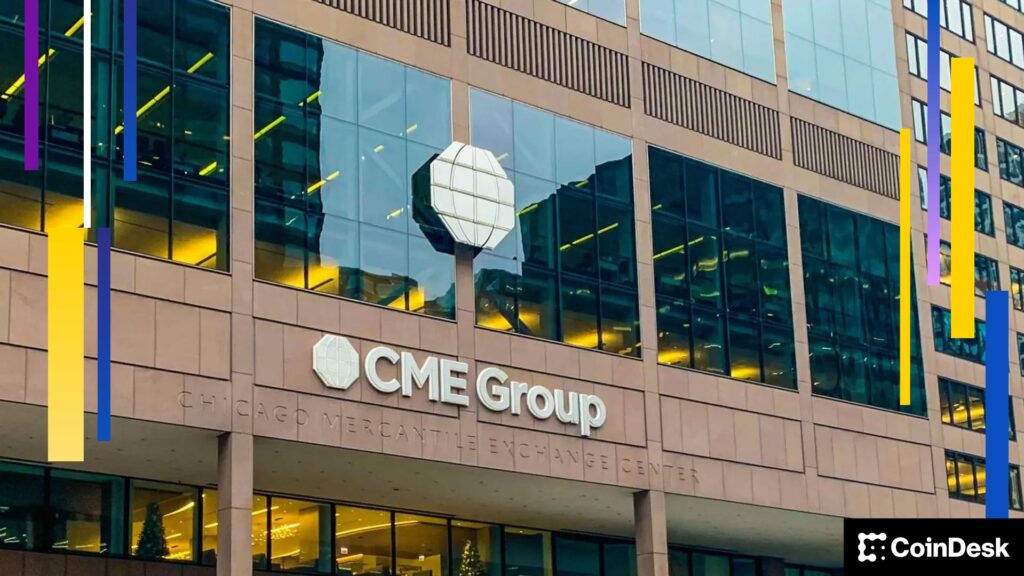
CME Group, the derivatives exchange giant favored by Wall Street, said it will begin offering 24/7 trading for its cryptocurrency futures and options on May 29, a major milestone in how traditional institutions access crypto markets.
The move, the exchange said, aims to meet the growing demand from professional investors who want to manage risk continuously even on weekends, when crypto volatility often rises when institutional venues are closed.
The decision to open around the clock was driven by growth, said Tim McCourt, CME’s global head of equities and foreign exchange, adding that crypto derivatives across CME venues hit a record $3 trillion in notional volume last year.
“Client demand for risk management in the digital asset market is at an all-time high,” he said.
‘Violent price fluctuations’
However, this move will have an even bigger impact on how crypto trades over the weekend.
While crypto markets have always been live 24/7, the CME’s derivatives — largely hedge funds and institutions for their strict regulatory oversight — shut down on Friday night and reopen on Sunday, while the spot market remains open 24/7.
This discrepancy contributes to the well-known “CME gap”, the empty price area between Friday’s close and Sunday’s open, leaving institutions exposed to weekend price swings with no opportunity to hedge.
Experts say the CME’s shift to always-on trading could reshape liquidity and trading dynamics across both institutional and retail crypto markets, especially around weekends.
“The most violent price swings happen precisely when institutional venues are dark,” said Bobby Ong, co-founder of CoinGecko. “CME’s move is a structural acknowledgment of what CoinGecko data has been showing for years.”
He said liquidation cascades over the weekend were a “predictable consequence” of thin, fragmented liquidity, noting that “CME [is] finally closing that gap.”
Less dramatic features
What this will essentially do is make trading more seamless between weekdays and weekends.
Adam Haeems, head of asset management at Tesseract Group, said the change “closes one of the last structural gaps between crypto-native markets and regulated derivatives infrastructure.”
Institutional flows that pause on Friday and restart on Sunday will continue uninterrupted, reducing the risk and cost of holding positions through weekends. He added that weekend volatility has been “a direct consequence of this structural mismatch” and continuous trading should help compress those price swings and narrow spreads.
However, this does not guarantee a total reduction of massive fluctuations; rather, price action is likely to be more gradual.
Haeems cautioned that simply keeping the venue open does not guarantee deep liquidity. “Institutional desks must not staff weekend risk-taking with the same intensity as weekdays,” he said. “The improvement will be real, but gradual.”
For retailers, the change could mean less dramatic price action on Monday.
“Tighter rates and less of the Monday morning rush,” Haeems said. “The CME gap has historically filled more than 90% of the time – retail traders tracking the futures structure will notice the signal fading.”
Bitcoin as a macro risk proxy
Maxime Seiler, CEO of trading firm STS Digital, reiterated that the change offers clear benefits to institutions, especially those wary of the forced liquidation mechanisms on crypto-native platforms.
“The ability to trade futures and options on the CME without the risk of automatic deleveraging is a big selling point,” he said.
He also pointed to a shift in how bitcoin can be used over the weekend as a professional tool to hedge against global risk events when other assets are not available for trading.
“With other markets closed, bitcoin could increasingly act as a proxy for broader macro risk, pricing in real-time global events.”


