
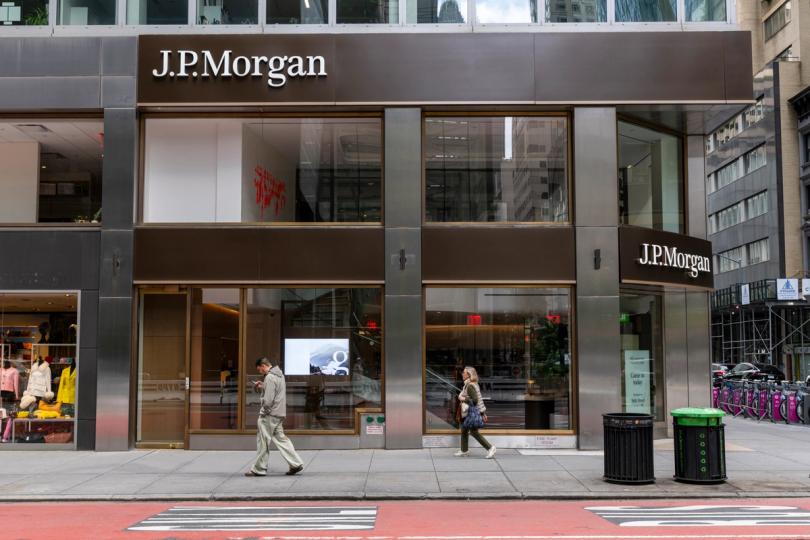
JPMorgan’s ( JPM ) reported plan to offer crypto trading to institutional clients could reshape the competitive landscape, but not necessarily at the expense of its rivals.
According to analysts, the Wall Street giant’s entry could benefit existing players like Coinbase ( COIN ), Bullish ( BLSH ) and Galaxy Digital ( GLXY ), although it signals tougher competition ahead.
“If JPMorgan offers crypto trading to institutional clients, it will be a big positive for the space,” said Owen Lau, analyst at ClearStreet. “It will further legitimize crypto and increase distribution channels,” he continued. “The domino effect is likely to cascade down to other banks. Coinbase and Bullish are well positioned to benefit from aggregating and matching institutional orders from this large distribution channel.”
“JPMorgan is a broker, they potentially use exchanges to match the orders,” Lau continued. That opens the door for platforms like Coinbase Prime and Bullish — which already offer institutional-grade crypto execution — to play a key role in settling these trades.
Read more: JPMorgan Weighs Institutional Crypto Trading Amid Rising Demand
Still, the move adds new pressure for the established companies. In a note last week, Compass Point’s Ed Engel wrote that while Wall Street’s growing involvement in crypto “expands the addressable market for digital assets,” it also intensifies competition.
“Companies like GLXY and BLSH benefit from higher institutional participation, while COIN and Circle Financial (CRC)L face risks of margin pressure,” Engel wrote.
As institutional crypto activity picks up, Engel said trading volume in both spot and derivatives markets is likely to rise along with demand for lending and custody services — areas where crypto-native firms have already built infrastructure. However, lower touch services such as basic spot trading may face downward pressure on fees.
“We believe GLXY is a leading beneficiary of Wall Street’s crypto adoption given its focus on prime trading, derivatives and high-touch prime brokerage services,” Engel wrote. “BLSH can also benefit from Wall Street’s adoption as it already offers some of the lowest spot fees globally.”
To sum up the analyst’s assessments, JPMorgan’s potential entry could draw more traditional institutions into the crypto market. But instead of displacing existing platforms, it could push them deeper into the plumbing of institutional finance — matching trades, providing custody and offering risk management tools.
In practice, it could look like a pension fund routing a crypto trade through a traditional Wall Street bank, only to have it executed on Coinbase Prime or Bullish. The more demand JPMorgan and every major lender brings into the system, the more liquidity these platforms can capture.
To this point, JPMorgan has not confirmed the launch of crypto trading for institutional clients, but the move seems more likely than not, as the bank has gradually warmed up to the sector, including launching its own stablecoin and exploring blockchain settlement tools.


