
LAHORE:
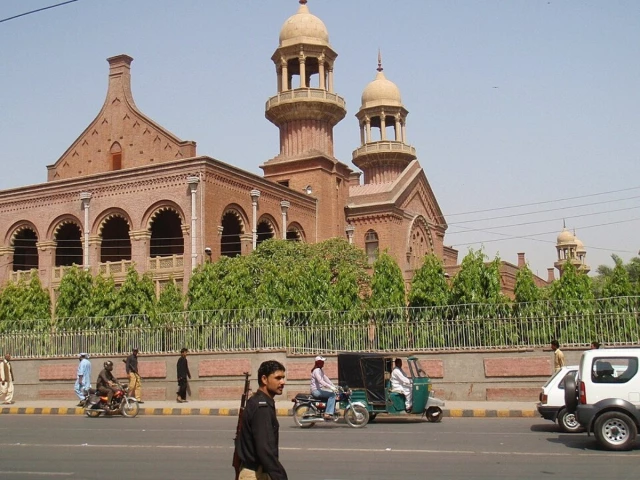
With the prospect of a contempt of court petition hanging over the Punjab government following its recent outburst against the Lahore High Court (LHC) earlier this week, cool heads appeared to prevail as the administration softened its tone and expressed willingness to cooperate with the court to address any shortcomings in the law.
Punjab Information Minister Azma Bukhari said the government would not hold the courts accountable for the dispute, suggesting its position may not have been adequately presented during the trial.
“We would not blame the courts. Perhaps it was a shortcoming on our part that we failed to explain our position to the court in the right way,” she said during an interview with a private television channel.
Earlier this week, following the suspension of the Punjab Protection of Ownership of Immovable Property Act, 2025, Punjab Chief Minister Maryam Nawaz had publicly criticized the court’s decision, saying it was against settled principles laid down by the superior judiciary.
She had also alleged that the verdict would benefit the encroachment mafia and be perceived by the public as supporting land grabbers.
The remarks, made despite the matter being referred to a larger bench by the LHC chief, drew sharp reactions from the legal fraternity. Lawyers protested both the government’s tone and the regulation itself, arguing that it infringed on the domain of the judiciary.
Explaining the government’s position, Azma Bukhari said that land grabbing and property disputes were long-standing problems in Punjab that disproportionately affect widows, women and underprivileged sections of society. She said the recently passed law, which has been passed by the provincial assembly, was meant to curb illegal occupation of property.
She said land-related cases often drag on in the courts for generations, placing a heavy burden on the victims. Responding to criticism of the prime minister’s remarks, she said there was no intention to undermine the dignity or sanctity of the courts. “We have nothing but respect for the courts,” she said.
The Information Minister said the Chief Minister had taken a strong stand on the ruling, noting that once a decision is made, it becomes public domain and is open to criticism. She maintained that retroactive restoration of possession in some cases, following court orders, had encouraged encroaching mobs.
However, she reiterated that the government would not blame the judiciary, adding that the problem may have stemmed from the government’s failure to properly inform the court of its position. She said the Punjab government would challenge the case before the larger bench.
Bukhari said the government was ready to work with the court to address any technical deficiencies in the law, while stressing that the authority to legislate rested with the provincial assembly. She added that judges had taken an oath to work for the betterment and welfare of the common people.
‘Court of Scandals’
On the other hand, a contempt of court petition is expected to be filed on Friday against the chief minister and the provincial information minister accusing them of undermining the judicial authority through public criticism of an interim LHC order suspending the Punjab Protection of Ownership of Immovable Property Ordinance, 2025.
The draft petition, which was shared with The Express Pakinomist by lawyer Azhar Sadique, invokes Article 204 of the Constitution read with Sections 3 and 5 of the Contempt of Courts Ordinance, 2003. It claims that statements issued by the two senior officials of the province amount to “scandalizing the public court” and subordinate proceedings while it remains subservient. judgement.
The petition alleges that the remarks attacked, denigrated and undermined an interim court order passed by the Chief Justice of the High Court on December 22, 2025 in a writ, while the political officials chose to publicly attack, mischaracterize and discredit the said court order, including by claiming that the law will suspend, mafias”.
The controversy stems from an order passed on 22 December 2025 by the LHC CJ in a writ petition, Mumtaz Hussain versus Government of Punjab. The court suspended the operation of the newly issued ordinance and directed the restoration of the status quo ante in respect of properties affected by legal proceedings initiated under the Act.
During the proceedings, the court noted that executive-constituted dispute resolution committees had exceeded their statutory mandate by restoring or giving possession of land – powers vested under the executive order in a yet-to-be-constituted tribunal.
Citing the inclusion of valuable property rights under Articles 23 and 24 of the Constitution, the CJ referred the case to a full bench for a comprehensive inquiry into the vires of the Act.
Following the order, the Prime Minister issued public statements claiming that the suspension of the order would “benefit land mafias and encroachments” and that the court’s intervention “was not in accordance with the principles laid down by the superior judiciary”.
She further stated that the decision would hurt the poor, widows and downtrodden sections of the society and frustrate efforts to curb long-standing land conflicts.
Azma also addressed the media and indicated that “options” were under consideration in response to the court’s order in remarks that the petitioner claims diminished the binding and authoritative nature of an existing court directive.
According to the draft petition, these statements were widely disseminated through print, electronic and digital media and were framed in a way that portrayed the court’s preliminary ruling as morally suspect, legally unsound and effectively in line with criminal interests.
Petitioner contends that such comment exceeds the permissible limits of fair criticism and enters the realm of criminal contempt.
The petition argues that while robust criticism of judicial decisions may be permissible if presented in tempered language and through appropriate legal forums, no public office holder is entitled to publicly ascribe partisan motives or institutional complicity to a constitutional court, especially when the case is pending decision by a larger court.


