Economic confrontation between nations and its consequences topped the World Economic Forum’s (WEF) annual risk perception survey released on Wednesday, replacing armed conflict as the top concern among more than 1,300 experts surveyed worldwide.
The survey also found that perceptions of environmental risks fell down the rankings, while other concerns were expressed – particularly fears about the long-term consequences of weak governance of artificial intelligence.
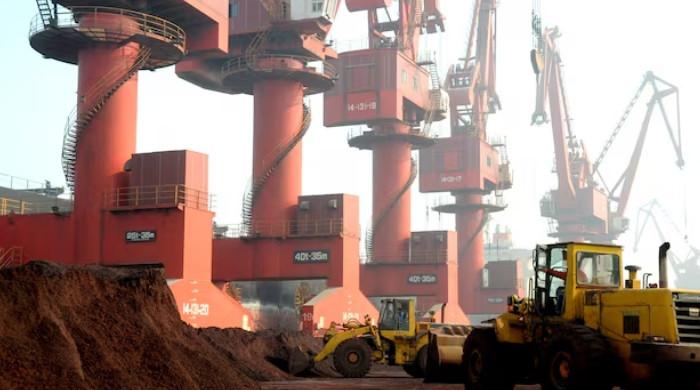
Saadia Zahidi, executive director of the WEF’s annual meeting in Davos, which is expected to start next week, cited rising tariffs, controls on foreign investment and tighter supply controls of resources such as critical minerals as examples of “geoeconomic confrontation” that ranks as the biggest risk.
“(It is) when economic-policy tools essentially become weapons rather than a basis for cooperation,” she told an online news conference.
US President Donald Trump’s “America first” policy has led to a sharp increase in US trade tariffs around the world and fueled tensions between the US and China, which is dominant in critical minerals and the world’s second-largest economy.
Perceived risks of extreme weather over the next two years dropped from 2nd to 4th place and pollution from 6th to 9th place. Anxiety about critical changes in land systems and loss of biodiversity fell by seven and five positions respectively.
But when asked what their most pressing concerns were over a longer period of 10 years, the same respondents ranked such environmental concerns in the top three spots.
Fear of “unwanted outcomes of AI technologies” ranked 30th in the two-year horizon, but 5th in the 10-year horizon.
Zahidi said the study revealed that most of the concerns focused on how inadequate governance around AI could harm jobs, society and mental health, while increasingly being used as a weapon of warfare.
The WEF said its annual survey draws on responses from “over 1,300 global leaders and experts from academia, business, government, international organizations and civil society”.