
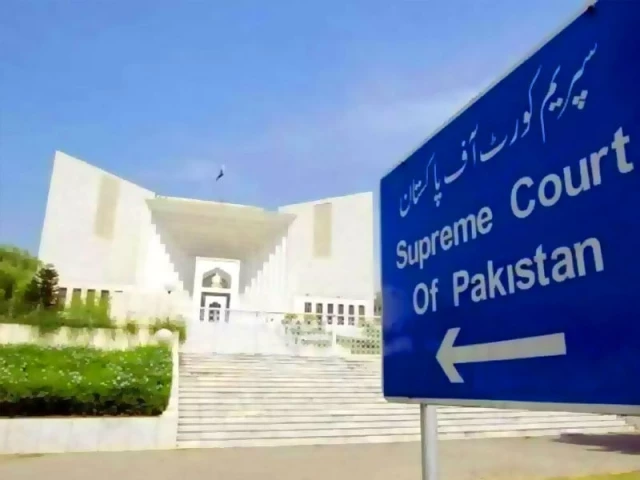
27th Amendment gives FCC no authority to reopen SC rulings, strengthening legal finality in private, public disputes
ISLAMABAD:
The Federal Constitutional Court ruled on Thursday that a parallel appeal cannot be made against a Supreme Court of Pakistan decision, reinforcing that the top court’s final rulings are murky.
The JFC clarified that it cannot appeal the SC’s final rulings, marking a significant ruling after months of legal uncertainty.
The court said that even after the 27th Amendment to the Constitution, which established the FCC, the new court does not have the authority to oversee or reopen judgments already handed down by the Supreme Court. “The Constitution does not permit endless litigation; every legal battle must have a final conclusion,” the court noted in its written judgment.
Read: FCC rules on century-old land mutation plea
The ruling comes after a series of petitions were filed in the FCC challenging Supreme Court rulings, raising concerns about parallel lawsuits and the finality of the apex court’s rulings. The FCC stressed that while it was created to protect constitutional rights and provide a forum for certain specialized cases, it cannot serve as a forum to review final Supreme Court rulings.
Chief Justice Aminuddin Khan dismissed a revision petition filed against the Supreme Court’s order on 12 September 2024. The petitioner had argued that a three-member bench of the Supreme Court had ruled in their favor in 2015, only for the verdict to be overturned by a two-member bench in 2022. The case related to a land compensation dispute with the Multan Development Authority.
The FCC held that the land dispute was not of public importance but a private matter and therefore did not warrant reopening the Supreme Court decision. The court also made it clear that review could not be sought under the guise of “reconsideration” or “corrective measures.”
Read more: The FCC closes the door on recycling
The ruling strengthens the principle of judicial finality and limits attempts to use the FCC to circumvent the Supreme Court’s authority. After the 27th Amendment, several petitions challenging Supreme Court decisions had been filed in the FCC, creating confusion over the scope of its jurisdiction. This ruling now states that the FCC cannot act as an appellate body above the Supreme Court.
The petitioner’s petition for review in the Supreme Court had also been denied before the FCC case.


